 * Image is for illustrative purposes only.
Shimazu Masamune
島津正宗
Also known as: Masamune of Shimazu
Description
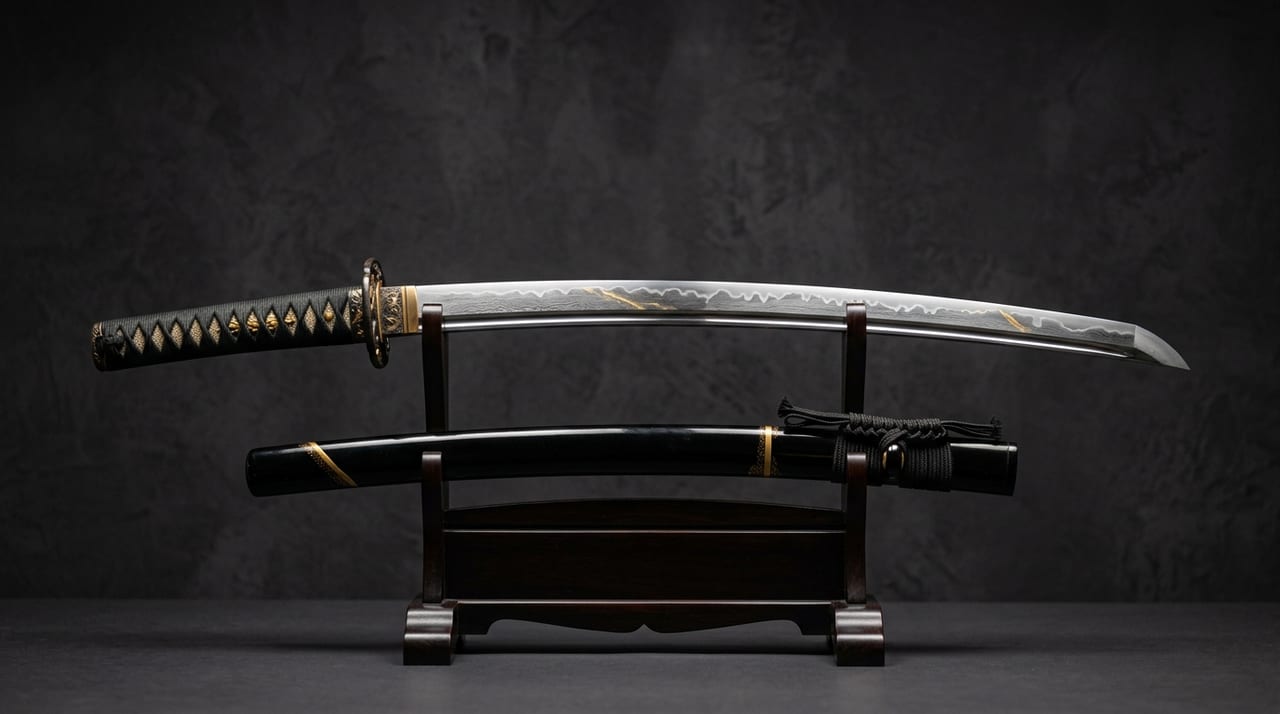
Shimazu Masamune is one of the masterwork blades forged by Masamune—the supreme master of the Sōshū tradition—and takes its name from its long provenance in the collection of the Shimazu clan, lords of the Satsuma domain. Approximately 68 centimeters in length with a blade that tends slightly inward (uchi-zori), its well-proportioned form embodies the distinctive Sōshū style. The jigane shows ō-itame grain interlocking with deeply permeating ji-nie, producing the mysterious, ethereal surface texture characteristic of Masamune's work. The hamon displays a straight suguha style interweaving with ko-midare and gunome in complex patterns, with abundant activity—kinsuji, sunagashi, and nijūba—appearing throughout the tempered zone, exemplifying the essence of the Sōshū tradition. The nioi-guchi is broad, the movement of nie vivid and alive across the entire blade, wholly exemplifying the quintessence of the Sōshū tradition. The Shimazu family is said to have treasured this sword as a household heirloom across generations, bringing it out only for special ceremonial occasions. The renowned sword appraisers of the Edo period, the Hon'ami family, awarded it their highest assessment in their authentication certificate (orikami), confirming its status as a particularly outstanding surviving work of Masamune. After the Bakumatsu period, its whereabouts remained unknown, but it was rediscovered in 2013 and donated to the Kyoto National Museum, where it is now designated an Important Cultural Property. While Masamune's oeuvre includes the famous Three Greatest Swords and numerous other masterpieces, Shimazu Masamune is particularly esteemed for its exceptional state of preservation and for perfectly embodying the defining characteristics of the Sōshū tradition.
Legends & Stories
According to oral tradition passed down in the Shimazu clan, this sword passed through the fierce battles of the Sengoku period without ever sustaining a chip to its blade, and moreover, it is said to have grown more brilliant with each engagement. The Satsuma warriors revered it, believing that 'the soul of Masamune dwelling in the blade protects its master.' An anecdote also passed down from the household tells that when a warrior was maintaining the blade late one night, the steel began to emit a pale blue light, and the sword came to be held sacred in the belief that 'this Shimazu Masamune possesses spiritual power.'