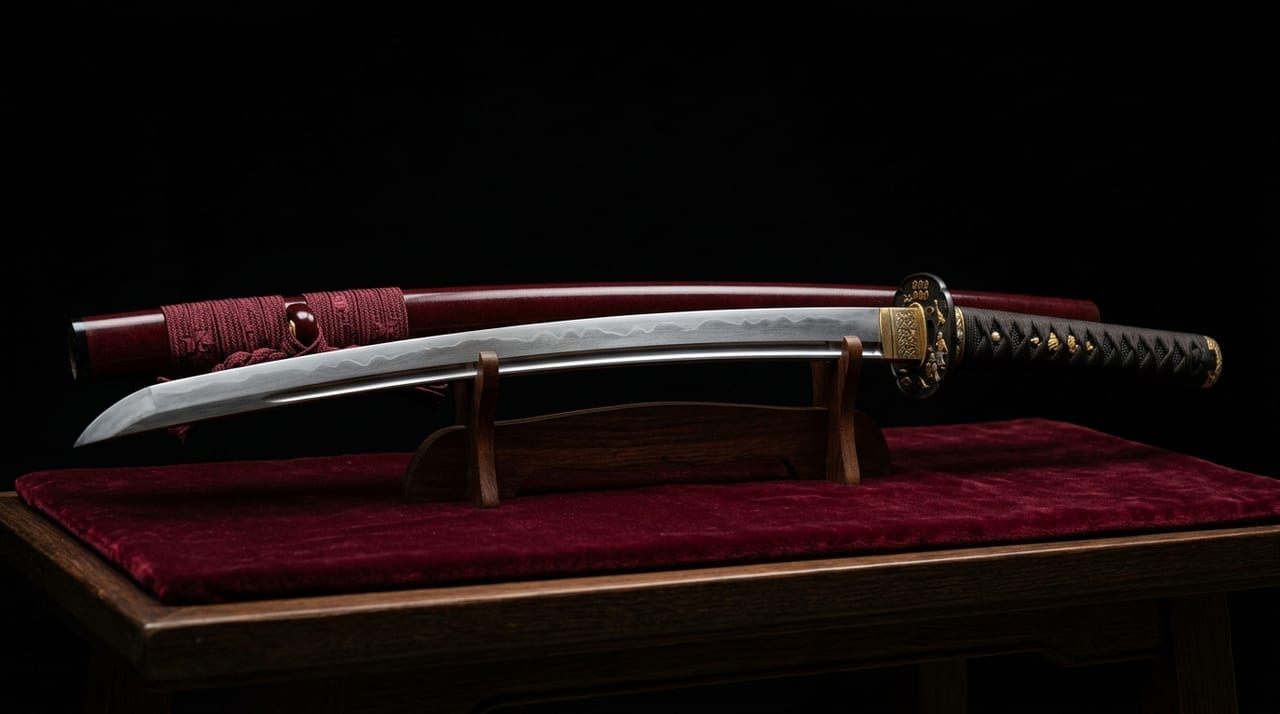
 * Image is for illustrative purposes only.
Beloved Sword of Sanada Yukimura
真田幸村の愛刀
Also known as: Tachi of Sanada Nobushige (Sword of the Greatest Warrior of Osaka)
Description
Sanada Yukimura (1567–1615)—born Sanada Nobushige—was a military commander who flourished during the late Sengoku and early Edo periods, honored as "the greatest warrior under heaven" and remembered as a tragic hero. His martial prowess was legendary; even Tokugawa Ieyasu is said to have declared, "In the eight provinces of Kantō, there is one fearsome warrior—Sanada." Yukimura's beloved sword continues to be spoken of today as a symbol of the sword culture of the late Sengoku period.
Yukimura was born into the Sanada clan of Shinano Province (present-day Nagano Prefecture) and honed his martial arts under his father Masayuki. At the Battle of Sekigahara (1600), he fought for the Western Army but was defeated; he was then placed under house arrest at Kudoyama in Kishū. However, at the Siege of Osaka (1614–1615), he constructed the fortification of Sanada-maru to counter the Tokugawa forces, and he repeatedly repelled them in remarkable battles. In the Summer Campaign of 1615, clad in the all-red armor and banner known as "Sanada's crimson array," he is said to have charged into the Tokugawa main camp, routing Ieyasu twice over. In the end, outnumbered, he fell on the battlefield.
Regarding Yukimura's beloved sword, multiple accounts exist. The sword he used during his lifetime is said to have been forged either by a smith of Shinano or commissioned from a craftsman of Echigo, though definitive historical records are few. The Sanada Treasure House in Matsushiro, Nagano, preserves multiple swords transmitted from the Sanada family, the former lords of Matsushiro Domain, and among them is said to be a blade associated with Yukimura. Furthermore, at temples and shrines near Osaka Castle and at others connected to the place of Yukimura's death, such as Shitennōji, multiple swords survive that are enshrined and transmitted as blades carried by Yukimura, and in the local area they are held in deep reverence as "Yukimura's sword."
The blade is in the uchigatana form, with a blade length of approximately 2 shaku 3 sun, which is said to represent the typical dimensions of a warlord's sword emphasizing practical utility in combat. Yukimura was also known as a formidable mounted warrior, and it is said that he favored longer uchigatana suited for slashing strikes from horseback. Carried alongside the red armor of his crimson array, Yukimura's sword came to be an object of admiration for later generations of warriors as an embodiment of the fusion of martial valor and beauty. Throughout the Edo period, Yukimura was celebrated in popular culture as a "tragic hero," and his beloved sword has similarly been revered as a sacred relic embodying the spirit of the warrior.
Legends & Stories
Legend holds that when Sanada Yukimura charged into the Tokugawa main camp at the Summer Siege of Osaka, his sword cut down more than ten of Ieyasu's elite guards in a single sweep. It is also said that when Yukimura fell at last, his sword stood upright in the ground rather than returning to its scabbard; when the blade was later taken to be polished, the character for "happiness" (幸) appeared on the steel. During his years of house arrest at Kudoyama, it is said that Yukimura kept his beloved sword at his pillow and dreamed of Takeda Shingen appearing to tell him, "The day will come when you will wield that blade" — a story still told by elders in Shinano. The scabbard of Yukimura's sword is further said to have borne an inscription invoking the dispersal of seven calamities and the advent of seven fortunes, revered as a spiritual talisman of protection and victory on the battlefield.