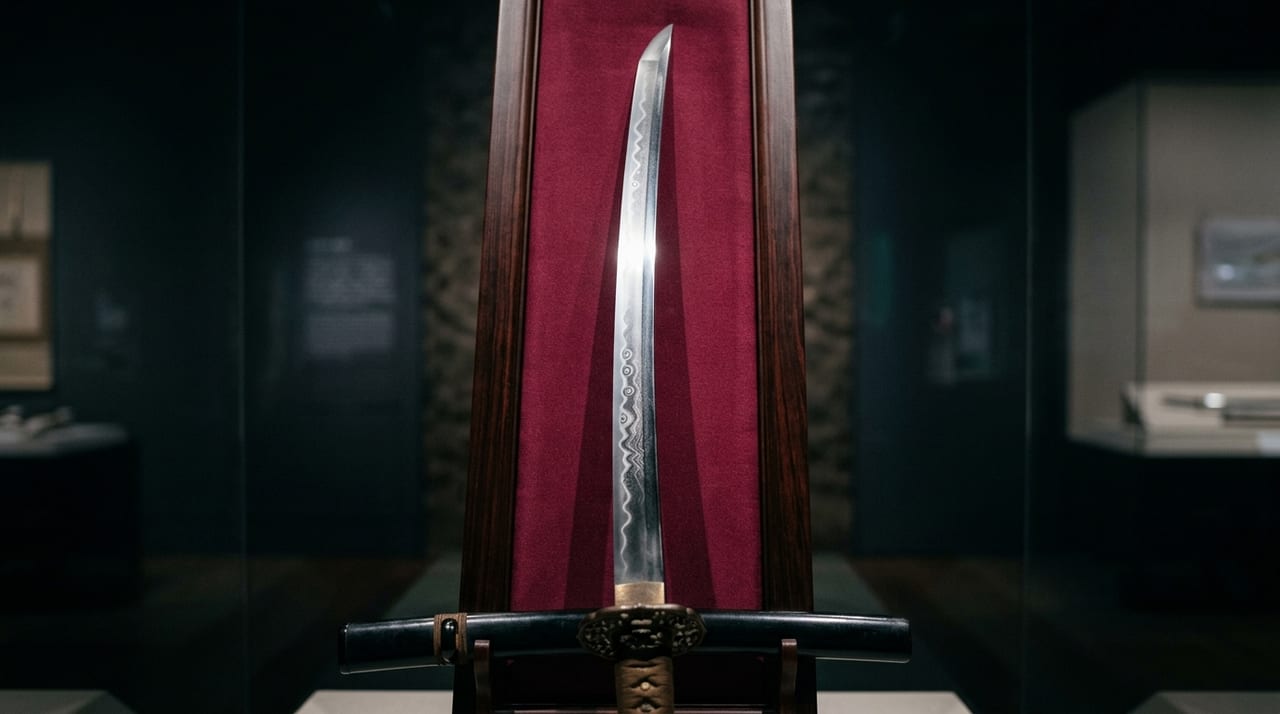
 * Image is for illustrative purposes only.
Samidare Gō
五月雨江
Also known as: Samidare; masterwork of Gō Yoshihiro; treasured sword of the Maeda clan
Description
Samidare Gō is a katana attributed to Gō Yoshihiro, a swordsmith active in Etchū Province (present-day Toyama Prefecture), and is designated an Important Cultural Property. Gō Yoshihiro is counted first among the Jūtetsu (Ten Disciples) of Masamune and is regarded as a preeminent successor of the Sōshū tradition; his works, collectively known as "Gō," have been treasured as supreme swords since the Edo period. Samidare Gō ranks among the most celebrated named examples of his work. The name "Samidare" — meaning "early summer rains" — is said to have been bestowed in reference to the way the activity within the ha unfolds ceaselessly and richly, like the unending rains of early summer.
Samidare Gō was presented by Kuroda Nagamasa to Tokugawa Hidetada, and subsequently passed to Tokugawa Iemitsu and the Owari Tokugawa clan. It is currently held and managed by the Tokugawa Art Museum in Nagoya (a collection of the Owari Tokugawa clan) and is periodically exhibited at special exhibitions and other occasions.
The blade displays Gō Yoshihiro's typical style: moderately wide mihaba, shallow curvature, slightly extended kissaki — the Nanbokuchō form combining power and refinement. The hamon is the fierce ō-midare characteristic of Gō Yoshihiro, with gunome, yahazu, pointed ha, and notare elements fused together, blazing with nie, and lightning-like kinsuji and sunagashi running throughout. The jigane flows in itame-hada with abundant ji-nie and active jikei — altogether overflowing with the wild yet transcendently spiritual beauty unique to "Gō swords."
Legends & Stories
A poetic legend is transmitted concerning the origin of Samidare Gō's name. When a certain appraiser first took the sword in hand, the kinsuji and sunagashi within the ha appeared one after another like falling raindrops, and he found himself unable to look away. A bystander remarked: "It is as though one is gazing at a river's surface on a rainy early-summer night" — and this phrase, it is said, became the sword's name. A further anecdote concerning its transmission to the Maeda clan holds that a certain Maeda lord once drew the sword and held it up to the moonlight in his garden at night; from within the ha, he heard what seemed like a faint sound, and he said: "This sword remembers the sound of rain." From that time forward, it is said, the Maeda household observed the custom of placing Samidare Gō before the household shrine in drought years, offering prayers for rain. Gō Yoshihiro's swords, like Masamune's, are bywords for swords possessed of divine power, and Samidare Gō has been passed down through the ages as a spiritual blade capable of summoning the forces of nature.
Related Famous Swords
同田貫正国
Multiple official designationsDōtanuki Masakuni
Dōda-tsuruba Masakuni (Higo Dōda-tsuruba School)
肥前忠吉
Important Cultural Property • Important Sword (multiple works)Hizen Tadayoshi
First Hizen Kuni Tadayoshi
一期一振
Gomotsu (Imperial Collection)Ichigo Hitofuri
Awataguchi Yoshimitsu
織田信長の愛刀
National Treasures and Important Cultural Properties (multiple)Oda Nobunaga's Beloved Sword
Awataguchi Tōshirō, Samonji, Yukimitsu, Hasebe (respective smiths)