 * Image is for illustrative purposes only.
Saburō Tachi
三郎太刀
Also known as: The third great tachi, associated with the giant Tarō-tachi and Jirō-tachi series
Description
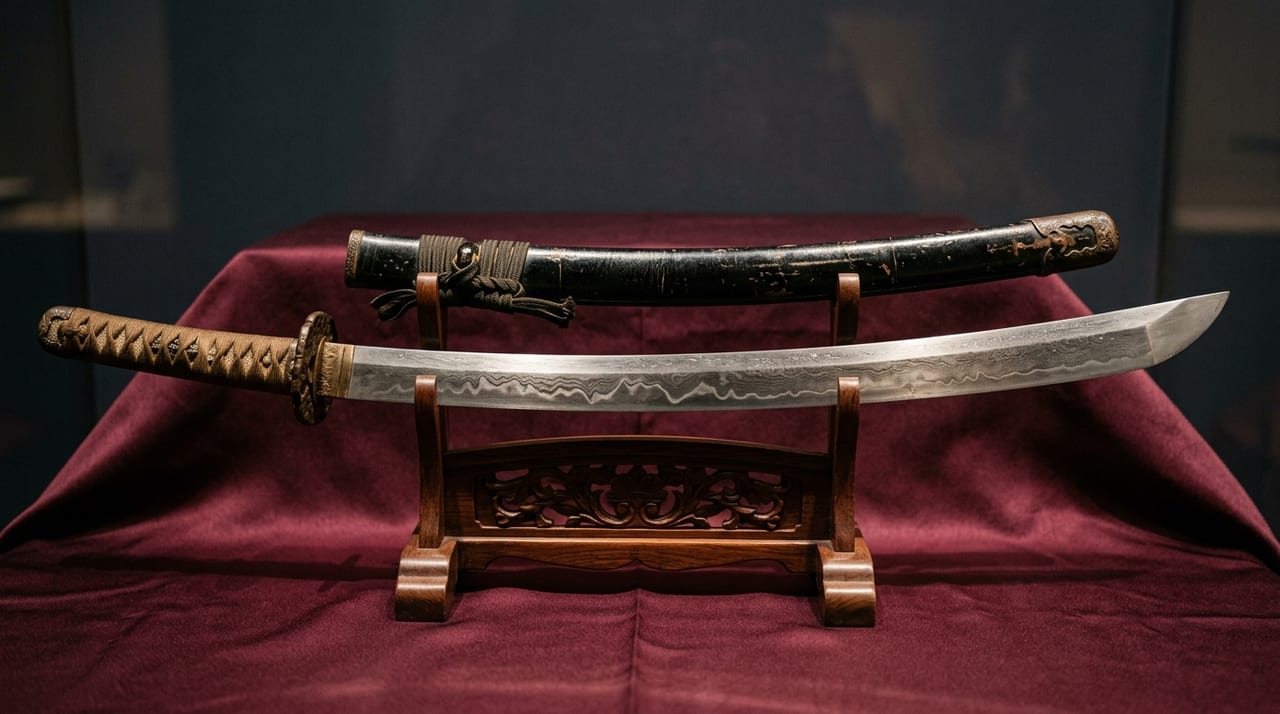
Saburō Tachi is a great sword (ōdachi/nodachi) said to have been forged during the Nanbokuchō period (mid to late 14th century) and has been designated a Specially Valuable Sword. The naming convention "Tarō Tachi, Jirō Tachi, Saburō Tachi" as a set of three blades reflects a fraternal lineage relationship conferred upon certain groups of famous swords in Japanese sword tradition, and Saburō Tachi occupies the third position in this lineage. While Tarō Tachi and Jirō Tachi have several well-known examples (such as Tarō Tachi and Jirō Tachi at Atsuta Shrine), Saburō Tachi is a rarer name and may be used at multiple locations.
The Nanbokuchō period was an era when the most radical transformation in Japanese sword history occurred, and grand ōdachi and nodachi, exemplified by the "Enbun-zori" curvature, were forged in abundance. This blade demonstrates construction that embodies the very spirit of that era. The blade length exceeds 2 shaku 8 sun (approximately 85 cm), with the shallow curvature, moderately wide blade width, and large kissaki (approaching ō-kissaki or inokubi-kissaki) that are characteristic of Nanbokuchō style.
The hamon is based on the Nanbokuchō ō-midare (Enbun-style ō-gunome-midare), with a vigorous and fierce edge. The nie is coarse and strong, the activity within the blade is magnificent, combining practical utility as a "battlefield tachi" with overwhelming visual impact. The jigane flows primarily in itame-hada, with coarse ji-nie rising prominently, displaying the vital, dynamic forging characteristic of the Nanbokuchō era. Currently held in private or shrine/temple collection with details undisclosed, it is accompanied by the Specially Valuable Sword certification (Tokubetsu Kichō Tōken) from the Japan Sword and Art Society (NBTHK), and its value is officially recognized.
Legends & Stories
The heart of the legend associated with Saburō Tachi concerns the origin of the three-brother naming convention "Tarō – Jirō – Saburō." According to old tradition, a certain Nanbokuchō warrior commissioned three great tachi from a swordsmith in a single order, commanding: "Forge the souls of my first, second, and third sons into the iron." The smith began forging all three from the same furnace fire, but when the third blade — Saburō Tachi — was completed, a pillar of fire rose from the forge, and within that fire the forms of three warriors appeared. The lord interpreted this as "proof that the martial souls of the three brothers had taken up residence in the blades," and from that time forward kept the three swords together, never separating them, as guardians of the household. Another tradition holds that of the three, only Saburō Tachi was used in actual battle, while Tarō-tachi and Jirō-tachi were dedicated to a shrine. In a certain engagement, the warrior bearing Saburō Tachi found himself in desperate straits, but at that very moment the sword vibrated of its own accord within its scabbard and was swung as though animated by its own fighting spirit, cutting down the enemy commander in a single stroke. After the battle, the warrior is said to have declared of the sword: "Saburō ranks third after his brothers, yet like the youngest brother in the tales, he proves the most courageous in action" — entrusting to the sword the folk-cultural ideal of the valiant youngest son that runs deep in Japanese tradition.