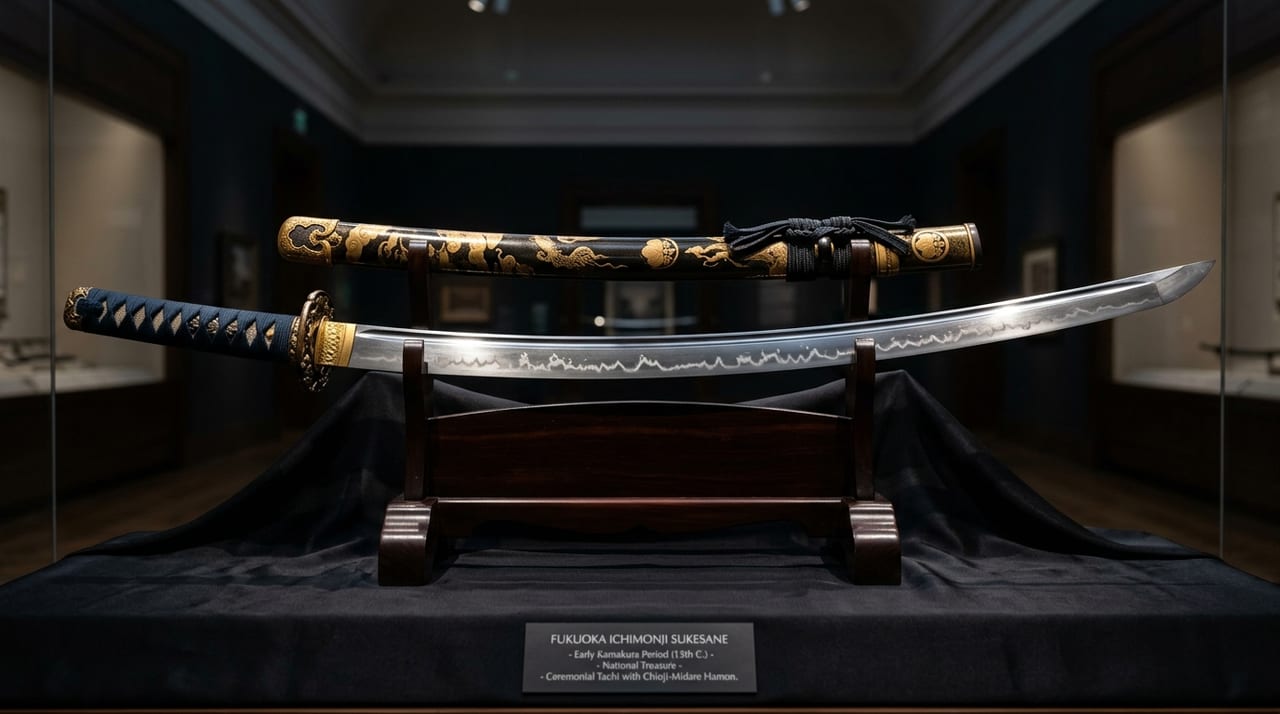
 * Image is for illustrative purposes only.
Nikkō Sukezane
日光助真
Also known as: Nikkō Sukezane; the Sacred Tachi of the Tōshōgū Shrine
Description
Overview of the Sword
Nikkō Sukezane is a tachi forged by Sukezane, a celebrated swordsmith of the Fukuoka Ichimonji school of Bizen Province, during the early Kamakura period. This National Treasure is enshrined at Nikkō Tōshōgū Shrine in Tochigi Prefecture. The name "Nikkō" derives from the shrine where it is enshrined, and as a sacred treasure enshrined at this shrine dedicated to Tokugawa Ieyasu — who is venerated as a deity — it possesses exceptional spiritual significance. The blade measures 2 shaku 3 sun 5 bu (approximately 71.2 cm), a magnificent tachi that exemplifies the grand and imposing tachi form of the early-to-middle Kamakura period.
Sukezane and the Fukuoka Ichimonji School
Sukezane was a swordsmith of the Fukuoka Ichimonji school, based in Fukuoka, Bizen Province (near present-day Setouchi, Okayama Prefecture), during the early Kamakura period. Unlike other smiths of the Ichimonji school who bore the "Ichimonji" signature, Sukezane was a distinctive craftsman who employed his own unique "Sukezane" signature. The jitetsu of Sukezane's tachi displays an itame grain interspersed with ko-mokume, while the hamon is characterized by a chōji-midare pattern, displaying rich and varied visual effects. His works are highly regarded as exemplifications of the finest achievements of the Bizen tradition — the bright, lustrous jitetsu and ornate chōji-midare characteristic of Bizen craftsmanship at its highest level. Sukezane's blades were particularly cherished by the samurai of the Kamakura shogunate and were prized among influential gokenin (military retainers), especially the Hōjō clan.
Enshrinement at Tōshōgū and Sacred Significance
Nikkō Tōshōgū was established in 1617 (Genna 3) as a shrine dedicated to enshrining Tokugawa Ieyasu as its principal deity. Situated amid the lush natural surroundings of the Nikkō mountains, it features ornate shrine architecture including the Yōmeimon Gate. Swords enshrined at the shrine possess a special sacred status as objects embodying the presence of the deity, and Nikkō Sukezane has long been preserved as such a sacred treasure. The fact that this tachi, enshrined at the shrine, has maintained excellent condition for over seven centuries testifies to the profound reverence in which this sword has been held.
The Beauty of Kamakura-period Tachi
Bizen tachi of the early Kamakura period, such as Nikkō Sukezane, are distinguished by their generous curve and broad blade, upon which an ornate chōji-midare hamon unfolds in splendid fashion. These swords embody the bold and vigorous aesthetic sensibility of Kamakura-period samurai. Even after centuries have elapsed, this tachi continues to testify to the high level of forging technique in the Kamakura period, commanding a particularly distinguished presence among the treasures displayed in the Tōshōgū treasure hall.
Legends & Stories
Bizen Sukezane's blades were the swords of the Kamakura warrior class at its most powerful and most aesthetically demanding. The great vassals of the Kamakura shōgunate wanted weapons of the highest cutting performance, but they were also men of sophisticated aesthetic sensibility — the Bizen tradition's chōji-midare hamon, blooming along the edge like clustered cloves, satisfied both requirements simultaneously. It was genuinely beautiful and genuinely deadly. Nikkō Sukezane's preservation at the Tōshōgū Shrine — the great mausoleum-shrine built by the Tokugawa dynasty to enshrine Ieyasu as a deity — gives the sword a sacred dimension beyond its artistic one. To offer a sword to a god was to consecrate it, to remove it from the world of use and place it in the world of eternal veneration. The clove-blossom hamon still blooms, unchanged, seven hundred years after Sukezane finished his work.