 * Image is for illustrative purposes only.
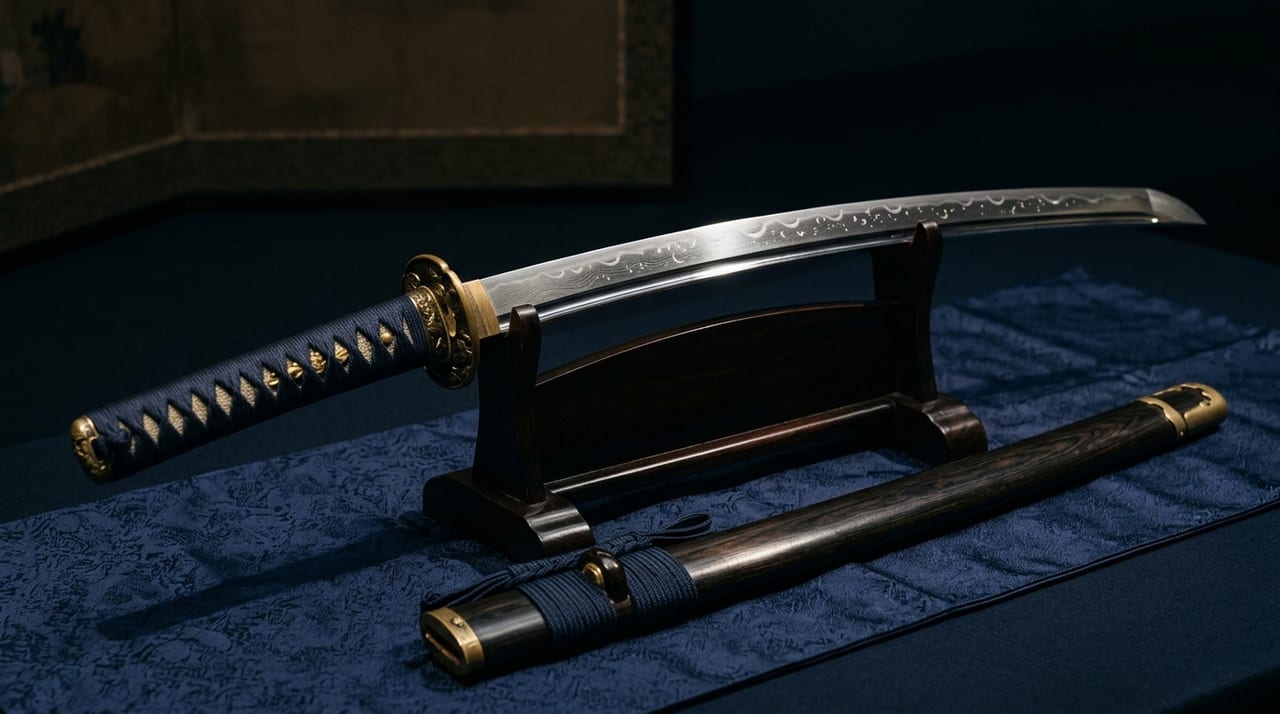
Katana, Mumei attributed to Yoshihiro (Meibutsu Murakumo-Gō)
刀 無銘伝義弘(名物 村雲江)
Also known as: Murakumo-Gō
Description
Overview
Murakumo-Gō is an unsigned (mumei) katana attributed to Gō Yoshihiro, the celebrated swordsmith of Etchū Province (present-day Toyama Prefecture), and is said to have been named by Toyotomi Hideyoshi. Yoshihiro, counted among the "Ten Great Disciples of Masamune," is a near-legendary figure with no authenticated signed work surviving; this blade, too, is attributed to him on stylistic grounds as "mumei den Yoshihiro."
Style
Gō Yoshihiro's works are especially prized for the beauty of their ji-hada, and this blade takes its name "Murakumo" (billowing clouds) from the way the shimmer of its ji-nie was said to resemble drifting clusters of cloud. The itame grain, thick with ji-nie, and the hamon rich in nioi with fine ko-nie, exemplify the refined craftsmanship characteristic of Yoshihiro.
Provenance
The blade passed through the hands of Toyotomi Hideyoshi to the Maeda family, and was later presented to the Tokugawa shogunal house, eventually coming into the possession of the fifth shogun, Tokugawa Tsunayoshi. It was subsequently bestowed upon Tsunayoshi's trusted attendant Yanagisawa Yoshiyasu and remained in the Yanagisawa family for generations, until it was released amid the family's declining fortunes after the Meiji Restoration.
Designation
Surviving works by Gō Yoshihiro are extremely rare, and each blade attributed to him by later connoisseurship commands high esteem. This blade is designated an Important Cultural Property and is ranked alongside other representative Yoshihiro works, such as Tomita-Gō (held by the Maeda Ikutokukai foundation).
Current Location
Since leaving the Yanagisawa family after the Meiji era, the blade has been held in private hands and remains carefully preserved to this day.
Legend
No signed work by Gō Yoshihiro survives; each of his blades is known to the world only through the "mumei den Yoshihiro" attribution of later connoisseurs. The tradition that this blade was named after the cloud-like shimmer of its ji-nie reflects the poetic sensibility with which Sengoku-era warriors and connoisseurs described the beauty of a fine sword.
Legends & Stories
Among the swords of Gō Yoshihiro, none of which survive with a signature, this blade is said to have been named "Murakumo" (billowing clouds) by Toyotomi Hideyoshi, who likened the shimmer of its ji-nie to drifting clouds — an anecdote that captures the poetic sensibility of Sengoku-era connoisseurship.