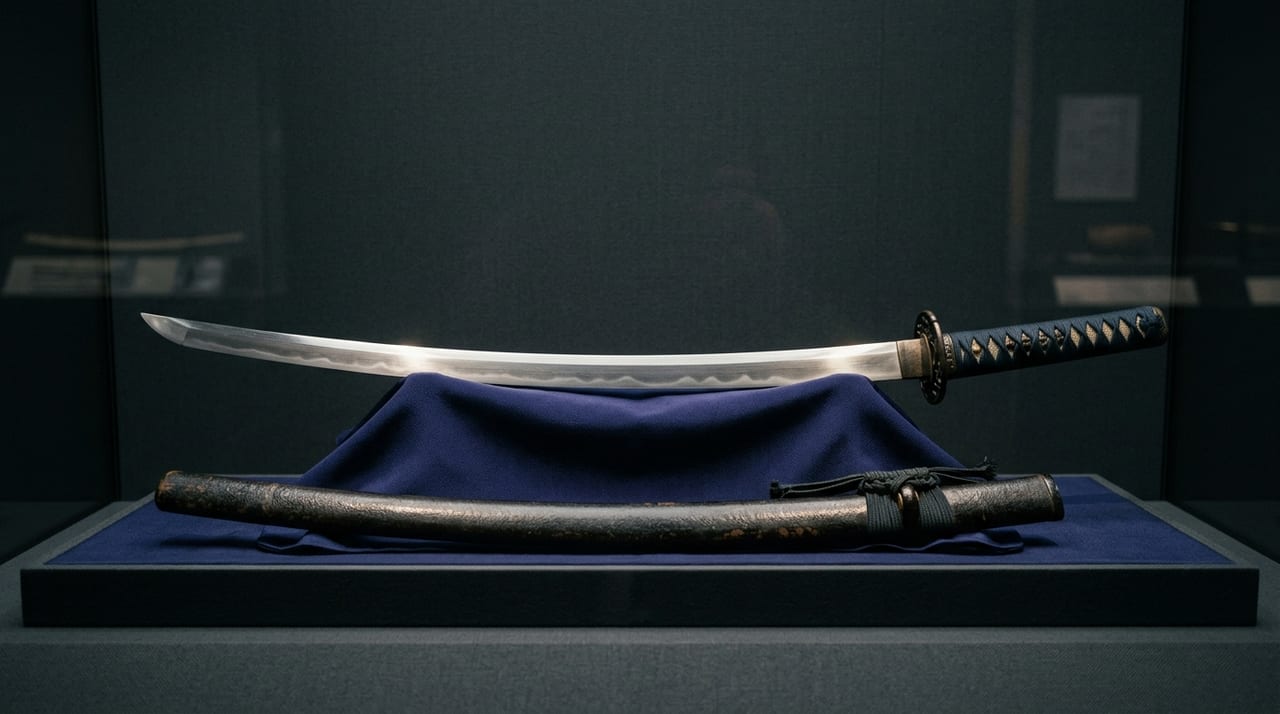
 * Image is for illustrative purposes only.
Tachi by Yukimasa of Ko-Bizen
古備前行正の太刀
Also known as: Gyosho Tachi
Description
This tachi by Gyosho of Ko-Bizen is a representative work of the Ko-Bizen school from the Late Heian period. The Ko-Bizen school was an ancient group of blade smiths from Bizen that shaped the dawn of Japanese swordmaking, with Tomonari, Masatsune, and Kanehira among its renowned makers. Gyosho was particularly highly regarded among Bizen blade smiths of the Late Heian period, and his tachi exerted considerable influence on the aesthetic principles of the later Bizen Ichimonji school. With a blade length of approximately 79 centimeters, it exhibits the characteristics of the transitional period style between the late Heian and early Kamakura periods. It is characterized by an elegant form with deep curvature near the hilt and a dignified hamon based on fine straight suguba. The surface is densely packed with the small itame grain characteristic of Ko-Bizen, imparting an overall sense of ancient elegance throughout. While the circumstances of its transmission to Kyushu are unclear, it is conjectured that it was likely a votive sword dedicated to either Dazaifu or Hakozaki Shrine.
Legends & Stories
The sword of Yukimasa has long been revered as a "Guardian Blade of the Divine Shrine," and detailed records regarding its transmission to the Kyushu region survive in the temple chronicles of Dazaifu Tenmangu. The tachi was dedicated to Dazaifu from ancient times and is said to have been venerated as a miraculous divine blade. Furthermore, according to legend, when this sword was transferred to Hakozaki Shrine and raised along Hakata Bay, where the Mongol forces of the Genko invasions had landed, a divine wind blew from the sea and defeated the Mongol army—a tale that has been passed down through the generations.
Related Famous Swords
同田貫正国
Multiple official designationsDōtanuki Masakuni
Dōda-tsuruba Masakuni (Higo Dōda-tsuruba School)
肥前忠吉
Important Cultural Property • Important Sword (multiple works)Hizen Tadayoshi
First Hizen Kuni Tadayoshi
一期一振
Gomotsu (Imperial Collection)Ichigo Hitofuri
Awataguchi Yoshimitsu
織田信長の愛刀
National Treasures and Important Cultural Properties (multiple)Oda Nobunaga's Beloved Sword
Awataguchi Tōshirō, Samonji, Yukimitsu, Hasebe (respective smiths)