 * Image is for illustrative purposes only.
Jizō Yukihira
地蔵行平
Also known as: Jizō Yukihira, Masterpiece of Yukihira, Buddhist Iconography
Description
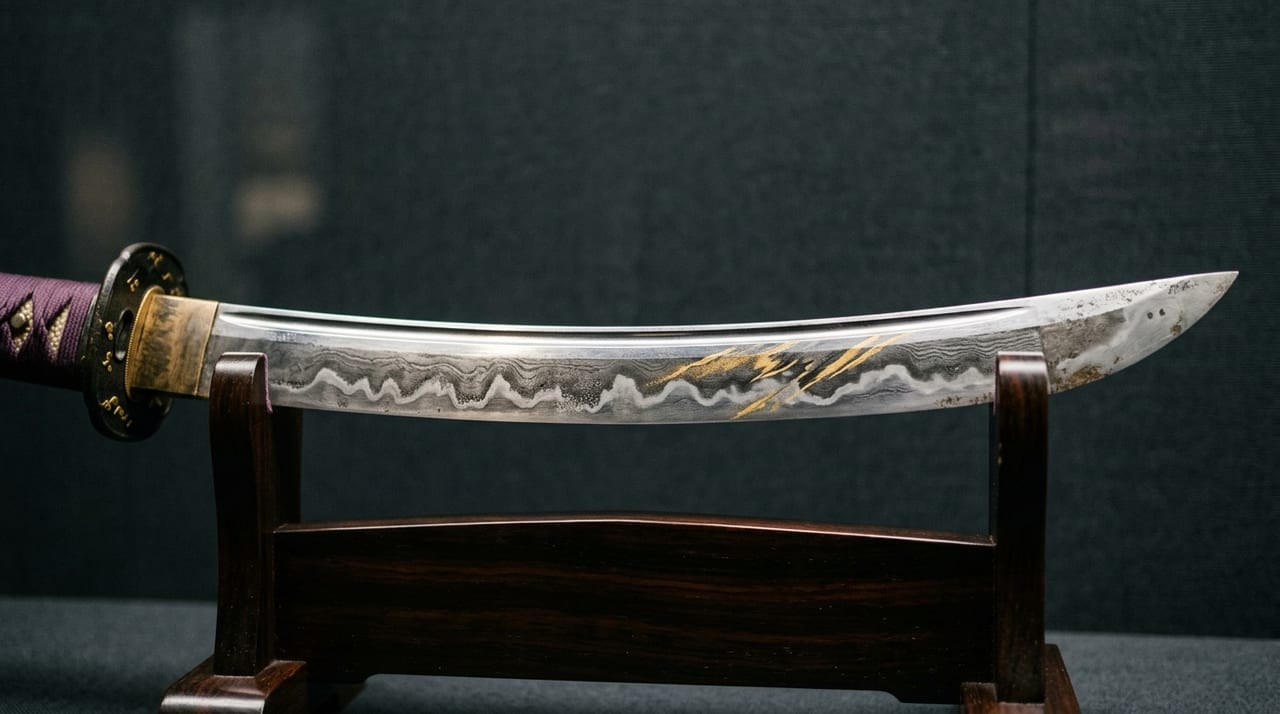
Jizō Yukihira is a tachi forged by Yukihira, also known as Bungo Yukihira, who worked in Bungo Province (present-day Ōita Prefecture) during the late Heian period and stands as one of the supreme swordsmiths of ancient Kyushu. The name "Jizō" derives from the carved image of the bodhisattva Jizō (Sanskrit: Kṣitigarbha) incised into the body of the blade, a practice that imbued the sword with sacred Buddhist protective power. The tachi's most arresting quality is the elegance of its curvature — a flowing koshi-zori that embodies the refined aesthetic sensibility of the Heian aristocratic culture in which the sword was born. The hamon is a quiet, narrow suguha accented by uchinoke passages and delicate ko-ashi, creating subtle visual movement along its length. The jigane is a tightly packed ko-itame grain revealing the density and discipline of the smith's forging. On the mune (spine) side of the blade, an image of Jizō Bosatsu is rendered in high relief through sophisticated metalwork chiseling. Jizō is the bodhisattva who descends into all six realms of existence to guide souls toward salvation, and warrior tradition held that enshrining such an image in a blade would comfort the spirits of the fallen on the battlefield and protect the living in combat. The tang retains a clear "Yukihira" signature, a testament to the harmony of supreme technical mastery and sincere religious devotion that defined the finest swords of the age.
Legends & Stories
The night a certain warrior first held this sword, Jizō Bosatsu appeared in his dream and declared, "This blade guards the living and guides the dead." From that time on it was venerated as a protecting sword for warriors marching to battle, and a custom spread among samurai households of venerating the carved Jizō on the blade before departing for the front.
Related Famous Swords
同田貫正国
Multiple official designationsDōtanuki Masakuni
Dōda-tsuruba Masakuni (Higo Dōda-tsuruba School)
肥前忠吉
Important Cultural Property • Important Sword (multiple works)Hizen Tadayoshi
First Hizen Kuni Tadayoshi
一期一振
Gomotsu (Imperial Collection)Ichigo Hitofuri
Awataguchi Yoshimitsu
織田信長の愛刀
National Treasures and Important Cultural Properties (multiple)Oda Nobunaga's Beloved Sword
Awataguchi Tōshirō, Samonji, Yukimitsu, Hasebe (respective smiths)