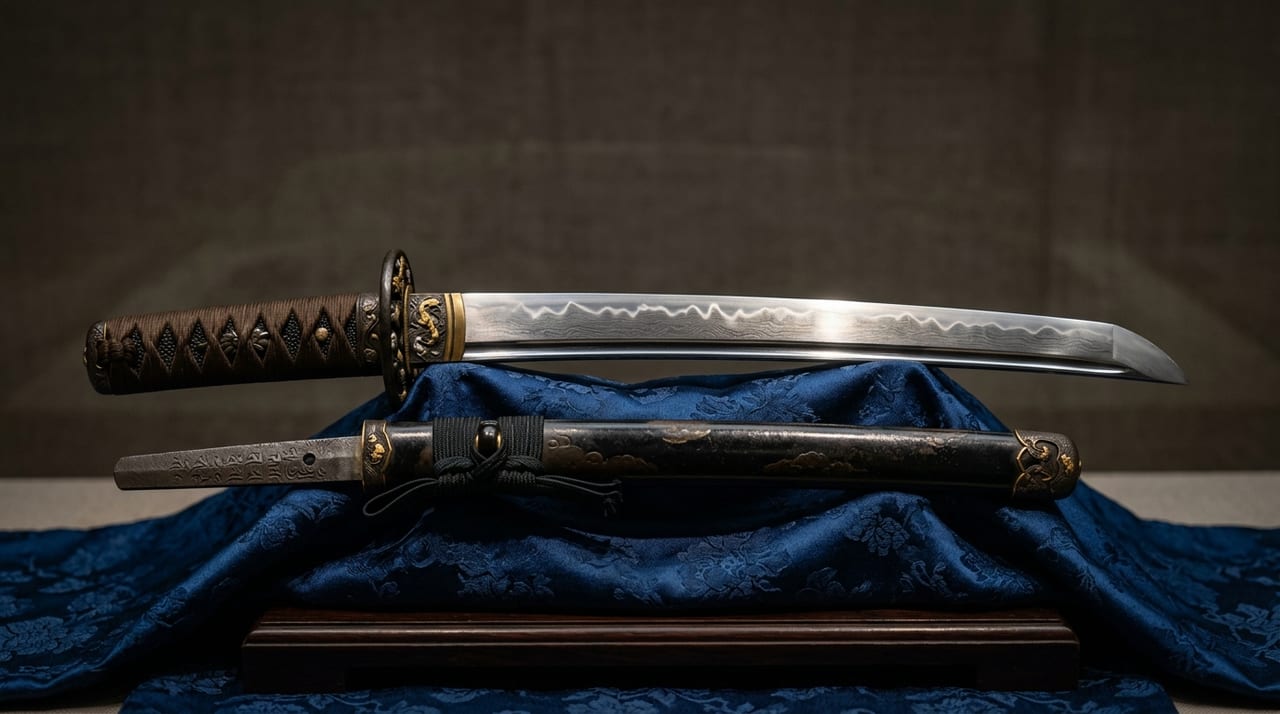
 * Image is for illustrative purposes only.
Jizō Masamune
地蔵正宗
Also known as: Jizō Masamune—Treasured Blade of Soshu Tradition from the Maeda Family Collection
Description
Overview of the Blade
Jizō Masamune is a tanto forged in the late Kamakura Period by Okazaki Masamune, who is regarded as the founder of the Soshu tradition and the greatest master swordsmith in Japanese sword history, and is counted among the extant tantos known to have been forged by Masamune. The name 'Jizō' derives from Jizō Bodhisattva, and the naming is attributed either to Sanskrit characters or carvings depicting Jizō Bodhisattva on the tang of this tanto, or to its transmission through a temple where Jizō Bodhisattva is the principal deity. With a blade length of approximately 9.5 sun (roughly 29 cm), this is a magnificent tanto that embodies the condensed mastery of the rough yet refined Soshu techniques characteristic of Masamune, compressed into the compact form of the tanto.
The Pinnacle of Soshu-Tradition Tantos
In Jizō Masamune, the ji-gane displays complex layering of itame and masame wood-grain patterns with thick, large particles of ji-nie coating the surface. The hamon features a turbulent midare with waves and interlocking gunome, while the ara-nie—Masamune's signature—with its deep ashi and ha and shimmering nie brilliance, unfolds completely within the intimate scale of the tanto. The rugged beauty characteristic of Soshu tradition is expressed through this compact tanto format, achieving a masterwork that balances both the imposing presence of the tachi and refined precision in a format distinct from the longer blade—earning it high acclaim.
The Profundity of the Jizō Bodhisattva Name
Jizō Bodhisattva is one of the principal bodhisattvas in Buddhism, said to save sentient beings who cycle through the six realms. Particularly revered as a savior in the realm of hell, Jizō Bodhisattva remains one of the most beloved Buddhist deities in Japan today, widely enshrined by roadsides as 'Ojizō-san.' That this tanto, created through the supreme rough technique of the Soshu tradition, bears the name of Jizō Bodhisattva demonstrates how Japanese culture fuses seemingly opposing elements—the compassion of the Buddha and the cutting edge of a weapon—deeply within the art of the Japanese sword.
Transmission to the Maeda Family and Provenance
Jizō Masamune is said to have been transmitted to the Maeda family, daimyo of Kaga's Million Koku fief, though detailed records of its current designation and provenance are sparse.
Legends & Stories
Masamune and the Ten Disciples—The Soshu Tradition's Legacy
Okazaki Masamune (dates unknown; active in the late Kamakura Period) left few detailed records of his life, and his life is wrapped in many legends. Masamune is said to have had many accomplished disciples, and is said to have trained ten renowned masters known as the "Jittetsuten"—the Ten Philosophers of Masamune. The Jittetsuten became the core guiding the diverse development of Japanese swords from the Nanboku-chō period onward, and the influence radiating from Masamune, a single genius, persisted throughout the entire history of Japanese swords. As a work directly from Masamune's hand, Jizō Masamune embodies the very source of this great tradition.
Jizō Bodhisattva and the Spirituality of the Blade—The Crossing of Buddha and Weapon
In medieval Japan, the sword was not merely a weapon but was revered as a sacred object possessed of spiritual power. Blades offered to shrines and temples served as vessels for kami and Buddhas, believed to bring divine protection. Behind the naming of Jizō Masamune lies a religious context—the blade's connection to devotion to Jizō Bodhisattva. The compassion of Jizō Bodhisattva, who saves sentient beings even from the suffering of hell, and the essential nature of the sword to cut with sharpness—this fusion of seemingly contradictory elements reveals the deep spiritual complexity inherent in Japanese sword culture, and Jizō Masamune is one of the finest blades most vividly embodying this complexity.
Jizō Masamune in the Modern Era—Preservation at the Maeda Ikutoku-kai Foundation
Following the Meiji Restoration and the dissolution of samurai culture, many treasured blades of daimyo families were dispersed, but the sword collection of the Maeda family has been safeguarded by the Maeda Ikutoku-kai Foundation. Many celebrated blades transmitted through the Maeda lineage continue to be carefully preserved and passed down by this Maeda Ikutoku-kai. Jizō Masamune—forged by a master craftsman of the Kamakura Period, bearing the name of a Buddha, and safeguarded continuously by the Kaga daimyo family—stands as one of the highest cultural treasures of Japan, maintaining its perfect form even after more than seven hundred years.