 * Image is for illustrative purposes only.
Inari Masamune
稲荷正宗
Also known as: Inari Fox Horimono Masamune
Description
Inari Masamune — Overview: The Sacred Fox Carving Dwelling upon the Tang
Inari Masamune is a sword forged by the hand of Sōshū Masamune, the supreme master swordsmith in the history of Japanese swords, and is transmitted as a work of Masamune. Active in Kamakura, Sagami Province, from the late Kamakura period through the early Nanboku-chō era (first half of the 14th century), Masamune is said to have been a student of Shintetsugo Kunimitsu and stands renowned as the completer of the Sōshū-den tradition. The defining characteristic of this blade lies in the carving of an Inari shrine fox (horimono) executed upon the tang (nakago), and from this spiritually efficacious design, it has been given the name "Inari Masamune" or "Inari Kitsune-bori Masamune."
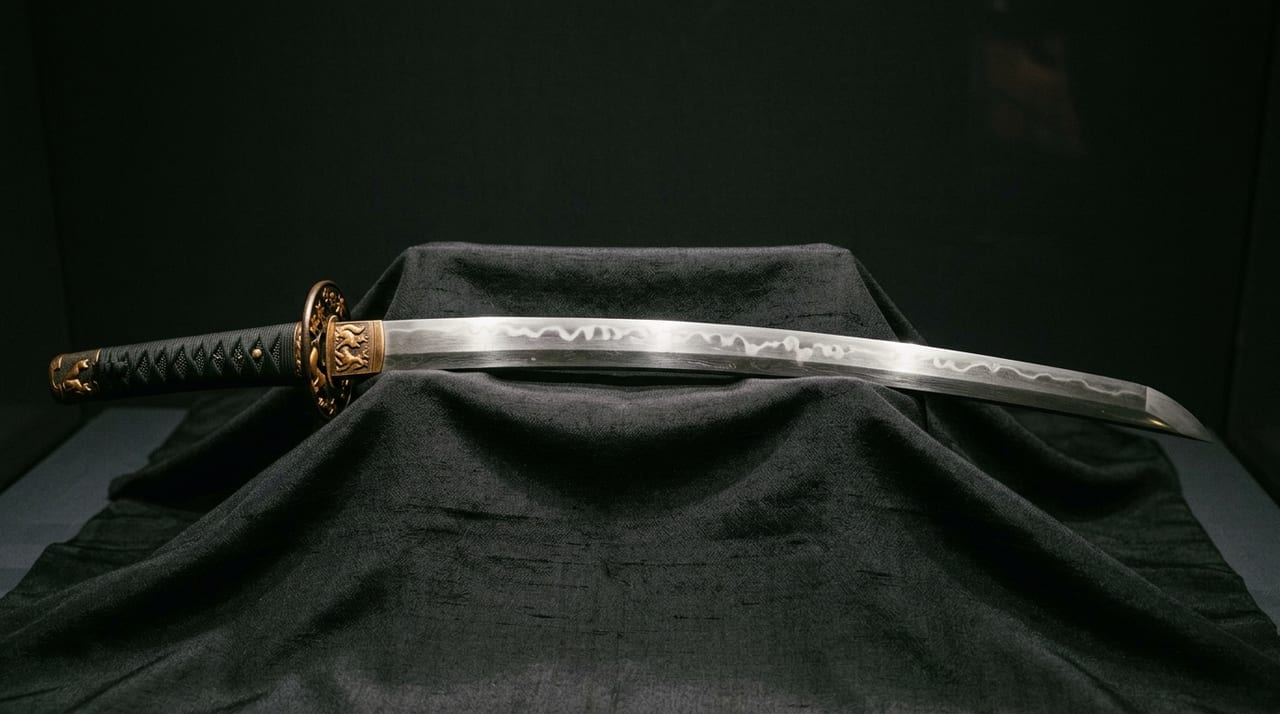
The blade length is approximately 70 centimeters and displays Masamune's characteristic bold and imposing form (sugata). The hamon exhibits a nie-deki irregular blade pattern (midareba) with a bright and keen nioi-guchi. The blade surface features abundant ashi and yō interspersed throughout, with sunagashi and kinsuji dancing at various points along the cutting edge. The jigane displays well-forged itame-hada with chikei flowing vertically and horizontally, and thick ji-nie adhering to the surface, attesting to the superior refinement of the tamahagane steel. The bōshi curves and returns in a small rounded form; the kissaki assumes a somewhat inokubi character, conveying resolute strength. While these elements exemplify Masamune's typical mature style, the singular addition of the Inari carving lends this blade an individuality that sets it apart from other renowned Masamune works—such as Honjō Masamune, Hyūga Masamune, Ishida Masamune, and Fudō Masamune.
Records indicate that during the Edo period, this blade passed into the possession of the Tokugawa shogunal house or one of the Three Houses (Gosanke), where it was treasured as a prized military heirloom. Reliable records regarding its current designation and provenance are scarce. The fox carving, representing the messenger of Inari deity, transmits to the present day the faith of medieval warriors who sought divine protection upon their weapons. As a masterwork in which Masamune's technique and spirituality converge, Inari Masamune stands as a notably significant presence in the history of swords.
Legends & Stories
The Spirit Fox Dwelling in the Tang — Protection of the Inari Deity
The name "Inari Masamune" originates from the image of a fox engraved on the sword's tang. According to legend, when Masamune forged this blade, a white fox—a messenger of the Inari deity—appeared at his smithy and watched over the flames of the forge. Sensing the divine fox's blessing, Masamune carved the fox's likeness into the tang upon completion as an expression of gratitude. This horimono was believed to be not mere decoration, but a symbol of sacred power dwelling within the blade itself.
During the Edo period, one Tokugawa retainer who possessed the sword recounted that on the eve of a campaign, a white fox appeared in his dream and declared, "Bear my form with you. The blade shall guard you." The warrior survived a fierce battle unscathed and extolled the miraculous protection of Inari Masamune. Another tale tells that when stored in the sword vault, the fox carving would emit a faint glow on nights of the full moon, astonishing the guards on duty.
Uniting Inari worship with reverence for the sword, this blade was venerated as a bringer of both martial fortune and commercial prosperity—a "sword of good fortune." Even today, the spirit fox carving inspires quiet awe in those who behold it, and Inari Masamune endures as a singular masterpiece in which Masamune's artistry and religious devotion are inseparably fused, shining with a unique brilliance in the cultural history of Japanese swords.