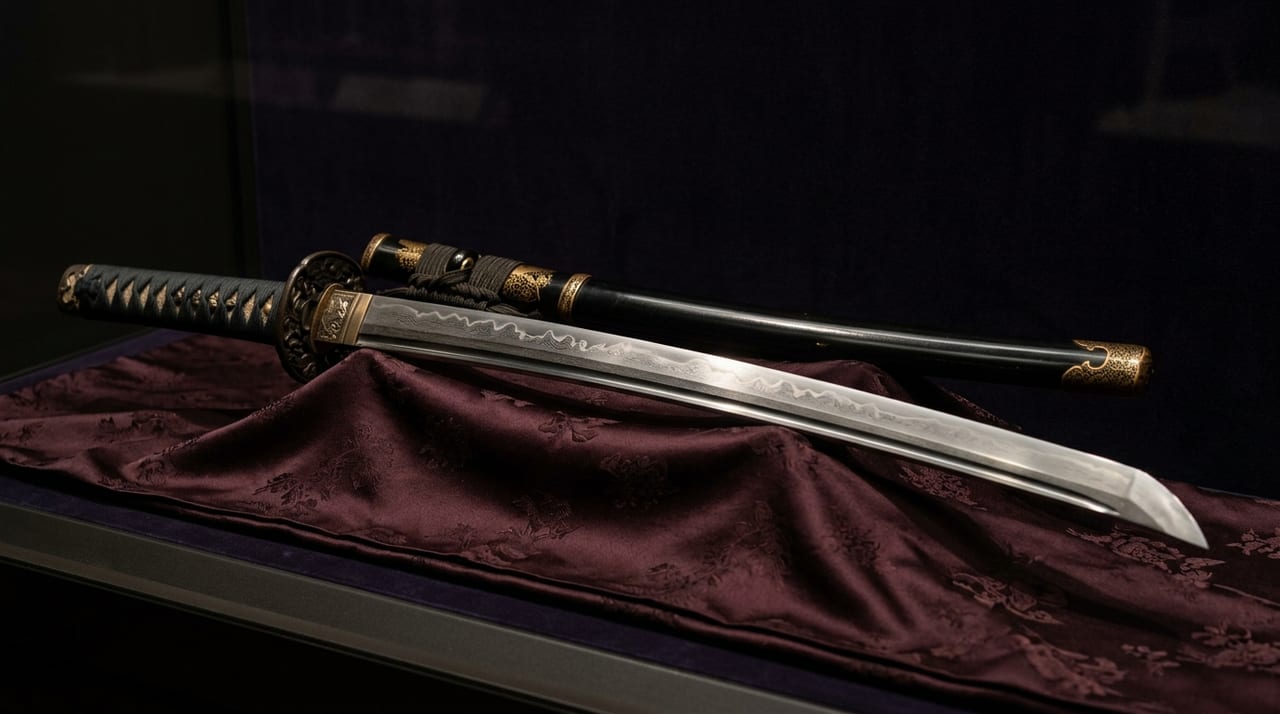
 * Image is for illustrative purposes only.
Hyogo Moriie
兵庫守家
Also known as: Hyogo Moriie; Tachi signed Bizen no Kuni Osafune ju Moriie
Description
The Smith Moriie
Moriie is said to have worked from around the Kencho era (1249-1256) in Hatakeda village of Bizen Province (present-day Hatakeda, Bizen City, Okayama Prefecture), and is regarded as the founder of the Bizen Hatakeda school. He was one of the master smiths who sustained the golden age of Bizen blades, and is known for the unusual number of surviving fine works: more than ten tachi signed Moriie are designated Important Cultural Properties.
The Name "Hyogo Moriie"
This tachi bears the signature "Bizen no Kuni Osafune ju Moriie" and has been handed down under the name Hyogo Moriie. It is designated an Important Cultural Property and is held today by The Tokugawa Art Museum in Nagoya. Moriie is said to have lived first in Hatakeda village and later in Osafune village, and although he is the representative smith of the Hatakeda school, on this tachi he signed himself as a resident of Osafune.
Provenance to the Tokugawa Art Museum
According to Edo-period equipment records of the Owari Tokugawa house, this tachi is presumed to have been the personal sword of Tokugawa Yoshinao, the ninth son of Ieyasu and first lord of the Owari Tokugawa house. It has remained in the Owari Tokugawa collection ever since and is held today by The Tokugawa Art Museum.
Position within the Bizen Tradition
The Hatakeda school arose in Bizen alongside the Fukuoka Ichimonji and Osafune schools, and is characterized by robust tachi shapes and flamboyant temper patterns. Moriie's work exemplifies the Bizen tradition, and many of his blades entered daimyo collections and survived to the present in fine condition.
Legends & Stories
According to Edo-period equipment records of the Owari Tokugawa house, this tachi is presumed to have been the personal sword of Tokugawa Yoshinao, first lord of the Owari Tokugawa house — one of the Three Tokugawa Houses. The origin of the name "Hyogo Moriie" itself remains unclear, but the blade has been carefully preserved to the present day as a sword associated with the first head of that senior branch of the Tokugawa family.
Related Famous Swords
姫鶴一文字
Important Cultural PropertyHimetsuru Ichimonji
Ichimonji School (Bizen)
同田貫正国
Kumamoto Prefecture Important Cultural Property (a Masakuni blade held by Honmyō-ji), among othersDōtanuki Masakuni
Dōtanuki Masakuni (Higo Dōtanuki school)
毛抜形太刀
National Treasure / Important Cultural Property (multiple designated examples)Kenuki-gata Tachi
Unknown (Heian period)
一期一振
Gomotsu (Imperial Collection)Ichigo Hitofuri
Awataguchi Yoshimitsu