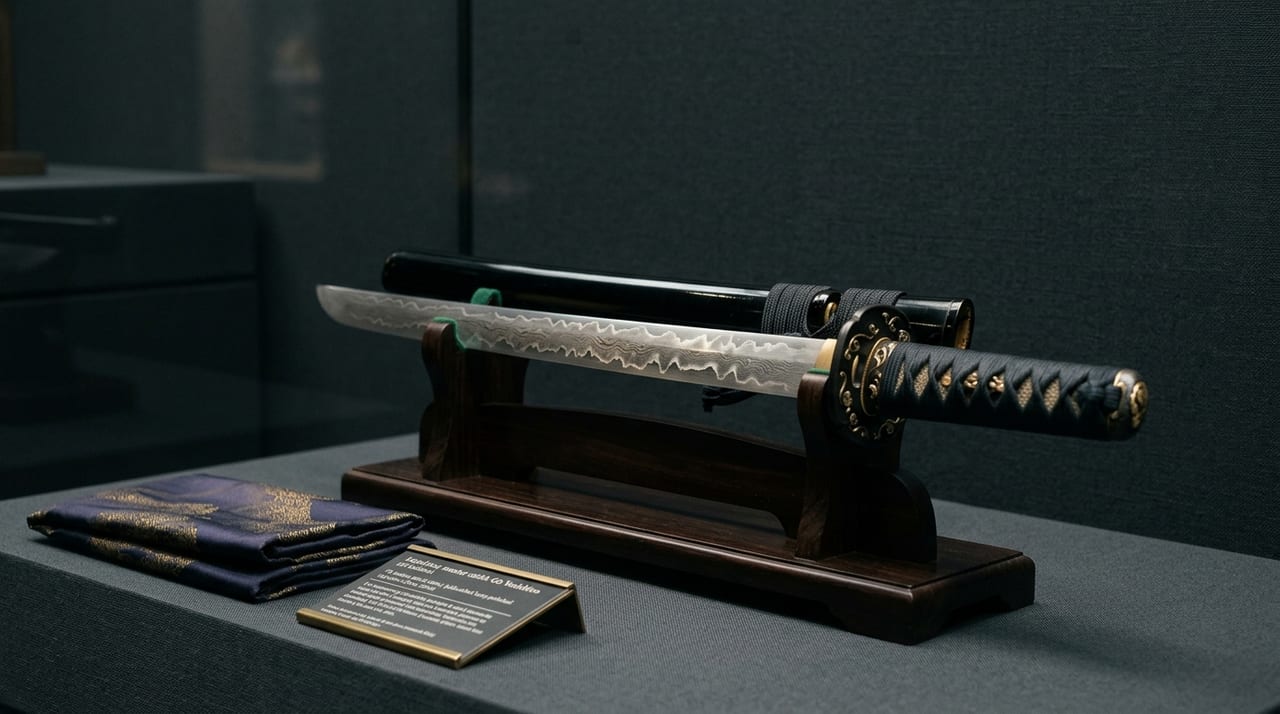
 * Image is for illustrative purposes only.
Echizen Sadamune
越前貞宗
Also known as: Sadamune of Echizen — Tantō by Sōshū Sadamune
Description
Echizen Sadamune is a tantō forged by Sadamune (Hikoshirō Sadamune), the successor to Masamune, the great master of the Sōshū tradition, and is designated an Important Cultural Property as a distinguished meibutsu (named sword) transmitted through generations in a daimyō house of Echizen Province (present-day Fukui Prefecture). The name "Echizen Sadamune" derives from this tantō's transmission within an Echizen daimyō house, with the place name becoming established as the meibutsu name.
Sadamune (dates of birth and death unknown; active in the first half of the 14th century) lived in Kamakura as the legitimate heir or disciple of Sōshū Masamune, inherited the Sōshū tradition, and established an independent style of the first rank. He is cited among the preeminent disciples or successors of Masamune representing the Sōshū tradition, holding an assured position in sword history as "Masamune's successor." In contrast to Masamune's fierce nie, Sadamune is characterized by a calmer, more refined nie, and established a beauty distinct from Masamune's through the elegance of his hamon and the clarity of his jigane.
The blade of Echizen Sadamune displays the typical Sadamune tantō style: moderately broad mihaba, hira-zukuri construction, somewhat thin kasane, and a refined, subtle uchi-zori. The hamon is centered on gunome or ko-notare, displaying a calmer, more ordered nie-deki than Masamune. The nie is fine, refined, and even, with the luminosity of the ha-edge soft and beautiful. The jigane presents densely packed itame-hada with even, delicate ji-nie and a beautiful surface. This work is unsigned—Sadamune is said not to have left any signed works—and has been authenticated as a representative example of Sōshū Sadamune.
After being transmitted from the old Echizen daimyō house through the modern cultural property designation process into private ownership, it has been widely recognized as a masterwork of Sōshū Sadamune through exhibitions and public displays.
Legends & Stories
The legends surrounding Echizen Sadamune begin with a mysterious account of how this tantō came to be transmitted in Echizen. During the turmoil of the Northern and Southern Courts period (mid 14th century), a certain warrior who governed Echizen is said to have visited Sagami Province and called upon Sadamune's workshop, requesting: "I wish to commission a single tantō of supreme quality." Sadamune was moved by this warrior's sincerity and warrior caliber, and is said to have forged with his utmost skill "the one blade of which he was most proud" — and gave it to the warrior. This tantō is said to have come to be called Echizen Sadamune thereafter. Once rooted in Echizen, this tantō developed a faith as the "guardian sword of Hokuriku," and the warrior houses of Echizen are said to have enshrined this Sadamune as the guardian deity of their households. The warriors who endured the harsh winters of Hokuriku saw in this tantō — "appearing tranquil, yet harboring intense fierceness within" — a mirror of their own bushidō, and handed it down with care through the generations. In the world of sword appraisal, it is said that "Sadamune's tantō has achieved a quiet perfection that sublimates Masamune's ferocity one level higher," and Echizen Sadamune has been spoken of as the exemplar of that "quiet perfection." The blood of Masamune is said to flow within its serenity, and it is handed down with the words of an appraisal philosophy: "The essence of Masamune resides in Sadamune; the essence of Sadamune resides in Echizen Sadamune."