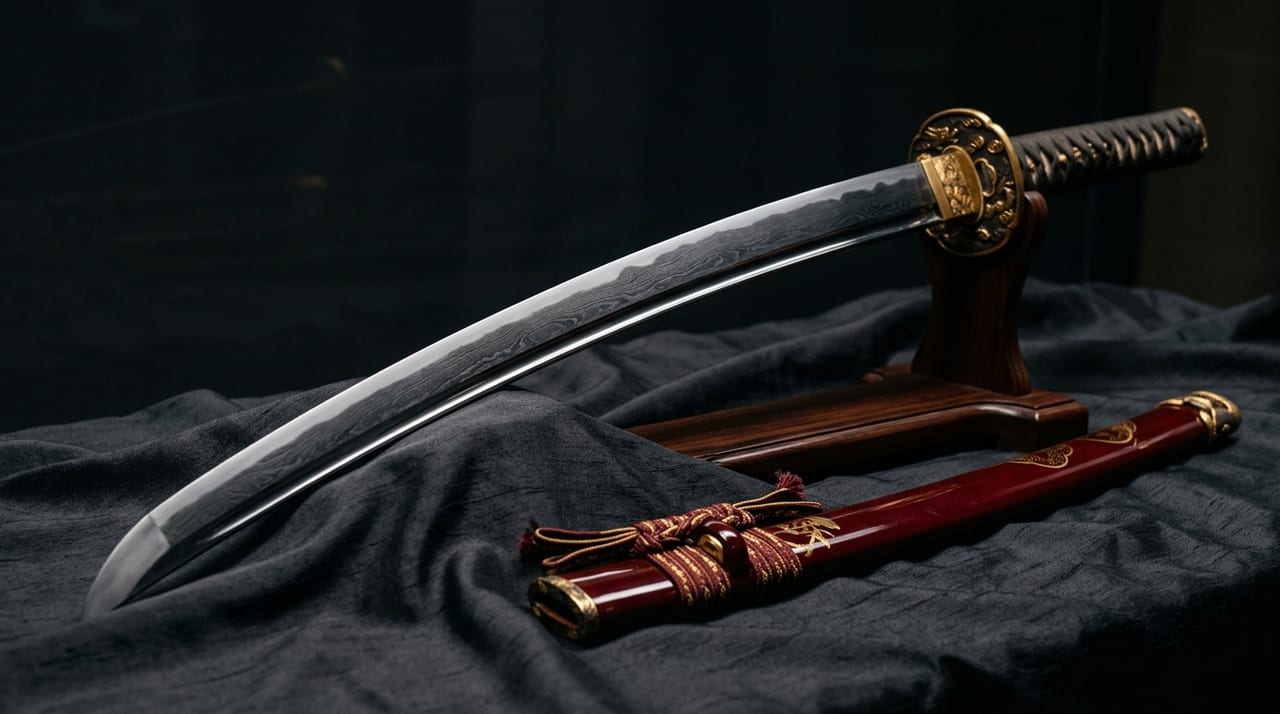
 * Image is for illustrative purposes only.
Chiyoganemaru
千代金丸
Also known as: Chiyoganemaru (Royal Sword of the Ryukyu Kingdom)
Description
Chiyoganemaru is a tachi passed down through generations by Ryukyuan Kingdom monarchs, occupying a uniquely significant position among Japanese swords as a National Treasure with Ryukyuan provenance. The blade measures approximately 72 centimeters in length, is unsigned with flat-surface construction (hirazukuri), transmitted under the name "Chiyoganemaru," and bears the characters "大世" carved on the pommel. The name "Chiyoganemaru" is interpreted in Ryukyuan tradition as meaning "eternal golden circle." The hamon is founded on a quiet straight temper line (suguha), with fine, calm nie pervading the entire hardened zone. The jigane exhibits tightly packed itame grain in dignified refinement. Regarding the sword's origin, scholarly opinion remains divided: some attribute it to the Yamato tradition, while others ascribe it to smiths who flourished in Ryukyu itself, and discussion continues among researchers. Throughout the era of Shō dynasty rule over the Ryukyuan Kingdom, this blade was treasured as a symbol of royal authority, and after surviving the Satsuma invasion of Ryukyu in 1609, it continued to be transmitted as a precious sword. Following the Meiji Restoration, the blade was transferred to mainland Japan and is now held by the Naha City Museum of History, designated a National Treasure as part of the "Ryukyuan Royal Shō Family-related Materials" collection. Its unprecedented history as a Japanese sword that served as the emblem of Ryukyuan royal authority further elevates its significance as a singular presence in Japanese sword history.
Legends & Stories
Chiyoganemaru is deeply intertwined with Ryukyuan mythology. One tradition holds that the sword descended from heaven to Shō Hashi, the founder of the unified Ryukyu Kingdom, making it a divine weapon—a 'spirit sword'—enshrined in a sacred space within Shuri Castle. It was believed that the king who girded Chiyoganemaru would never be wounded in battle, and each successive Ryukyuan monarch is said to have offered ritual veneration to the blade before any military campaign. Even during the Satsuma invasion of 1609, the sword survived unharmed, giving rise to the enduring legend that 'the sword protected the soul of Ryukyu.'
Related Famous Swords
同田貫正国
Multiple official designationsDōtanuki Masakuni
Dōda-tsuruba Masakuni (Higo Dōda-tsuruba School)
肥前忠吉
Important Cultural Property • Important Sword (multiple works)Hizen Tadayoshi
First Hizen Kuni Tadayoshi
一期一振
Gomotsu (Imperial Collection)Ichigo Hitofuri
Awataguchi Yoshimitsu
織田信長の愛刀
National Treasures and Important Cultural Properties (multiple)Oda Nobunaga's Beloved Sword
Awataguchi Tōshirō, Samonji, Yukimitsu, Hasebe (respective smiths)