 * Image is for illustrative purposes only.
Atsuta Shimazu-Dono Kuniyuki
熱田島津殿国行
Also known as: Shimazu-Dono Kuniyuki, a Yamato-tradition masterpiece at Atsuta Shrine
Description
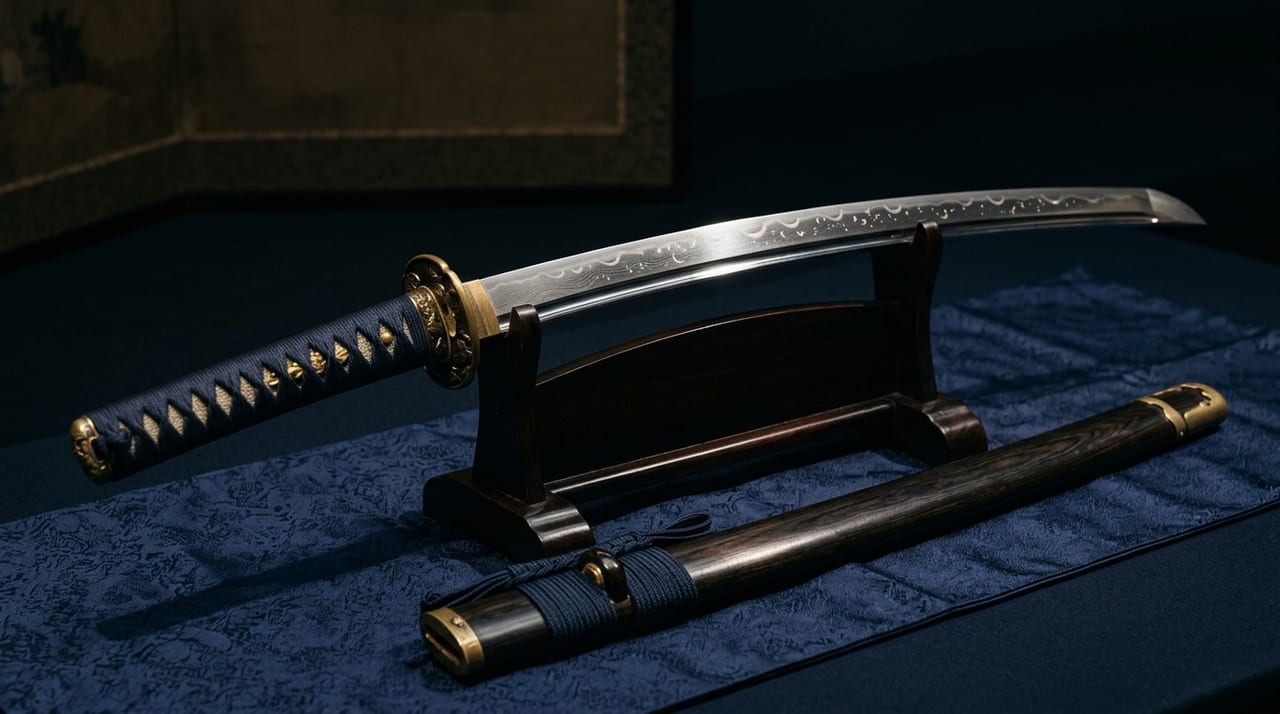
Atsuta Shimazu-Dono Kuniyuki is a tachi forged by Kuniyuki, one of the foremost smiths of the Yamato tradition (Yamato-den). Enshrined at Atsuta Jingū, it bears the prefix "Atsuta" in its name, while the designation "Shimazu-Dono" (Lord Shimazu) reflects its provenance from the Shimazu clan, the ruling house of Satsuma domain. According to tradition, it was dedicated to Atsuta Jingū during the Sengoku period — when the Shimazu were prosecuting their campaign to unify Kyushu — by the Shimazu lord himself or a senior retainer as an offering for lasting martial fortune.
The Yamato tradition is one of the five great schools of Japanese swordsmithing (Yamashiro, Yamato, Bizen, Sōshū, and Mino), rooted in the ancient province of Yamato (present-day Nara Prefecture). Within the Yamato tradition, the Kuniyuki school is particularly celebrated for its refined, dignified style. The school's hamon typically features nie-based suguha (straight temper line) or ko-midare, and the jigane shows a finely packed itame-hada with meticulous forging. This tachi embodies all of these hallmarks: the hamon is predominantly suguha, interspersed with occasional ko-gunome and ko-chōji, with fine, even nie forming a deep and lustrous nioi-guchi. The jigane presents a closely packed itame-hada with fine, uniform ji-nie rising throughout, creating a clear and composed surface.
The blade length is typical for the Sengoku period (approximately 69–70 cm), with a moderate tori-zori well suited for both actual combat and ceremonial use. While the kasane near the habaki-moto is thick and sturdy, the natural tapering toward the kissaki creates an elegant silhouette — a testament to the refined aesthetic sensibility of warriors who never lost their appreciation for artistry even amid the tumult of civil war.
Atsuta Jingū has been venerated since ancient times as one of Japan's three great shrines and is closely associated with swords, enshrining the Kusanagi-no-Tsurugi, one of the Three Imperial Regalia. Blades dedicated to this sacred precinct are believed to acquire a special spiritual power, and Shimazu-Dono Kuniyuki has been preserved with the utmost reverence to this day as a relic possessing religious and cultural significance far beyond its value as a mere masterpiece sword.
Legends & Stories
The legend most widely associated with Atsuta Shimazu-Dono Kuniyuki tells of Shimazu Yoshihiro visiting Atsuta Jingū on the eve of his departure for the Korean campaigns (Bunroku-Keichō no Eki, 1592–1598) and dedicating this Kuniyuki tachi as an offering for victory in battle and the safe return of his warriors.
According to the tradition, on the night before the dedication, Yoshihiro placed the tachi on the floor before him and spent the night in prayer. Just before dawn, the blade's hamon began to glow with a pale blue-white light, and a single thin ray of that light stretched toward the main shrine hall. Yoshihiro interpreted this as a sign that the divine spirit of the Kusanagi-no-Tsurugi had taken up residence in the blade of the Kuniyuki — a promise of martial protection. Having received this divine oracle, Yoshihiro went on to achieve a miraculous withdrawal under desperate circumstances in the fierce engagements that followed — most notably the Battle of Noryang (1598) — and his retainers passed down the account that "the divine protection of Atsuta was with us."
Furthermore, records attributed to priests serving at Atsuta Jingū during the Edo period contain accounts of the sword box housing this blade rumbling and vibrating on its own during the night in certain years, only for a great conflagration or epidemic to strike the following day. The notion of a blade sounding a warning through its divine power is deeply rooted in the cult of divine swords at Atsuta Jingū, intertwined with the legend of the Kusanagi-no-Tsurugi itself, and Shimazu-Dono Kuniyuki has been passed down through the generations as a tangible embodiment of that sacred tradition.