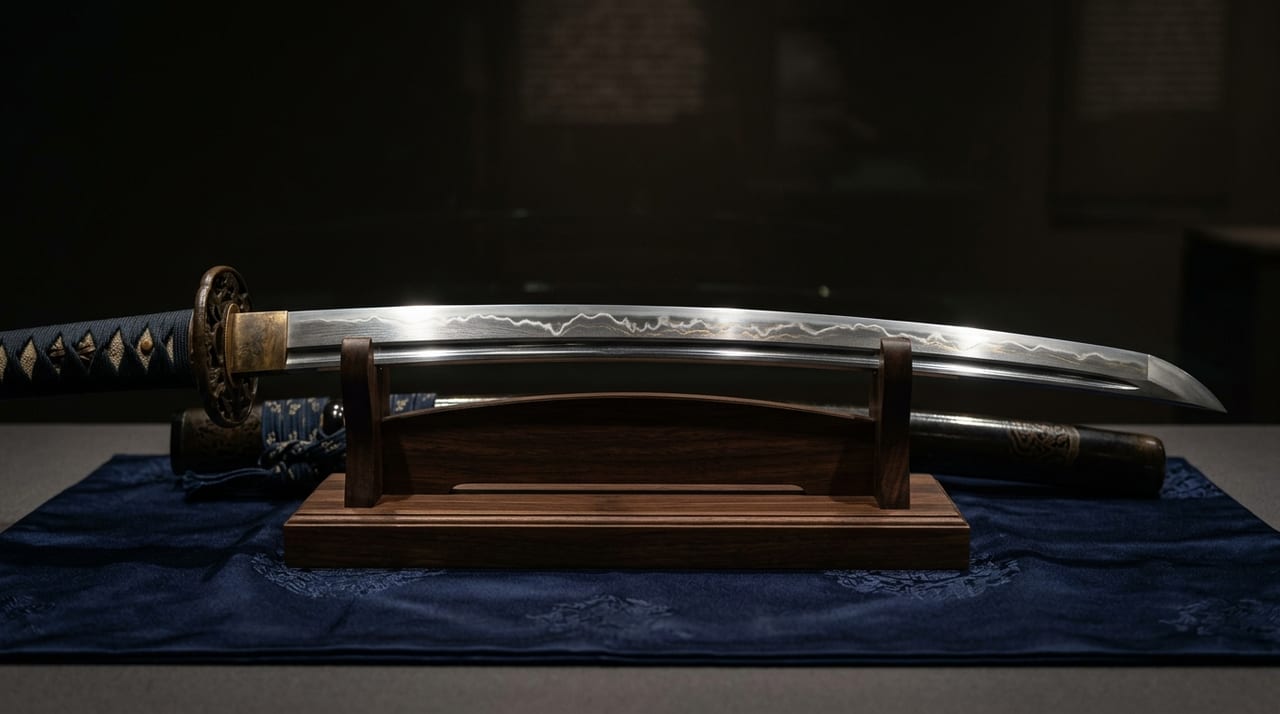
 * Image is for illustrative purposes only.
Asaarashi
朝嵐
Description
Asaarashi is an uchigatana by the swordsmith Katsumitsu, who was active in Osafune, Bizen Province (present-day Setouchi City, Okayama Prefecture) in the late Muromachi period, and is a famous sword certified as an Important Art Object (Jūyō Bijutsuhin).
Katsumitsu was a leading master smith of Sue-Bizen (the Bizen Osafune of the late Muromachi period) and is known as a renowned Osafune smith alongside his contemporary Munemitsu and others. The Bizen tradition, one of the five traditions (gokaden), has produced famous swords since ancient times. In the Muromachi period, demand for practical swords was high on the eve of the Sengoku period, an age of frequent armed conflict. Katsumitsu's swords display a jigane of finely packed ko-itame typical of the Bizen tradition, and he excelled at works with many hataraki, with a hamon of gunome-midare mixed with chōji.
The name Asaarashi is considered to have been coined by likening it to the force of a storm blowing across at dawn, and it is an appellation that shows the dignity befitting a meibutsu. Publicly available information about the provenance of its collection is limited.
The Important Art Object designation is based on certification under the Law Concerning the Preservation of Important Art Objects, enforced in Shōwa 8 (1933). Although it differs from the current Important Cultural Property, some swords certified as Important Art Objects at the time were designated as Important Cultural Property under the postwar Law for the Protection of Cultural Properties. Asaarashi has remained an Important Art Object to the present day and is known to sword researchers as a famous sword of Sue-Bizen.
Legends & Stories
The origin of the Asaarashi appellation and its provenance are not known for certain.
Related Famous Swords
姫鶴一文字
Important Cultural PropertyHimetsuru Ichimonji
Ichimonji School (Bizen)
同田貫正国
Kumamoto Prefecture Important Cultural Property (a Masakuni blade held by Honmyō-ji), among othersDōtanuki Masakuni
Dōtanuki Masakuni (Higo Dōtanuki school)
毛抜形太刀
National Treasure / Important Cultural Property (multiple designated examples)Kenuki-gata Tachi
Unknown (Heian period)
一期一振
Gomotsu (Imperial Collection)Ichigo Hitofuri
Awataguchi Yoshimitsu