New Arrivals — Browse our catalog for the latest authentic Japanese sword arrivals. Browse →
Intercalary 8th month, Tenshō 13 (1585) and 9th month, Keichō 5 (1600)
Ueda Castle, Shinano Province (present-day Ueda City, Nagano Prefecture)
Forces
Sanada Forces
Tokugawa Forces
About 7 min read
The Battles of Ueda are the collective name for the two battles fought on two occasions at Ueda Castle in Shinano Province: in Tenshō 13 (1585) and in Keichō 5 (1600). In both, a small force led by Sanada Masayuki repulsed Tokugawa armies several to more than ten times its size, and the battles are remembered as the most dramatic defensive battles in Sengoku history.
Sanada Masayuki (1547–1611) was a clever commander who rose to prominence while serving the Takeda clan of Kai. Serving Takeda Shingen from a young age, he was reportedly trusted by Shingen to the point of being called 'my two eyes,' and after Shingen's death he remained a core figure in the Takeda clan. After the fall of the Takeda clan in Tenshō 10 (1582), Masayuki maintained his independence as a minor lord in Ueda, Shinano, positioned between the great powers of Oda, Uesugi, Tokugawa, and Hōjō. Through outstanding diplomacy and scheming, he continued to protect his house.
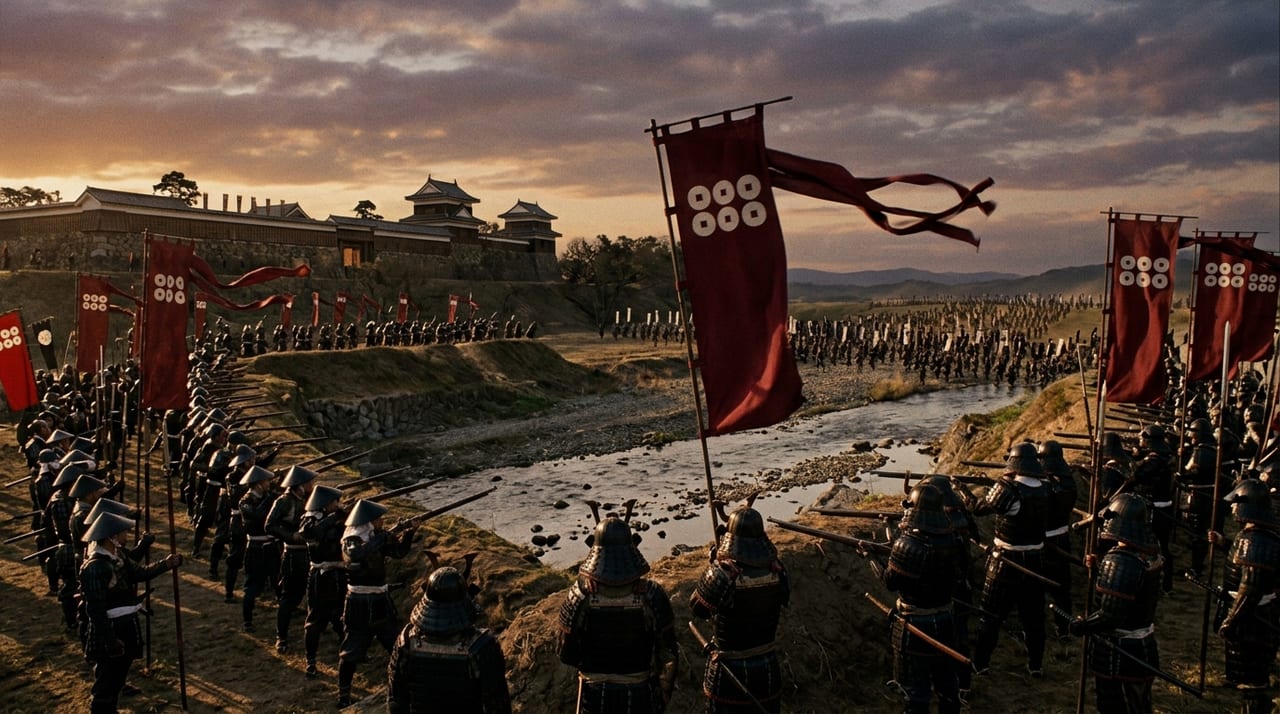
Ueda Castle was a flatland castle (hirajiro) built by Masayuki in Tenshō 11 (1583). It was a strong castle that made skillful use of the Amagafuchi cliffs, a steep bluff, and the flow of the Chikuma River. Its defining feature was a structure that was 'hard to attack and easy to defend.'
The direct cause of the first battle was a dispute with the Tokugawa over the allegiance of the Sanada family. In Tenshō 13 (1585), Tokugawa Ieyasu demanded that Sanada Masayuki cede his territory of Numata (present-day Numata City, Gunma Prefecture) to the Hōjō clan. Masayuki's refusal triggered the conflict, and the Tokugawa mobilized 7,000 troops to set out to take Ueda Castle.
Taking this opportunity, Masayuki launched a skillful diversionary tactic. After skirmishes outside the castle drew the Tokugawa army to the front of the castle, a detachment he had positioned in advance struck the enemy from the rear and flank. He combined this with a pincer attack in which troops sallied out from the castle's various gates, dealing heavy damage to the Tokugawa army. In this battle, fierce Tokugawa commanders, including Torii Mototada, were driven back, and the besieging army was forced to withdraw.
The second battle is positioned as a prelude to the Battle of Sekigahara in Keichō 5 (1600). Whereas Masayuki and his son Yukimura sided with Ishida Mitsunari's Western Army, the eldest son, Sanada Nobuyuki, who was the son-in-law of Honda Tadakatsu, sided with the Eastern Army. Amid the dramatic split in which father and sons were divided between opposing sides, Masayuki and Yukimura holed up in Ueda Castle.
The main force of the Eastern Army, a 38,000-strong army led by Tokugawa Hidetada, headed for Ueda Castle. Masayuki again reportedly employed godlike strategy and demonic cunning, repeatedly using guerrilla fighting outside the castle, feigned retreats, and surprise attacks to bewilder the Tokugawa army.
Hidetada's great army failed to take Ueda Castle and arrived far too late for the Battle of Sekigahara on the 15th day of the 9th month. Hidetada is said to have been rebuked by Ieyasu at Ōtsu on the 20th day of the 9th month. Sanada Masayuki's defense of the castle was a major event that transformed the strategic map of the Battle of Sekigahara.
The famous emblem of the Sanada clan is the rokumonsen ('six coins') family crest. The six coins represent the fare for crossing the Sanzu River, the river of the underworld, and the crest symbolized the martial spirit of the Sanada clan, which was 'always prepared to die.'
The Battles of Ueda became established in the history of Sengoku battles as the ideal model of a small force repulsing a great army. Sanada Masayuki's name is remembered as that of a clever strategist, and the skill of his defensive battles is still highly regarded today from the perspectives of military history and castle history. Together with Yukimura's heroic death in the Summer Campaign of Osaka, the story of the Sanada clan is a great epic of bushidō carved into the hearts of the Japanese people.
Tokugawa Ieyasu
Tokugawa leader who dispatched forces in the First Battle
Tokugawa Hidetada
Tokugawa Hidetada who besieged Ueda Castle in the Second Battle
Sanada Masayuki
Castle lord and overall commander of the defense
Sanada Yukimura
Masayuki's second son; aided the defense
Sanada Nobuyuki
Masayuki's elder son; sided with the Tokugawa in the Second Battle