New Arrivals — Browse our catalog for the latest authentic Japanese sword arrivals. Browse →
Ninth month (9th–11th), Tenshō 12 (October 12–14, 1584)
Suemori Castle, Noto Province (present-day Hōdatsushimizu, Ishikawa)
Forces
Maeda forces
Sassa forces
About 7 min read
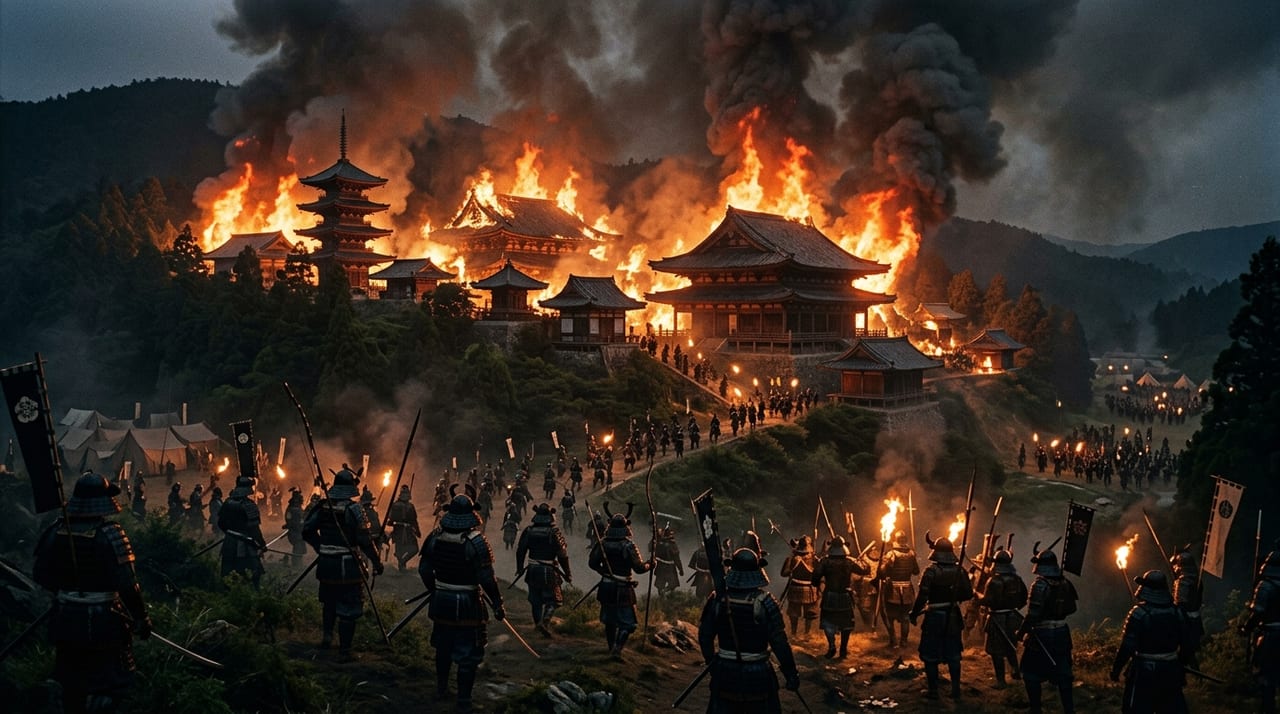
The Battle of Suemori Castle, fought at Suemori Castle in Noto Province from the 9th to the 11th day of the 9th month of Tenshō 12 (1584) (October 12–14 in the Gregorian calendar), was a clash between Maeda Toshiie and Sassa Narimasa over supremacy in Hokuriku, and it is an important battle for the Maeda house.
In Tenshō 12, Hashiba Hideyoshi and the allied forces of Oda Nobukatsu and Tokugawa Ieyasu faced each other at Komaki and Nagakute in Owari. This central confrontation shook the positions of daimyō across the country. Sassa Narimasa, who held Etchū, initially sided with Hideyoshi, but when Hashiba forces struggled at Nagakute, he decided to switch to the Oda and Tokugawa side. As a result, a confrontation with Maeda Toshiie, who ruled the neighboring provinces of Kaga and Noto and sided with the Hashiba side, became unavoidable. Both Narimasa and Toshiie were former retainers of Oda Nobunaga and had once stood side by side as comrades, so their conflict turned into a war that divided Hokuriku in two.
Narimasa first made a surprise attack on Asahiyama Castle, a Maeda stronghold, at the end of the 8th month. On the 9th day of the 9th month, he surrounded Suemori Castle in Noto with a total force of 15,000 men. Suemori Castle was a key point on the highway linking Kaga and Noto. If it fell, Maeda territory would be split north and south, and the Noto powers might turn toward the Sassa side. For Narimasa, it was a strategic move to break apart Toshiie's home province.
The defense of Suemori Castle was led by the castellan Okumura Nagatomi (Sukeemon) and about 300 men, a small force. When fighting began on the 10th day of the 9th month, the Maeda acting castellan (jōdai) Doi Tsugushige was killed in the face of the fierce Sassa assault, and the castle was driven to the brink of falling. Nagatomi is said to have rallied his soldiers and the local people together with his wife, and to have continued a desperate siege defense with his meager forces.
Maeda Toshiie, who received the urgent report at Kanazawa Castle, immediately set out at the head of 2,500 troops. Marching through the night, guided by the farmer Sakurai Saburōzaemon, they pushed along a back road by the coast. At dawn on the 11th day of the 9th month, they launched a surprise attack from behind the Sassa forces that were pressing toward Suemori Castle. Caught between the castle garrison and this pincer attack, the Sassa forces collapsed, and Narimasa retreated to Etchū. Both armies are said to have suffered more than 750 dead.
The successful defense of Suemori Castle became an important turning point in Maeda Toshiie's rise to a daimyō who ruled Kaga, Noto, and Etchū. After this battle, Narimasa shifted to the defensive, and in the following year, Tenshō 13, he surrendered after Hideyoshi's own subjugation campaign against Etchū. Toshiie, meanwhile, took on great weight under Hideyoshi's regime, and as one of the Council of Five Elders, he laid the foundation for the million-koku Kaga domain.
The defense of Suemori Castle, in which a small force held off a large army, is still told in the land of Kaga as a rescue drama built on Okumura Nagatomi's valor and Toshiie's quick decision. The Maeda house later devoted great effort under the Kaga domain to protecting the culture of swords and sword fittings, nurturing the soil in which Kaga metalwork and inlay (zōgan) work developed. The martial tradition that took root in Hokuriku through repeated battles connects to the splendid craft culture of Kaga in the Edo period.