New Arrivals — Browse our catalog for the latest authentic Japanese sword arrivals. Browse →
July 24–25, Keichō 5 (1600)
Shiroishi Castle, Katta District, Mutsu Province (present-day Masuoka-chō, Shiroishi City, Miyagi Prefecture)
Forces
Date Forces
Uesugi Forces (Shiroishi Castle garrison)
About 15 min read
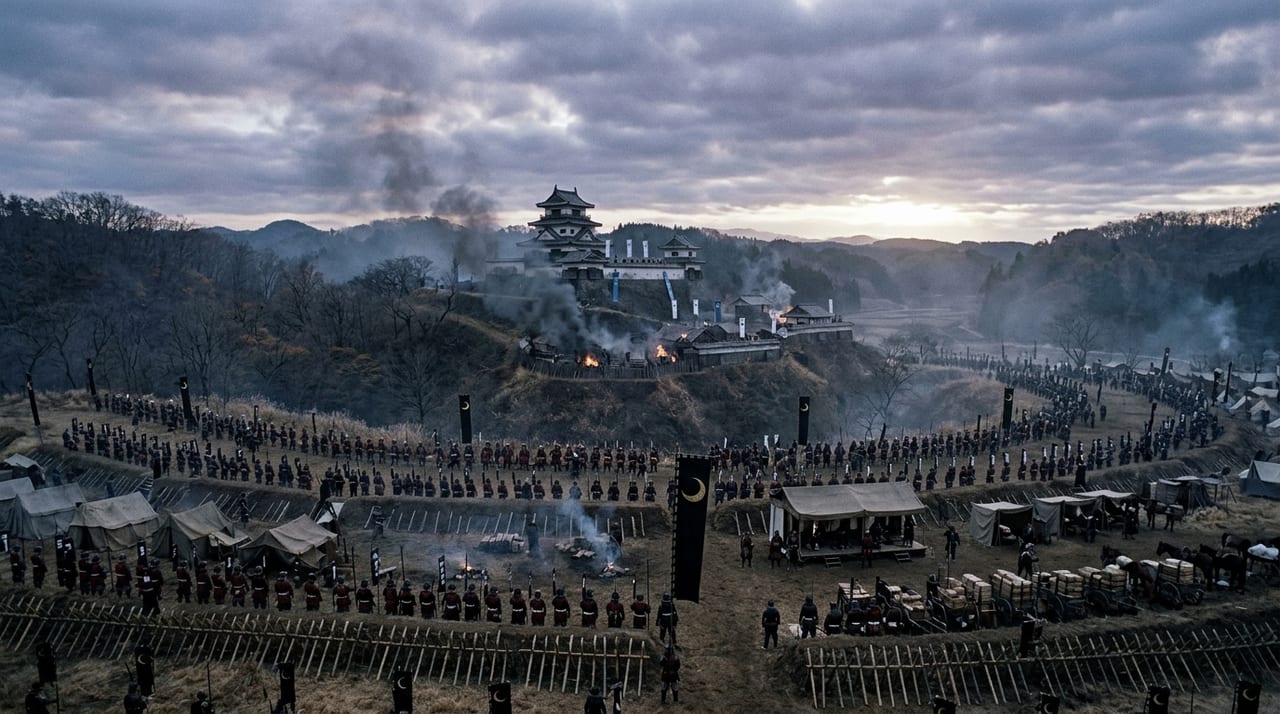
In July of Keichō 5 (1600), fierce fighting broke out at Shiroishi Castle in Katta District, Mutsu Province, between forces led by Date Masamune and the Uesugi garrison defending it. Carried out as part of Tokugawa Ieyasu's campaign against Uesugi Kagekatsu in Aizu, this battle offered Masamune a chance to reclaim territory once under his own rule, while also serving as the opening engagement leading into the later Keichō Dewa Campaign.
In Tenshō 18 (1590), having completed the Odawara Campaign, Toyotomi Hideyoshi carried out the Ōshū Settlement (Ōshū Shioki), confiscating part of Date Masamune's territory on the grounds of his tardy arrival and unauthorized territorial expansion. This cost Masamune the broad lands of Aizu and the Sendō region, confining him thereafter to a domain centered on Yonezawa. Shiroishi and other castles of southern Ōshū also passed out of Masamune's hands in this process, coming under the control of other daimyo. For Masamune, forced into years of dormancy under Toyotomi rule, recovering his former territory was a long-cherished ambition, and Ieyasu's Aizu campaign of Keichō 5 presented a once-in-a-lifetime chance to achieve it by force of arms.
Shiroishi Castle is said to have been built around Bunroku 1 (1592) and originally lay within the Date sphere of influence. However, in Tenshō 18 (1590), as part of Toyotomi Hideyoshi's Ōshū settlement, Date Masamune had part of his territory confiscated, including the area around Shiroishi. In Keichō 3 (1598), when Uesugi Kagekatsu was transferred by Hideyoshi's order to become lord of Aizu with a domain of 1.2 million koku, Shiroishi Castle was incorporated into his holdings. Kagekatsu appointed one of his senior retainers, Amakasu Kagetsugu, as castellan of Shiroishi, but Kagetsugu himself was mainly stationed at Aizuwakamatsu Castle, leaving the castle's actual defense to his nephew, Tosaka Katsuno, who served as the local deputy. Kagetsugu, originally known as Tosaka Tōemon, had succeeded to the Amakasu family name and lineage, and it is thought that Tosaka Katsuno was entrusted with deputizing as castellan through this family connection. It should be noted that within the Uesugi house there was also a separate senior retainer, Amakasu Kagemochi (Nagashige), celebrated for his exploits at the Battle of Kawanakajima; though the two share a similar name, they belonged to distinct branches of the Amakasu lineage and are often confused, but should be clearly distinguished.
In Keichō 5 (1600), Tokugawa Ieyasu, alleging that Uesugi Kagekatsu harbored rebellious intent, raised an army to subjugate Aizu. Masamune responded to this campaign, joining as part of the Eastern Army and launching an invasion of Uesugi territory from his own domain in the Shinobu region. For Masamune, this expedition was more than mere cooperation with Ieyasu — it was also an opportunity to reclaim, by force, territory he had lost under Toyotomi rule. Drawing on his familiarity with the land around Shiroishi Castle, once under Date control, Masamune devised a careful plan of attack. Ieyasu is also said to have promised Masamune a portion of whatever Uesugi territory was seized in the Aizu campaign — the so-called "Million Koku Pledge" (hyakuman-goku no osumitsuki) — a promise that further fueled Masamune's enthusiasm for the expedition.
On July 24, the Date army closed in on Shiroishi Castle. Masamune set up his headquarters on high ground overlooking the castle and completely sealed off the roads throughout the surrounding area, including Shichigashuku and Kogō, cutting off any possibility of reinforcement or relief from the Uesugi side before launching his attack. This thorough encirclement left Shiroishi Castle completely isolated as it came under assault. Masamune knew the terrain and road network around Shiroishi intimately from his years ruling the area, and he is thought to have built his tactics around exploiting this local knowledge to the fullest, making a rapid conquest possible even with a comparatively small force. Before the fury of the Date onslaught, the castle town and the third bailey went up in flames, and the defensive lines rapidly crumbled.
By the morning of July 25, a single night after the assault began, the Date army had seized nearly the entire castle grounds apart from the main keep. Judging further resistance impossible, Tosaka Katsuno chose to open the gates and surrender. Amakasu Kagetsugu, the titular castellan, never faced the brunt of this attack, having remained stationed toward Aizu. Shiroishi Castle fell to Masamune in little more than a day, and he succeeded in reclaiming a portion of his former domain by force. This rapid fall is thought to owe much to Masamune's meticulous encirclement, but also to circumstances on the Uesugi side: their main strength was tied down defending Aizu and facing Mogami on the northern front, leaving little capacity to send adequate reinforcements to Shiroishi. That the castle fell in barely a day left a strong impression of Masamune's military prowess among the daimyo of Tōhoku, an impression that would carry into his growing influence during the subsequent Keichō Dewa Campaign.
The subsequent history of Shiroishi Castle is inseparably bound up with the sword culture of the Katakura clan, among the most distinguished retainers of the Date house. Building on his recapture of the castle, Masamune granted it from Keichō 7 (1602) onward to his senior retainer Katakura Kagetsuna (Kojūrō), making it a key stronghold guarding the southern edge of the Sendai domain. Even under the shogunate's "One Domain, One Castle" edict, Shiroishi Castle was one of the very few exceptions permitted to survive as a subsidiary stronghold of the Sendai domain — testimony both to the weight the Katakura clan carried within the Date house and to Shiroishi's military importance as a bulwark of Ōshū. Masamune's decisive generalship in the 1600 siege can be seen as having laid the foundation of trust that led to the castle being entrusted to the Katakura family for generations to come. Kagetsuna was renowned for mastery of the eighteen martial arts, particularly as an expert with the bow and sword, and several blades said to include ones bestowed on him by Masamune have been passed down. His son, Katakura Shigenaga, later clashed with Sanada Yukimura at the Siege of Osaka and is remembered in legend for having sheltered Yukimura's children afterward. The southern Ōu region around Shiroishi Castle was also known as a center of swordsmithing, with confirmed records of smiths working under the patronage of the Sendai and Shiroishi domains, including some retained directly by the Katakura family who forged blades in Shiroishi itself. The 1600 siege thus marks the starting point of this long story linking Shiroishi Castle to sword culture.
Masamune's victory at Shiroishi Castle carried significance as an important prelude to the Keichō Dewa Campaign, fought that same year in Dewa Province between Uesugi Kagekatsu and the Eastern Army forces of Mogami Yoshiaki and Date Masamune. Ieyasu, midway through his direct advance on Aizu, learned of Ishida Mitsunari's uprising and hastily turned his army back toward Sekigahara, leaving the Aizu and Dewa fronts in the hands of Tōhoku's Eastern Army commanders, chiefly Mogami Yoshiaki and Date Masamune. Masamune continued afterward to press Uesugi territory in support of Mogami Yoshiaki, a campaign that would culminate in the fierce fighting around Hasedō Castle (the Battle of Hasedō, sometimes called "the Sekigahara of the North"). The fall of Shiroishi Castle, breaking one corner of the Uesugi's southern defensive line, is also considered to have narrowed the Uesugi's strategic options in the subsequent fighting in Dewa. When the main battle of Sekigahara ended in an Eastern Army victory, Uesugi Kagekatsu's domain was drastically reduced from Aizu's 1.2 million koku to Yonezawa's 300,000, and much of his former territory, including Shiroishi, was ultimately absorbed into Date control. Masamune himself, however, was judged to have mishandled his response to Ieyasu — including delays in traveling to the capital — and much of the additional territory he had reportedly been promised failed to materialize. Even so, the tangible gain of recapturing Shiroishi Castle remained in his hands, and as the hereditary seat of the Katakura clan, Shiroishi Castle remained a defensive stronghold on the southern edge of the Sendai domain throughout the Edo period.