Investment Value Analysis of Tsuba: Long-Term Holding, Sale Strategies, and Market Realities
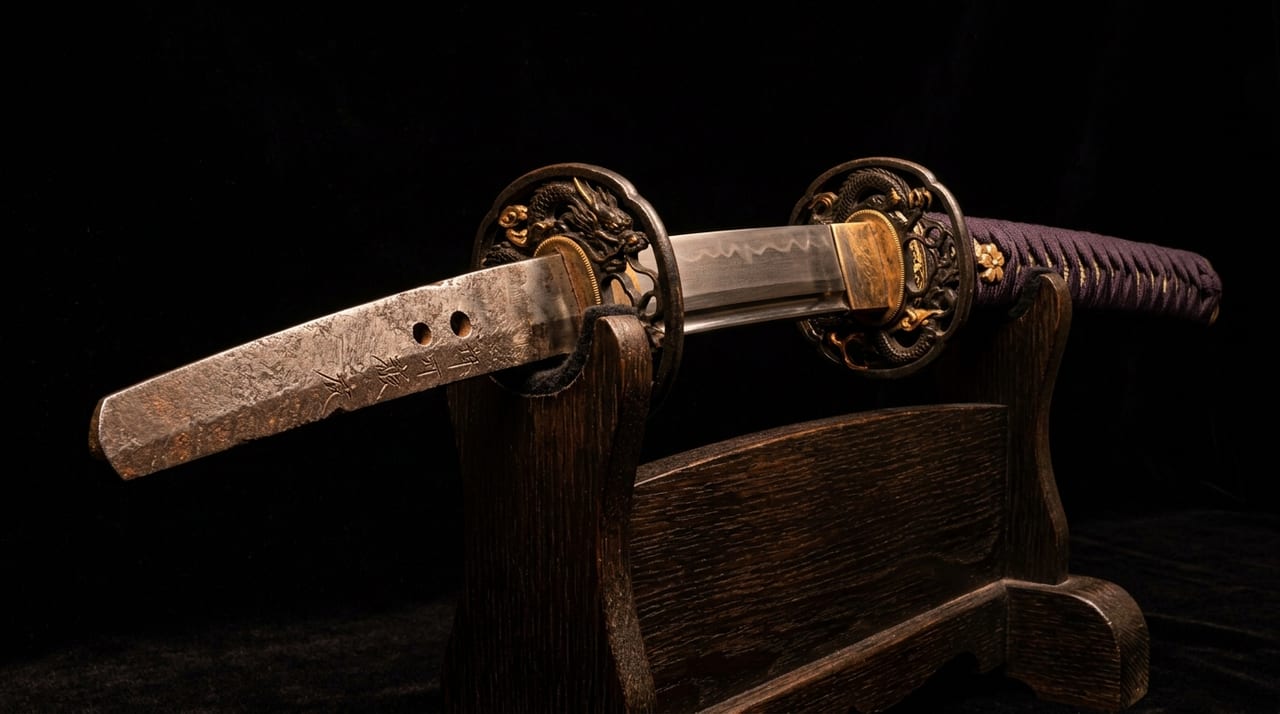 * Image is for illustrative purposes only.
Table of Contents
Can Tsuba Be an Investment Object?
As a first premise, one should be cautious about treating tsuba as purely financial instruments. Unlike stocks or bonds, they have low liquidity, it is difficult to judge appropriate prices without specialized knowledge, and the costs of storage and insurance arise constantly. It is not unusual for liquidation to take several years, and tsuba are not suited to short-term capital management.
However, tsuba that meet certain conditions have a track record of maintaining their value over the long term and, in some cases, rising substantially. The key perspective is to reconcile, without strain, the "aesthetic enjoyment of collecting" with "value as an asset." By selecting works that can be purely enjoyed for viewing, while also meeting objective value criteria such as the presence of an NBTHK kanteisho (appraisal certificate), attribution to a well-known school, and good condition, aesthetic value and asset quality can coexist without contradiction.
Past Price Trends——What Kinds of Tsuba Have Risen in Value?
Looking back over the domestic and international markets of the past few decades, notable value increases have been observed in several categories.
- NBTHK Jūyō Tōsōgu and Tokubetsu Jūyō Tōsōgu: Tsuba that have passed the top-tier appraisal have multiple documented cases of increasing several times in price over spans of 20 to 30 years, backed by their rarity and authority. Once designated as Jūyō Tōsōgu, they are elevated to "Important Sword Fitting" status even in international auctions, making it easier to attract bids from overseas buyers.
- Iron tsuba from the kotō period (Heian, Kamakura, Nanbokuchō, Muromachi): The number of surviving pieces is extremely limited, and new discoveries are rare. With supply not increasing while demand continues, their long-term rarity value is high. In particular, early tsuba made by tōshō (swordsmiths) that are mumei (unsigned) yet possess the classical character of iron texture and forging have continued to receive strong support from both researchers and collectors.
- Tsuba attached to the uchigatana koshirae (mountings) of famous tōkō (swordsmiths): Tsuke-tsuba (attached tsuba) that have been passed down together with the sword itself are highly valued as part of the sword's provenance documentation, and because they are rarely separated from the sword, their circulation in the market is itself limited. Such tsuke-tsuba often fetch higher prices than individually traded tsuba by the same maker.
- Subjects popular in the international market: Edo-period kinko tsuba bearing subjects favored by overseas collectors — dragons, tigers, warrior paintings — see fierce bidding in international auctions. In particular, works by well-known craftsmen such as the Gotō family and Yokoya Sōmin have stable demand from wealthy collectors in Europe, America, and Asia, with high prices frequently achieved during periods of yen weakness.
- Reappraisal of mumei pieces: In recent years, with advances in research, cases have been increasing in which tsuba previously given low evaluations as mumei (unsigned) have been re-attributed to specific workshops or regional tsuba traditions. There are examples in which scholarly reappraisal has strongly pushed up prices, and keeping an eye on research trends can sometimes lead to effective investment judgments.
Three Conditions for Maintaining Value
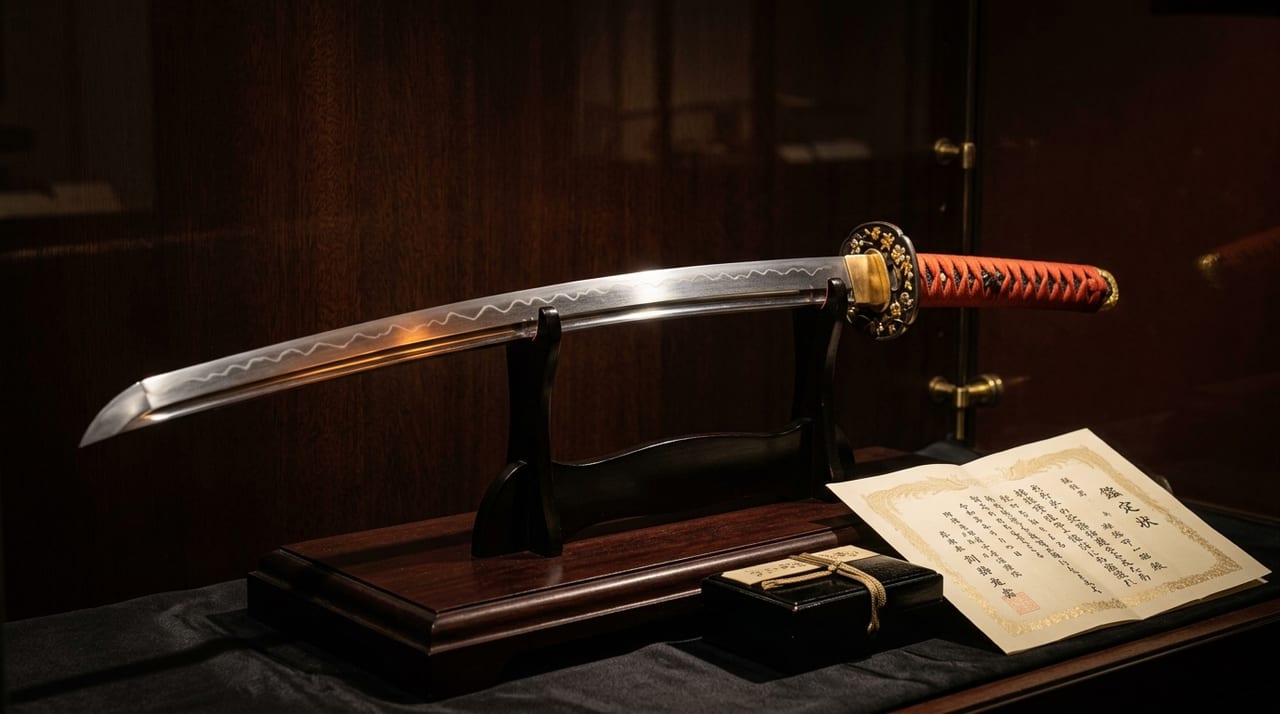
- Condition 1: Securing an NBTHK Kanteisho——If a tsuba purchased has not been submitted to NBTHK appraisal, consider submitting it. Passing the appraisal becomes an objective proof of value and works extremely favorably at the time of future sale. In particular, the ranks of Tokubetsu Kichō Tōsōgu, Jūyō Tōsōgu, and Tokubetsu Jūyō Tōsōgu are referenced as evaluation criteria even by international auction houses. However, make your decision after weighing the appraisal fee and the risk of not passing.
- Condition 2: Establishing an Appropriate Storage Environment——The primary causes of tsuba deterioration can be grouped into three: moisture, sudden temperature changes, and physical impact. A stable environment of 50–60% humidity and 15–25°C is ideal, forming the basic conditions that prevent iron rust, verdigris, and lacquer flaking. Storage in individual paulownia boxes or cloth pouches is standard, and stacking multiple tsuba directly against one another is strictly forbidden. For long-term storage, regular condition checks and care by a specialist when necessary are also indispensable. For high-value pieces, insurance should be included as an unavoidable cost.
- Condition 3: Recording Provenance——Keeping records of the place of purchase, date of purchase, and purchase price; preserving accompanying certificates, box inscriptions, and kanteisho (appraisal certificates); and gathering records of past exhibition history and literature citations all constitute important evidence that substantiates value at the time of future sale. Provenance from a renowned collection brings clear added value at auction. Detailed photographic records (mei, openwork designs, metal texture, overall and close-up views) are also useful in future appraisals and sale negotiations.
Sale Strategies——How to Sell at the Highest Price
The choice of selling method makes a large difference to the price realized. The main options are organized below by situation.
- Sale to a specialist dealer: This is quick, but the purchase price is lower than the dealer's retail price, as the dealer's acquisition margin is deducted. Effective when funds are needed urgently or when one is not confident in understanding market value. Getting quotes from multiple dealers is essential, and asking for explanations of appraisal reasoning also helps develop a sense of market prices.
- Consignment to domestic or international auctions: This takes time, but if appropriate bidders gather, there is a possibility of realizing a price close to the market maximum. Consigning to international auction houses such as Christie's and Bonhams broadens reach to overseas collectors, working particularly favorably during periods of yen weakness. Even after deducting the buyer's premium, there are cases where the result exceeds a sale to a specialist dealer. Commission rates differ by auction house, so check the terms before consigning.
- Direct transactions through industry networks: Direct transactions through networks of NBTHK members and sword dealers can sometimes achieve mutually favorable terms by eliminating intermediary fees. For parties with whom a relationship of trust has been established, private transactions between collectors can be the most efficient method of sale.
- Use of online platforms: Announcements in international tōsōgu communities (specialist forums and social media groups) enable direct access to buyers with a strong interest in specific subjects or schools. However, this requires risk management against fraud and disputes as a precondition.
Market Environment and Future Outlook
Several structural changes are underway in the environment surrounding the current tsuba market.
The continued weakness of the yen is creating a perception of international affordability for Japanese tōsōgu (sword fittings), pushing up demand from wealthy collectors in Europe, America, and East Asia. At the same time, in the domestic market there is an increasing trend of pieces being released through inheritance and estate liquidation by aging collectors, creating more opportunities for high-quality works to come to market.
The advance of digitization, which has made access to international auctions easier, is also a development that should not be overlooked. Cases are increasing in which works previously limited to domestic distribution are traded at international prices through online bidding, widening the gap from the purchase prices of domestic specialist dealers. How one can leverage this information asymmetry substantially affects the price realized at the time of sale.
Conclusion——Building a Valuable Collection and Exit Strategy
An investment-oriented perspective on tsuba should be positioned not as "pure speculation" but as "long-term asset building based on aesthetic judgment and specialized knowledge." Purchasing fine pieces that have passed NBTHK appraisal at appropriate prices, storing them in a proper environment, and carefully recording their provenance — accumulating this process is the surest path to building a collection that combines aesthetic value with asset value.
It is important to be conscious of the exit strategy from the moment of purchase. By anticipating in which market, to whom, and at what timing you will sell, the precision of your purchasing decisions naturally improves as well. The attitude of deepening knowledge without haste, building relationships with trustworthy specialists, and engaging over the long term is the key to elevating a tsuba collection into a true asset.