The Art and Philosophy of the Togishi: How Japanese Sword Polishers Reveal the Soul of the Blade
 * Image is for illustrative purposes only.
Table of Contents
The Craft and Aesthetics of Polishing Masters — Artisan Skill That Brings Out the Final Beauty of the Sword
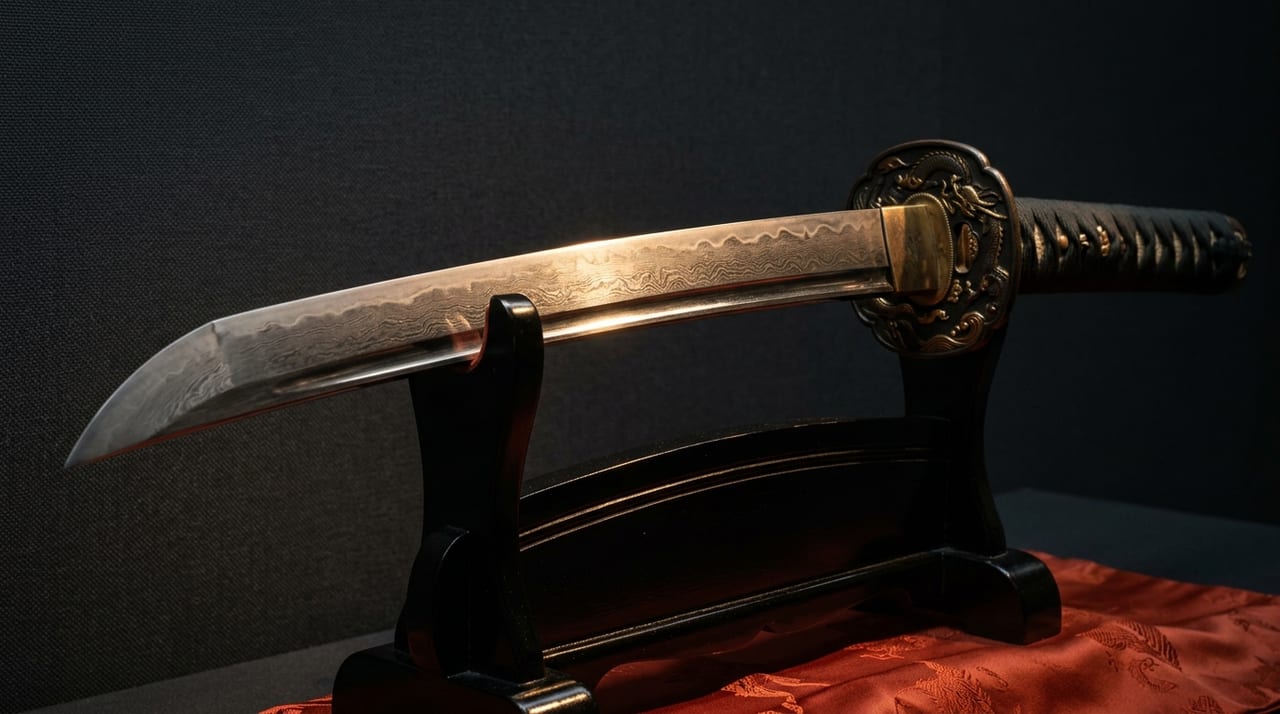
The final stage that determines the completion of a Japanese sword is the polishing (togi) process. The essential properties of the blade are formed during the process from forging by the swordsmith to the tempering. However, it is the skill of the polishing master (togishi) that brings that beauty into the present world. The polishing master is an artisan who, through fine polishing with whetstones, makes visible the latent hamon, jihada, and luster that are inherent in the blade.
Even with the same single sword, the appearance changes greatly depending on the skill of the polishing. Polishing is not merely the work of sharpening the edge, but also an interpretive process of reading the information inherent in the blade and drawing it out in a visible form. For those who purchase and appreciate swords, the condition of the polishing is an important factor that influences the impression of the work, and understanding polishing leads to cultivating the eye to view swords.
The Polishing Process and Technical Complexity
The polishing of a blade involves roughly five stages.
- Coarse polishing
- Medium polishing
- Main polishing
- Finishing polishing
- Buffing
At each stage, whetstones of different grit sizes are used to gradually shape the surface of the blade. This process is also one of harmonizing, through polishing, the differences in hardness and internal stresses created by the tempering of the sword.
The selection of whetstones is also an important technical judgment. Various whetstones exist with different grit sizes, hardnesses, and binding strengths, and determining the optimal combination of whetstones according to each blade's characteristics requires an intuitive decision based on decades of experience. The first half of the process is called "base polishing," which focuses on shaping the blade, removing scratches and rust, and revealing the surface of the jihada. In the second half, the "finishing polishing," techniques such as wiping (nugui) and edge polishing (hadori) are used to emphasize the contrast between the jihada and the hamon, and to complete the expression of the sword.
The Manifestation of Jihada and Hamon
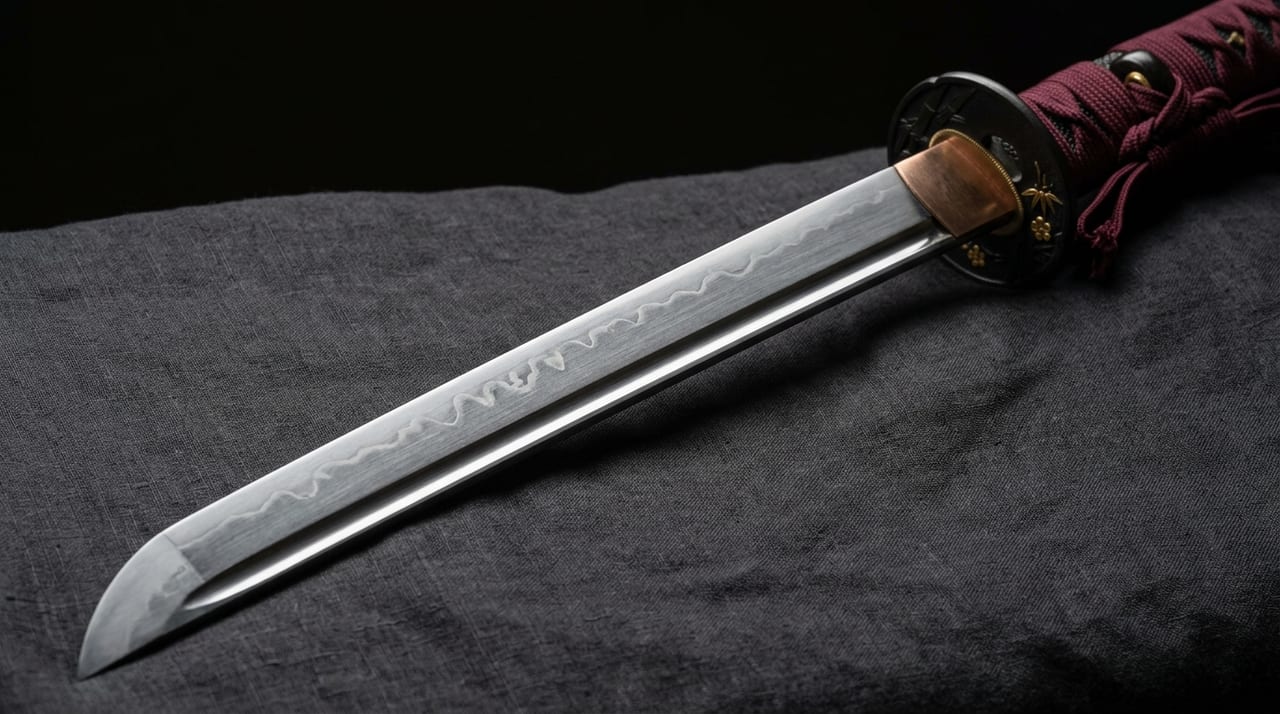
The jihada (wood-grain pattern) and hamon that appear on the blade are the crystalline structures formed during the forging process made visible through polishing. The polishing master's skill is the act of bringing out these hidden beauties, and is not merely a buffing operation but a creative process of decoding the inner structure of the blade and expressing it aesthetically. Even with the same sword, the beauty of the finished work varies greatly depending on the polishing master.
Differences in finishing tendencies can be seen depending on the polishing school or individual technique style. Some finishes show the texture of the jihada in a subdued tone, while others emphasize the contrast of the hamon and give an elegant impression. Neither is superior; the appropriate finishing direction is chosen according to the sword's individuality, historical background, and the preferences of the viewer.
The Current State and Challenges of the Polishing Master Profession
Like swordsmiths, the polishing master profession is experiencing an aging population. The number of registered polishing masters nationwide is limited, and young people newly aspiring to become polishing masters are an extremely small minority. Training as a polishing master also requires a long period, and the uncertainty of economic stability is reducing the attractiveness of this as a career choice.
In recent years, despite increased demand for polishing accompanying increased demand for artistic swords, there is a significant shortage of polishing masters. This supply-demand gap has resulted in longer waiting periods for polishing masters and increased service fees.
The Aesthetics and Evaluation Standards of Polishing
While the criteria for judging the quality of polishing are widely shared among craftspeople, it is difficult to articulate these criteria. Expressions such as "the jihada shows well" and "the hamon is vivid" refer to clear standards for the polishing master, but appear ambiguous to outsiders. The evaluation of polishing relies heavily on the judgment of sword appraisers.
The quality of polishing has a large impact on the overall value assessment of a sword; even a famous sword has its aesthetic value significantly diminished if the polishing is poor. Conversely, superior polishing by an excellent polishing master has the power to transform an ordinary sword into an attractive one.
Types of Polishing and Differences in Finishing
There are several directions for polishing finishes. There is a finishing method that emphasizes showing the natural appearance of the jihada in a subdued tone, and a finishing method that emphasizes visual elegance by highlighting the contrast between the hamon and the jihada. The polishing master decides which direction to polish based on the sword's era and individuality, and the owner's intentions.
When considering a purchase, it is desirable to confirm the condition of the polishing not only through photographs, but if possible, through images from multiple angles. Whether the outline of the hamon is clearly visible and whether the jihada shows no cloudiness or scratches are clues to observing the care of the polishing. It should be noted that a certificate of appraisal indicates the authenticity and value of the sword itself, but does not guarantee the age or condition of the polishing.
New Forms of Technical Succession
Some polishing masters are introducing the techniques and aesthetics of polishing to the general public through workshops and public demonstrations. Additionally, the polishing process is being recorded through video content. However, there are limitations to conveying the subtle techniques of polishing through video alone.
The training of foreign polishing craftspeople has also begun, and the internationalization of sword polishing is underway. With the formation of polishing centers not only within Japan but also overseas, there is a possibility of diverse forms of final finishing of swords appearing.
Daily Care That Owners Should Know
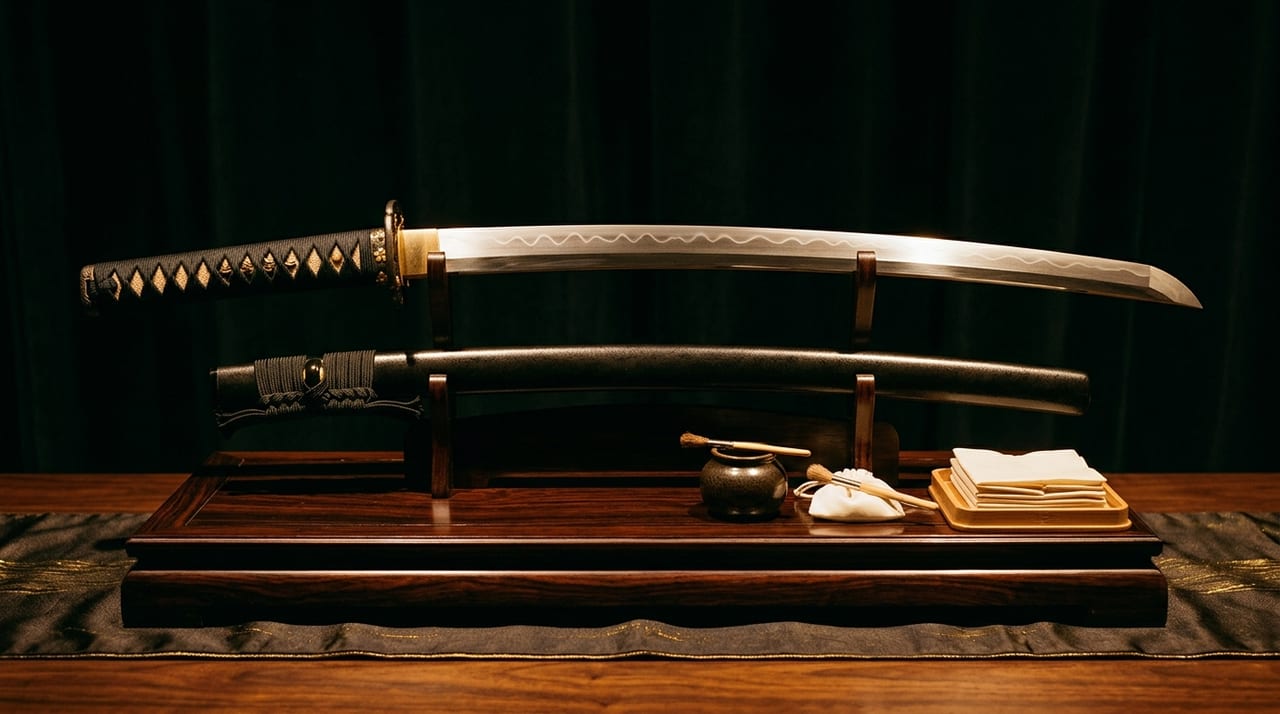
To maintain the beauty of the polished blade, regular care by the owner is also essential. Direct contact with bare hands on the blade can cause rust due to the oils on the fingers; the basic rule is to hold the handle when handling it, and use gloves if it is necessary to touch the blade. When maintaining it, follow these steps.
- Lightly brush off old oil and dirt with uchiko
- Wipe off with a clean cloth
- Apply a thin coat of sword oil
- Store it in the sheath
An ideal storage environment is a place with minimal humidity fluctuation and no direct sunlight. Trapped moisture can cause rust, and conversely, extreme dryness can also affect wooden parts such as the sheath and handle; periodic checks of the condition are desirable. Whether re-polishing is needed depends on the extent of rust and scratches; it is recommended not to attempt polishing on your own judgment, but to consult with an experienced polishing master.
Polishing and the Formation of Sword Value
The polishing process is the final and essential stage for completing a sword, and it determines the ultimate aesthetic value of the sword. It is only when the skill of the swordsmith and the skill of the polishing master mutually support each other that a complete Japanese sword appears in the world. The continuation of the polishing master profession and the transmission of skills are issues equally or even more important than swordsmiths for the maintenance of sword culture as a whole.
Without economic stabilization of the polishing master profession and improvement of skills transmission in the modern era, the future of the Japanese sword industry will inevitably be limited.