Nihonto Auction Market: How It Works and Fundamentals of Appraisal Evaluation
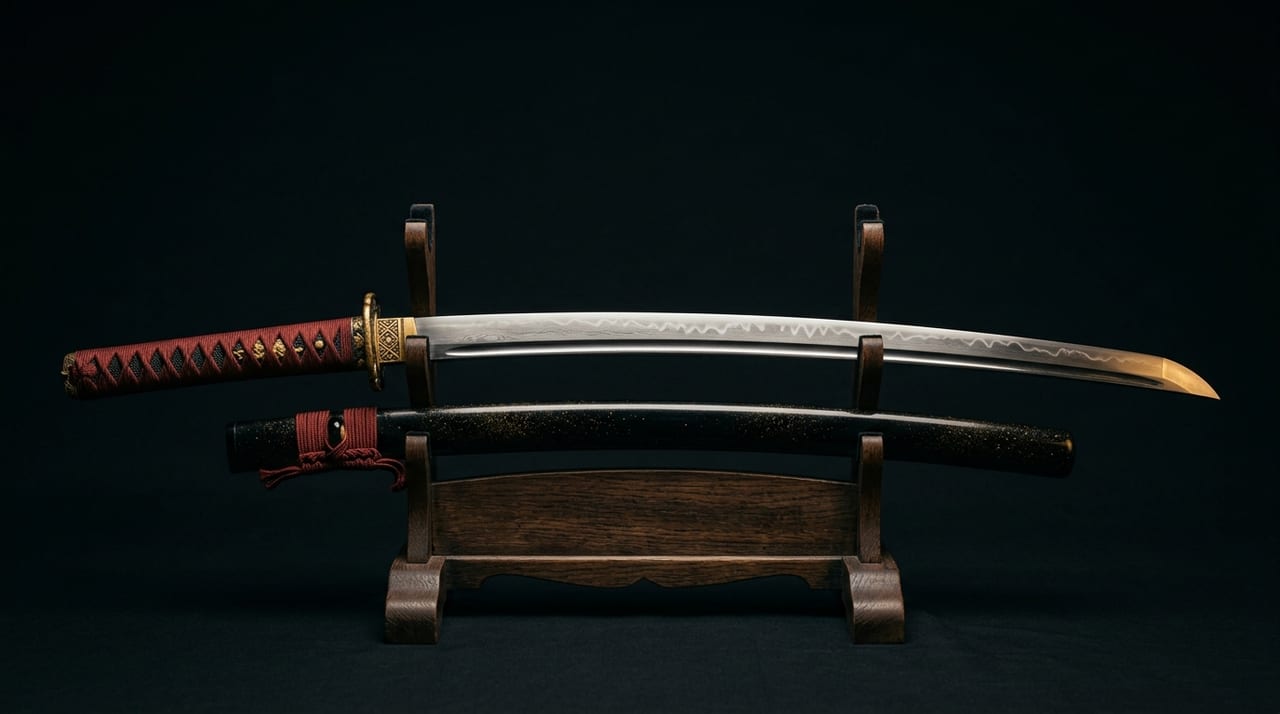 * Image is for illustrative purposes only.
Table of Contents
Overview of the Japanese Sword Auction Market
The Japanese sword market consists of two pillars: direct transactions conducted by sword merchants and antique dealers, and competitive sales through auctions. In recent years, with the proliferation of online bidding, it has become easier for international buyers to participate in the domestic market, and the market is showing expansion.
The main Japanese sword auctions include competitive sales organized by long-established antique dealers based in Tokyo and Osaka, as well as inter-dealer markets involving the National Sword Merchants' Cooperative Association. For the general public, major auction houses with fine art and crafts departments hold specialized sword and armor sales several times a year. Overseas, British auction houses such as Bonhams and Christie's regularly hold Japanese weapon and armor sales, and it is not uncommon for superior blades to fetch high prices in the international market.
Five Factors Determining Hammer Prices
The market price of swords is formed through a complex interplay of multiple factors. The main factors emphasized by experts are as follows.
- ① Mei and the rank of the tosho: The primary price-determining factor is the evaluation of the tosho, and the "ranking" established in the Edo period continues to influence the modern market. Works by smiths such as Masamune, Go Yoshihiro, and Osafune Nagamitsu, who were listed among the "saijotatewazamono," command prices in the hundreds of millions of yen. Even if mumeibto, if a certificate (origami) issued by an authoritative appraisal body such as the Honami family stating that it is recognized as the work of [specific maker] is attached, the price rises significantly.
- ② Preservation condition (soundness): Flaws (kizu), rust, and wear from sharpening in the blade directly reduce its value. In particular, damage to the hamon such as "muneaki" or "yakaiotoshi" is fatal, and such pieces may be valued at only a fraction compared to sound works by the same maker. Conversely, pieces that have not been worked on since the late Edo period and retain the original nie and nioi of the jigane perfectly are considered rare and receive high evaluation.
- ③ Completeness of accessories (koshirae, saya, habaki, etc.): A "kanzon-koshirae" with matching tsuba and menuki bearing the names of master metalworkers can command 20-30% higher prices than the blade alone. Koshirae from the Toyotomi regime era (known as "Momoyama-koshirae") or those from the Tokugawa shogunate are evaluated separately for their historical added value.
- ④ Clarity of provenance: Items with direct provenance from former daimyo and samurai families, or from the former collections of renowned collectors, receive a price premium as "clear provenance." Many swords that came to market during the post-war confusion period have unclear origins, and documentation of provenance (box inscriptions, records from former owners, photographic records) becomes crucial documentation that affects price.
- ⑤ Authority of certification and appraisal certificates: Currently, the most authoritative appraisal body is the Public Interest Incorporated Foundation NBTHK, and its certification of "Tokubetsu Juyo Token," "Juyo Token," "Tokubetsu Hozon Token," or "Hozon Token" directly determines market value. In particular, Tokubetsu Juyo Token certification has an extremely low approval rate of only a few percent, and obtaining this designation alone can double or more the market price.
Pre-Auction Appraisal and Preservation Condition Assessment Process
Before items are offered at auction, pre-auction appraisal is conducted by the auction house's expert staff or external appraisers. The evaluation proceeds through the following process.
First, cleaning called "nuguibto" is performed, removing clove oil to examine the condition of the jigane and hamon. Next, with the blade removed from its shirasaya, measurements are taken of magari, sori, motohaba, sakihaba, and hachō, and compared with the standard dimensions for the maker.
Observations of the blade are recorded through "oshigata," which are traced records of the blade's shape, mei, and hamon. By comparing oshigata with historical records, authenticity verification and identification are performed. Some blades recorded in the Edo period sword compendium "Kyoho Meibutsu Cho" have surviving oshigata that can be compared with the actual pieces.
A particularly important aspect in evaluating preservation is the preservation of "utsuri" in the jigane. Utsuri are pale, hazy patterns that appear on the jigane, particularly prominent in Bizen-tradition blades, but often disappear due to excessive polishing. Bizen blades with intact utsuri are highly valued as evidence that they have not been worn down by sharpening.
Bidding Strategy Fundamentals: Practical Knowledge for Buyers
A common mistake made by first-time auction participants is "mistaking the estimate (expected price range) for the upper limit." The estimate is merely the auction house's guide, and popular pieces often sell for 2-3 times the high estimate. Conversely, works by lesser-known smiths or pieces in poor condition may fail to meet the low estimate (unsold).
A mandatory pre-bidding task is attending the preview (viewing session). It is essential to examine the actual piece to assess flaws, rust, and wear from sharpening that cannot be judged from catalog photographs. If possible, it is strongly recommended to ask a trusted sword merchant or appraiser to accompany you and review the piece with an expert eye.
Additionally, costs after purchase must be calculated in advance. Domestic auctions add buyer's fees of approximately 10-15% to the hammer price. Furthermore, swords are subject to regulation under the "Firearms and Swords Control Law," and confirming registration and filing a change of ownership notice with the prefectural board of education (within 20 days) is a legal obligation. If purchased at a foreign auction, additional import and registration procedures are required.
When using proxy bidding (absentee bid), the strategy of setting the maximum bid slightly higher than your actual top price (by adding an odd amount) is considered effective. Since competing bidders often set round-number limits, adding an odd increment increases the likelihood of winning the bid.
Macro Factors Affecting Market Prices
Beyond individual blade valuation, it is necessary to understand macro factors that move the overall market. Exchange rates directly affect the purchasing power of foreign collectors. During periods of yen weakness, foreign buyers enter the market more frequently, pushing up domestic prices. In particular, collectors from the United States, Europe, Taiwan, and mainland China tend to bid aggressively with a long-term holding strategy in mind, which can create divergence from the pricing perspectives of domestic dealers.
Additionally, an important backdrop is the ongoing "re-evaluation of swords as an intangible cultural heritage" within the broader fine art market. Japanese sword-smithing techniques were under consideration for UNESCO Intangible Cultural Heritage designation in 2024, and such cultural authority functions as a long-term price support factor. As of 2026, the industry is actively promoting Japanese swords internationally based on this momentum.
Additionally, swords designated as National Treasures or Important Cultural Properties are generally prohibited from export and are traded only in the domestic market. These form a specialized distribution channel that could be called the "cultural heritage market," with a separate price-formation mechanism distinct from general auction markets.
Advice for Beginners: Mindset for Market Participation
The Japanese sword auction market is a meaningful world, both as an art investment and as participation in cultural heritage preservation, if one has the correct knowledge and trustworthy connections. However, it is a field where three areas of expertise—authenticity, valuation, and legal regulation—intersect, and independent entry carries corresponding risks.
As a recommended learning path, first is attendance at NBTHK appraisal meetings and study sessions. At "sword appreciation sessions" held regularly throughout the country, one can examine actual certified pieces while listening to expert commentary. Second, building a long-term relationship with a trustworthy sword merchant is important. Excellent sword merchants not only handle sales and purchases but also provide advance information about upcoming offerings, conduct proxy bids, and offer aftercare services (such as connecting buyers with sword sharpeners and shirasaya craftsmen), making them valuable partners in market participation.
The essence of the auction market lies in witnessing the moment when a single blade, having passed through centuries of history, comes into modern hands. I hope you will participate in this market with an understanding of price dynamics while appreciating the weight of history.