Rust Prevention and Corrosion Protection — Material Science of Storage Environments and Uchiko, and Long-Term Preservation Mechanisms
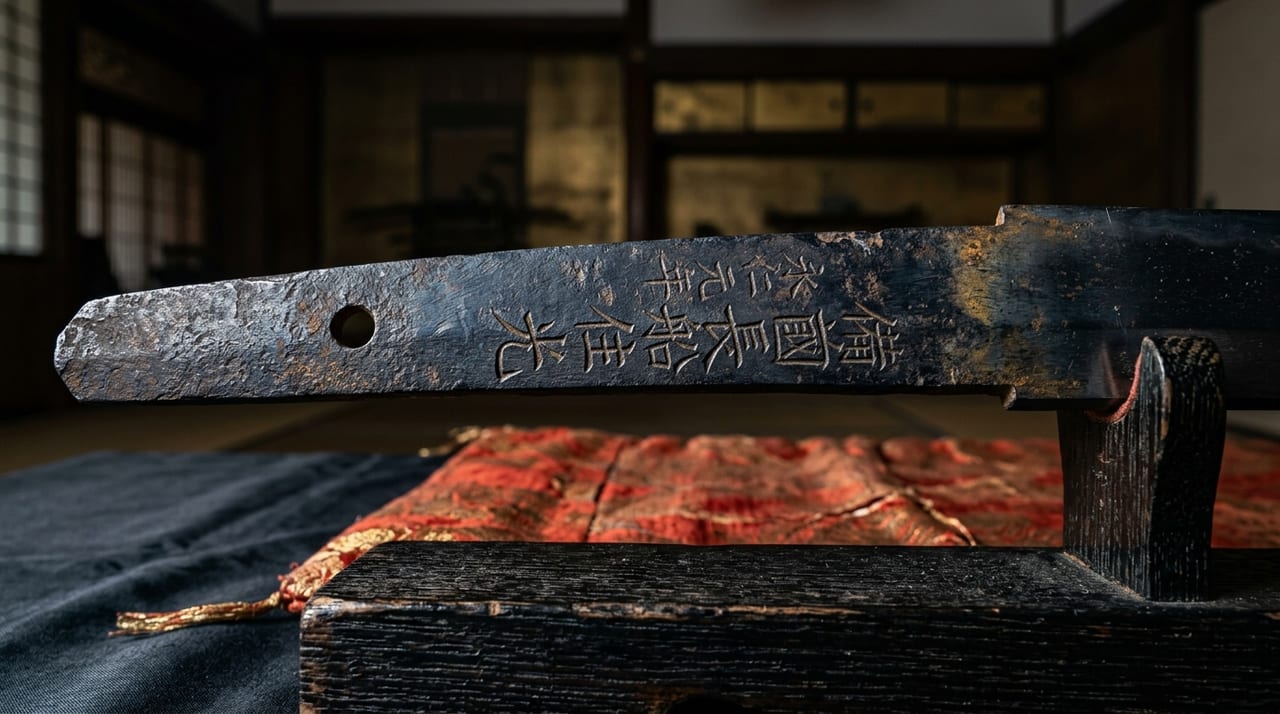 * Image is for illustrative purposes only.
Table of Contents
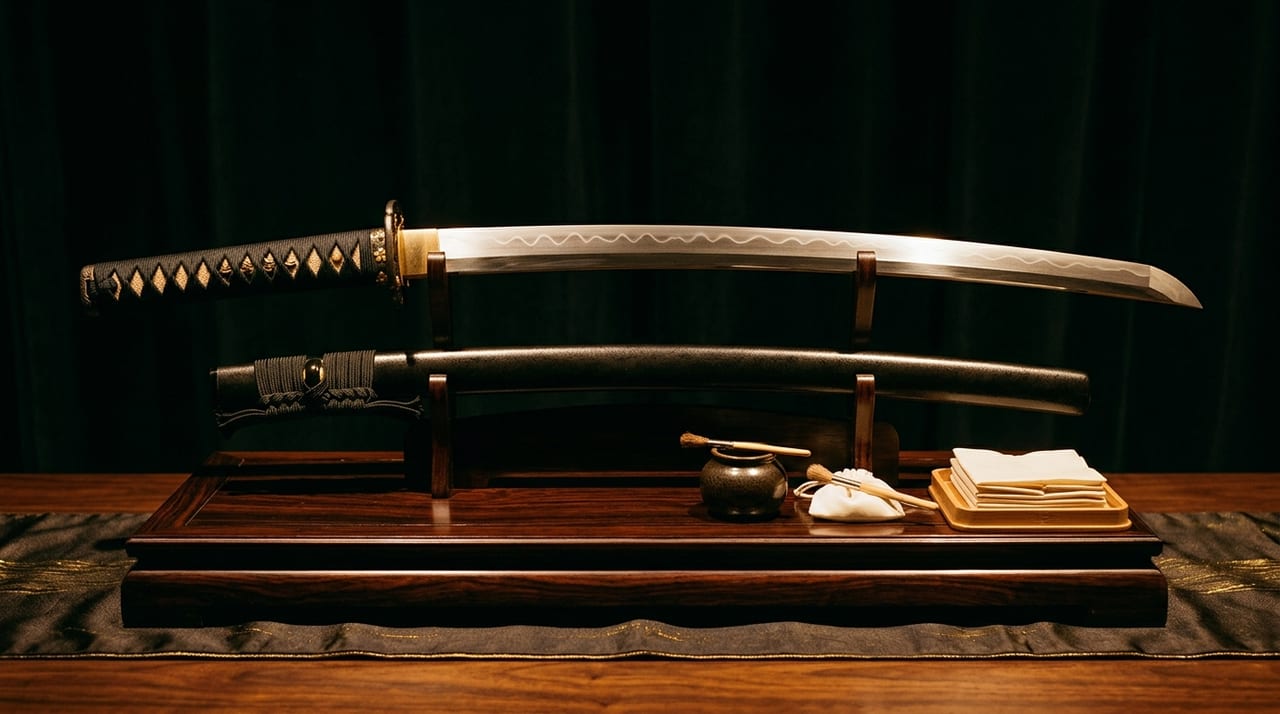
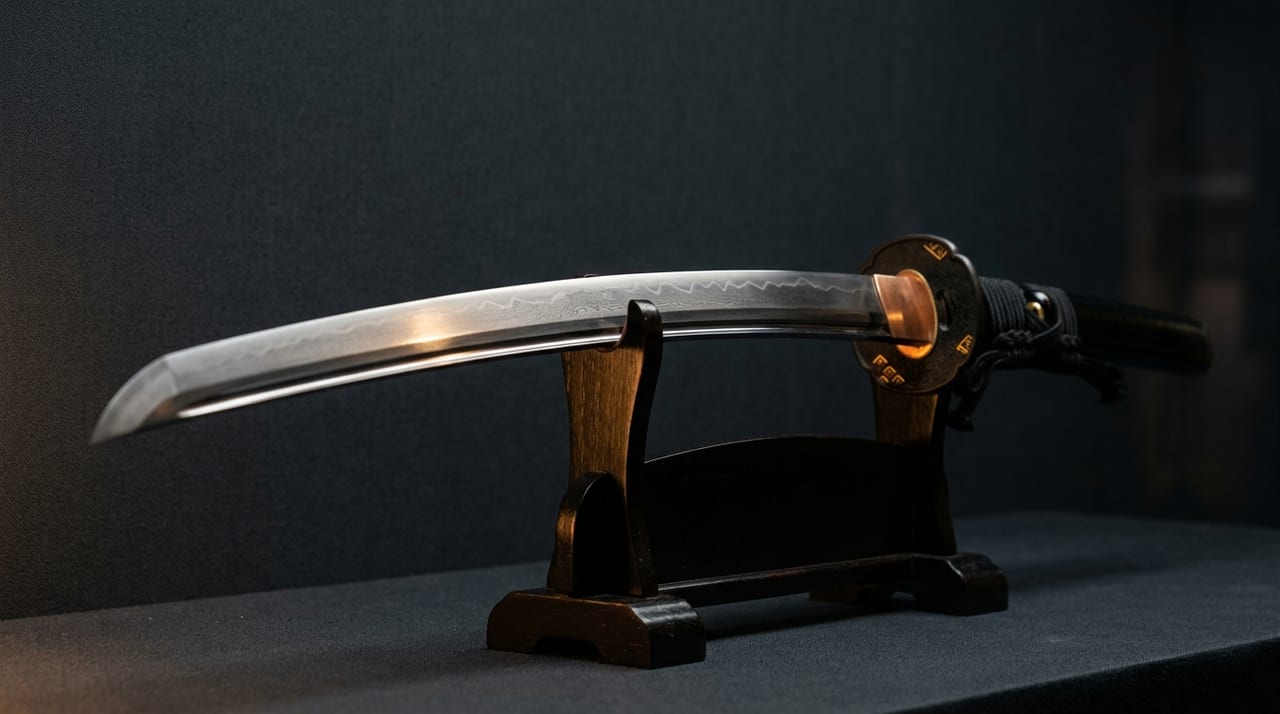
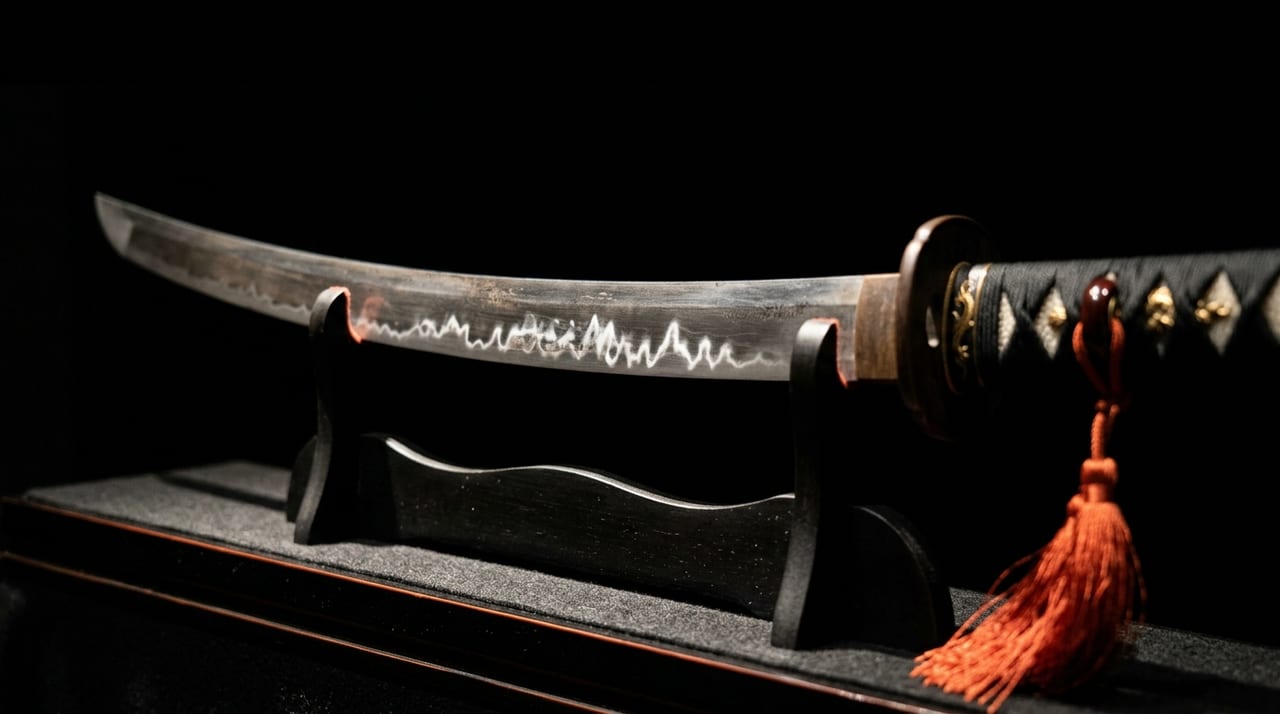
Long-term preservation of nihontō is impossible without rust-prevention technology. This article provides a detailed explanation of the chemical principles of rust prevention, the functionality of uchiko, and the optimal configuration of storage environments.
Material Science of Uchiko
Uchiko is a powdered maintenance material that is lightly tapped against the blade and has been used since ancient times. Its main components are as follows.
Composition of Traditional Uchiko
The main component of white uchiko is a fine powder of uchigumori stone enclosed in silk (or deerskin). When lightly tapped against the blade, the stone powder acts as an abrasive that adsorbs and removes old oil left on the blade surface. It contains no oil; the correct procedure is to apply fresh camellia oil or similar after maintaining the blade with uchiko.
When using uchiko, it is important to tap it lightly and evenly against the blade. Applying too much force can drive the powder into the blade and cause scratches, so it should always be limited to a gentle tap. After tapping, carefully wipe away the excess powder and old oil with soft nuguigami (wiping paper). Skipping this wiping step can leave stone powder residue on the blade surface, which may attract moisture; therefore, applying uchiko and wiping with nuguigami must always be performed as a paired operation.
Modern Rust-Prevention Materials
Some synthetic uchiko developed in recent years may use polyethylene glycol (PEG) or silicone-based rust-preventive oil. These offer the following advantages, though some collectors who prioritize tradition tend to avoid them.
- Low volatility, less prone to oil oxidation
- Low tackiness, does not remain on the blade
- Rust-prevention effect lasts for an extended period
Approach to Choosing Uchiko
Traditional uchiko and modern synthetic uchiko share the same role: serving as a preparatory step to remove old oil remaining on the blade and make way for fresh oil. The choice between them is often made based on whether one values the etiquette of appreciation or ease of handling, and neither can be declared categorically superior. In either case, it is essential to understand that the uchiko itself should not be expected to provide rust-prevention; the actual substance of rust prevention lies in the subsequent oiling and the management of the storage environment.
Storage Environment and Relative Humidity
Rust formation on a blade progresses rapidly at relative humidity (RH) of 60% or above. The key to rust prevention is "maintaining a low-humidity environment."
Ideal Humidity Management
| Relative Humidity | Condition | Notes |
|---|---|---|
| RH 40–50% | Optimal storage environment | Moisture adsorption on the iron surface is virtually absent |
| RH 50–60% | Acceptable range | Regular condition checks are necessary |
| RH 60% or above | Danger zone | White rust may develop within a few weeks |
It is recommended to place desiccant (such as silica gel) inside the sword box and replace it once a month. Particular caution is required during the rainy season (May to July) and in winter (December to February, condensation risk).
Choosing a Storage Location
When choosing a place to store the sword box, one must attend not only to the hygrometer reading but also to the surrounding environment. Rooms facing an exterior wall, or rooms near water sources such as the kitchen or bathroom, tend to experience locally elevated humidity even indoors and are best avoided. Also, rather than placing the box directly on the floor, storing it on a shelf or similar structure in a well-ventilated position reduces exposure to moisture rising from the floor. As for the material of the sword box, hō (Japanese bigleaf magnolia) wood has traditionally been used because it has low resin content, is unlikely to damage the blade, and is said to possess moisture-regulating properties, absorbing and releasing humidity.
Oil Film Formation Mechanism
The oil film applied to the blade (camellia oil in particular) physically blocks contact with oxygen. As chemical protection, the fatty acids in the oil form weak chemical bonds with the iron surface; as physical protection, the film prevents moisture and oxygen in the air from penetrating; and as a process of change over time, the film gradually oxidizes over a period of six months to one year, darkening (becoming black rust).
Black rust (iron(II,III) oxide, Fe3O4) is more stable than red rust (iron(III) oxide, Fe2O3) and also functions to prevent further corrosion. For aesthetic reasons, however, regular oiling (once or twice a year) is performed.
When oiling, the basic method is to apply a small amount of oil to a soft cloth and spread it across the entire blade so that it forms a thin, uniform film. Applying too much oil can create oil pools at the habakimoto and the areas where the tsuba (hand guard) makes contact, which in turn attracts dust and dirt; therefore, use a small amount and lightly wipe away any excess with nuguigami.
Seasonal Rust-Prevention Measures
| Season | Characteristics | Countermeasures |
|---|---|---|
| Spring (March–May) | Affected by pollen and yellow dust | Seal the sword box and minimize contact with outside air. White uchiko is prone to contamination, so a monthly inspection is recommended |
| Summer (June–August) | Hot and humid | Increase desiccant replacement to once a week; maintain a constant indoor temperature with air conditioning |
| Autumn (September–November) | Dryness reduces relative humidity, making this the season with the highest rust-prevention effectiveness | A good time to consider oiling |
| Winter (December–February) | Risk of condensation | Do not bring a cold sword abruptly into a warm room. Place extra silica gel inside the sword box |
Rust Prevention for Metal Fittings (Metalwork Components)
Rust prevention is important not only for the blade but also for iron fittings such as the habaki (blade collar) and mekugi. Although these are small in area, moisture tends to collect in the gaps, making them prone to pinpoint rust (pinhole rust).
Countermeasures include applying uchiko to the fittings before storage, oiling them every six months, and fully removing degraded uchiko before applying fresh oil. Since fittings may differ from the blade in material and surface treatment, it is advisable not to apply the same maintenance approach as for the blade directly but rather to inspect the condition of each fitting individually when caring for it.
Precautions During Handling
Something easily overlooked when discussing rust prevention is the handling of the sword during appreciation. Touching the blade with bare hands deposits the salt and moisture contained in sweat and skin oils on the surface, which becomes a cause of rust at those points. The basic etiquette when holding a sword is to grip the tsuka (hilt) and avoid directly touching the blade itself; this is also entirely logical from a rust-prevention perspective. If it is unavoidable to touch the blade, do so through a clean cloth or gloves, and promptly wipe away any oil or moisture from the contact area with nuguigami.
Response When Rust Has Developed
Even when daily maintenance is thorough, rust can develop due to a sudden change in the storage environment or a gap in maintenance. If rust is found, one should avoid attempting to remove it on one's own judgment using abrasives, sandpaper, or similar materials. The surface of the blade carries jihada (grain pattern of the steel) and hamon (temper line) — information of critical importance for appreciation and appraisal — and improper polishing can damage these and affect the value assessment in a kanteisho (appraisal certificate). When rust is discovered, the first step is to use a dry cloth to correct the moisture and oil conditions on the surface in order to halt further progression; for assessing the condition and determining the appropriate treatment, it is advisable to consult a specialist such as a togishi (polisher).
Summary
Long-term preservation of nihontō is achieved through the combination of removing and adsorbing old oil with uchiko, the subsequent oiling with camellia oil or similar, and maintaining a low-humidity environment. From a material-science perspective, the abrasive and adsorptive action of uchigumori stone fine powder and the oxidation barrier provided by oil are the core of the rust-prevention mechanism, supported by humidity management in the storage environment. Through seasonal countermeasures and periodic maintenance, durability spanning several centuries is secured. Taking care in daily handling and, upon noticing anything unusual, consulting a specialist rather than attempting one's own remedies is also an important element supporting long-term preservation.