How to Choose a Japanese Sword Restoration Specialist: A Practical Guide to Polishing, Shirasaya, and Fitting Repairs
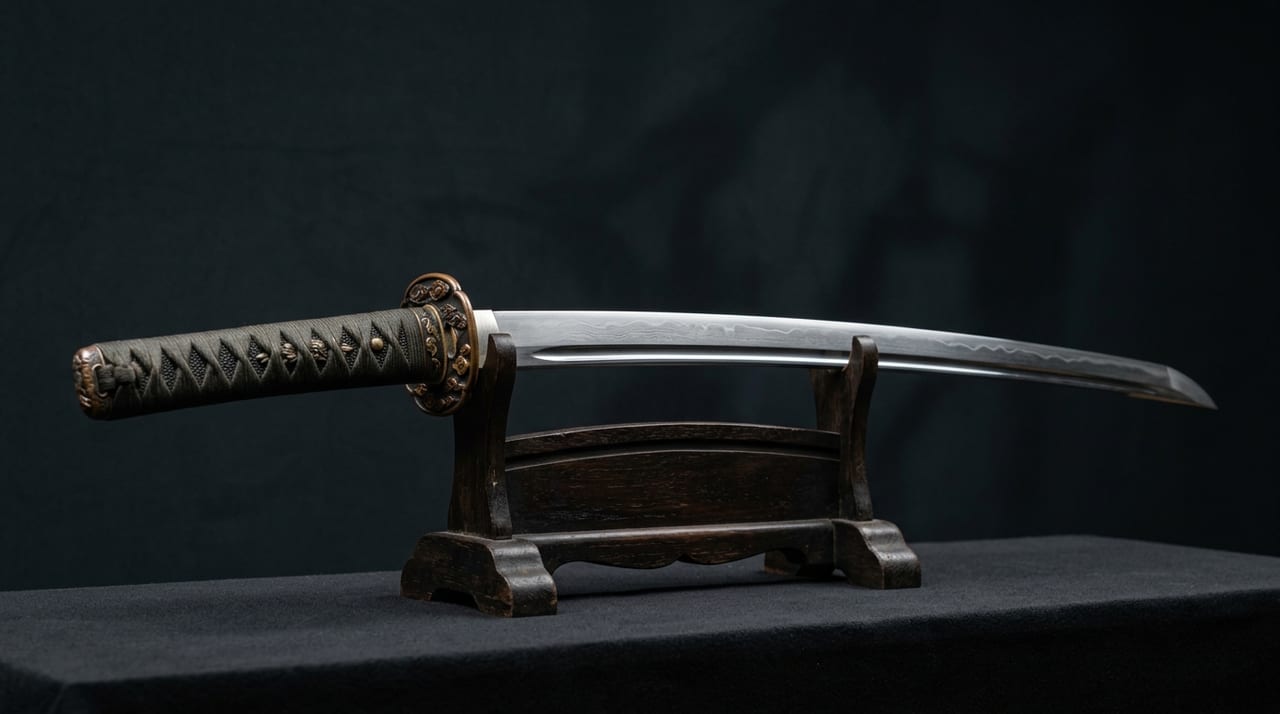 * Image is for illustrative purposes only.
Table of Contents
What is Japanese Sword Restoration Work?
Japanese swords are composite crafted artworks combining different materials such as metal, wood, lacquer, leather, and cord. Restoration involves multiple specialized craftspeople. These include the togi-shi (polisher) who handles the blade itself, the saya-shi (sheath maker) who creates the scabbard, the koshirae-shi (fittings maker) who creates the wrapped handle and ornamental fittings, and the shirogane-shi (metalsmith) who creates the habaki and separation plates—a system in which independent craftspeople work together to complete each sword continues to this day.
The roles of each craftsperson can be organized as follows.
| Craftsperson | Main Work |
|---|---|
| Togi-shi | Blade polishing |
| Saya-shi | Scabbard (shirasaya and koshirae scabbard) creation |
| Koshirae-shi | Wrapped handle, ornamental fittings, and fittings creation |
| Shirogane-shi | Habaki, separation plates, and metal fitting creation |
Though the term "restoration" is often used generically, in practice the appropriate contact differs depending on the purpose and target. "Polishing" to bring the hamon into a state suitable for appreciation, "shirasaya creation" to provide new plain sheaths for storage, "metal fitting repair" to remake rusted habaki, "handle repair" to fix damaged wrapped handles—all require specialized technique, and careless judgment by an amateur can lead to irreversible damage. Before requesting work, it helps to clarify which parts you want to restore and to what extent (whether to prepare for viewing or simply to improve storage conditions), as this makes communication with the craftsperson smoother.
Criteria for Selecting Restorers—What Should Be Verified
When selecting a restoration artisan, items to verify include the following.
1. Track Record and Specialty Just as some togi-shi specialize in jigurashi (foundational polishing) while others excel at keshougurashi (cosmetic polishing), each has different areas of expertise. Confirm in advance whether they have experience handling Important Cultural Properties or Specially Designated Swords, and whether they are knowledgeable about swords from specific periods or schools.
2. Registration with the All Japan Sword Craftsmen's Association and Sword Craftsman Directory It is fundamental that togi-shi, saya-shi, and shirogane-shi are registered as sword craftspeople with the Agency for Cultural Affairs. Verify whether their name appears in industry organizations (groups associated with the Japan Sword and Art Preservation Society, a public interest foundation).
3. Condition Assessment Before Quotation A trustworthy artisan will always "see the object before providing a quote." Be wary of artisans who provide a fixed price based on photographs alone. It is fundamentally impossible to provide a price without directly examining the sword's condition (degree of rust, blade chipping, warping of the curve, etc.).
4. Handling of Certificates of Authenticity The polishing approach may vary depending on whether an existing certificate of authenticity exists. There are cases where carelessly re-polishing a sword with an NBTHK certificate of authenticity results in a lower evaluation upon re-examination.
5. Quotation and Work Instructions in Writing If work proceeds with only verbal communication, discrepancies in understanding about the desired finish and scope of work are likely to arise later. Whether quotation details (work scope, estimated timeline, condition at return) are documented in writing or by email is also a factor in determining whether the artisan is trustworthy. Obtaining "multiple quotes" by consulting with several artisans and comparing the clarity of their explanations and sincerity of their responses is also an effective approach. If the sword being entrusted is of high value, it is advisable to confirm in advance how insurance and compensation during storage are handled.
The Process and Market Rate for Polish Requests
A request to a togi-shi generally follows these steps.
It begins with "jigurashi" (foundational polishing), gradually switching from coarser to finer whetstones while shaping the blade. Next, "finish polishing (keshougurashi)" brings out the character of the hamon and the steel surface. In the final stage, the surface is refined with wiping paper and oil, finishing oil is applied, and the work is complete.
The cost varies widely depending on the sword's size and condition. For a tachi (blade length of approximately 65–70 cm) in good condition, 100,000–150,000 yen is a general guideline, but cases with deep rust or requiring major suriaage (reshaping through extensive polishing) often cost more than double. The typical timeline is 3 to 12 months, with more renowned togi-shi having longer wait times.
Factors affecting work time and cost include the presence or absence of blade chips and deep rust, how many times the sword has been polished in the past (the degree of polish wear), and the presence or absence of forging damage or forge-weld defects in the steel surface. Swords with significant polish wear may see the blade shape and strength affected by further polishing, so togi-shi sometimes explain that "further polishing is not recommended." As a client, it is reassuring to confirm at the quotation stage how much polishing is necessary and whether progress reports will be provided during the work.
Practical Matters of Shirasaya Creation and Repair
A shirasaya is a plain-wood (magnolia) sheath used exclusively for storage and is essential equipment for long-term blade preservation. Damaged sheaths left unattended can cause stains and rust on the blade, so it is important to replace them promptly.
The cost of shirasaya creation varies with blade length, with approximately 20,000–50,000 yen being typical for one tachi. For new construction including the tsuka (handle) section rather than simply a box exchange, the cost increases further.
A trustworthy saya-shi measures the blade's "tame" (curve) before shaping the wood, preventing the accident of the sword not fitting into the sheath after completion. Moreover, a skilled saya-shi pays meticulous attention to wood-grain direction and selects material with density and dryness appropriate for long-term storage.
It is important to understand that shirasaya are custom-made "one sword, one sheath" items tailored to the blade's actual dimensions and thus cannot be reused like mass-produced items. At delivery, it is desirable to verify on the spot how the blade draws from and fits into the sheath (ensuring it is neither too tight nor too loose), and to consult immediately if anything feels amiss.
Precautions for Metal Fitting Repair and New Manufacturing
Metal fittings such as habaki, seppas, and fuchikashira are handled by shirogane-shi or metalworking artisans.
Creating a new habaki begins with material selection. Depending on the type—single-layer silver habaki, single-layer gold-plated habaki, or double-layer habaki—cost and finish vary. Creating a typical silver habaki generally costs approximately 30,000–80,000 yen.
An important consideration is that the decision whether to repair the original fitting or create a new one must be made carefully. Carelessly discarding antique fittings with historical value means losing information about the sword's provenance. Especially when old koshirae from the Edo period or earlier are attached, always consult an appraiser before deciding.
Even when creating new fittings, it is good to request that the removed old fittings be preserved rather than discarded. Old fittings can become important clues during later provenance research or re-evaluation. In addition, always confirm by actual fitting that newly created fittings match the exact size of the blade's nakago and sheath. Slight dimensional differences can affect finishing precision when relying only on drawings or verbal instructions.
Post-Restoration Management and Re-Evaluation
After restoration is complete, it is important to store it in appropriate conditions (a temperature and humidity-controlled location in a sword box). A blade is especially prone to rust immediately after polishing, so regular maintenance (uchikoh and oil application) should not be neglected during the first 1–2 years.
If considering re-examination by NBTHK after restoration, it is helpful to confirm in advance with the togi-shi whether the finish will withstand appraisal. There are reports of cases where appraisal value increases when cosmetic polishing by a renowned togi-shi has been applied.
Restoration is never inexpensive, but by entrusting the work to appropriate artisans, a sword's value can be preserved over the long term. Consulting with sword dealers familiar with the industry or with NBTHK often leads to finding trustworthy artisans.
Matters to Prepare Before Making a Request
There are points the client should prepare before making a restoration request.
- Document the current condition: Photographing the blade, sheath, and metal fittings before delivery provides a reference for before-and-after comparison and serves as documentation in case of any issues.
- Compile provenance materials: If certificates of authenticity, registration documents, or past restoration records exist, keep copies in hand and present them to the artisan.
- Articulate your desired finish: Communicating whether you want it prepared for viewing or if the goal is to improve storage conditions helps the craftsperson select the appropriate procedures.
- Confirm delivery method: Verify in advance whether you will bring it in person or by mail, and discuss the packing and shipping method for return.
By preparing these matters in advance, communication with the artisan becomes smoother and discrepancies in understanding about the final result are less likely to occur.