Japanese Sword Price Guide by Rank: From Entry-Level to Museum-Class Blades
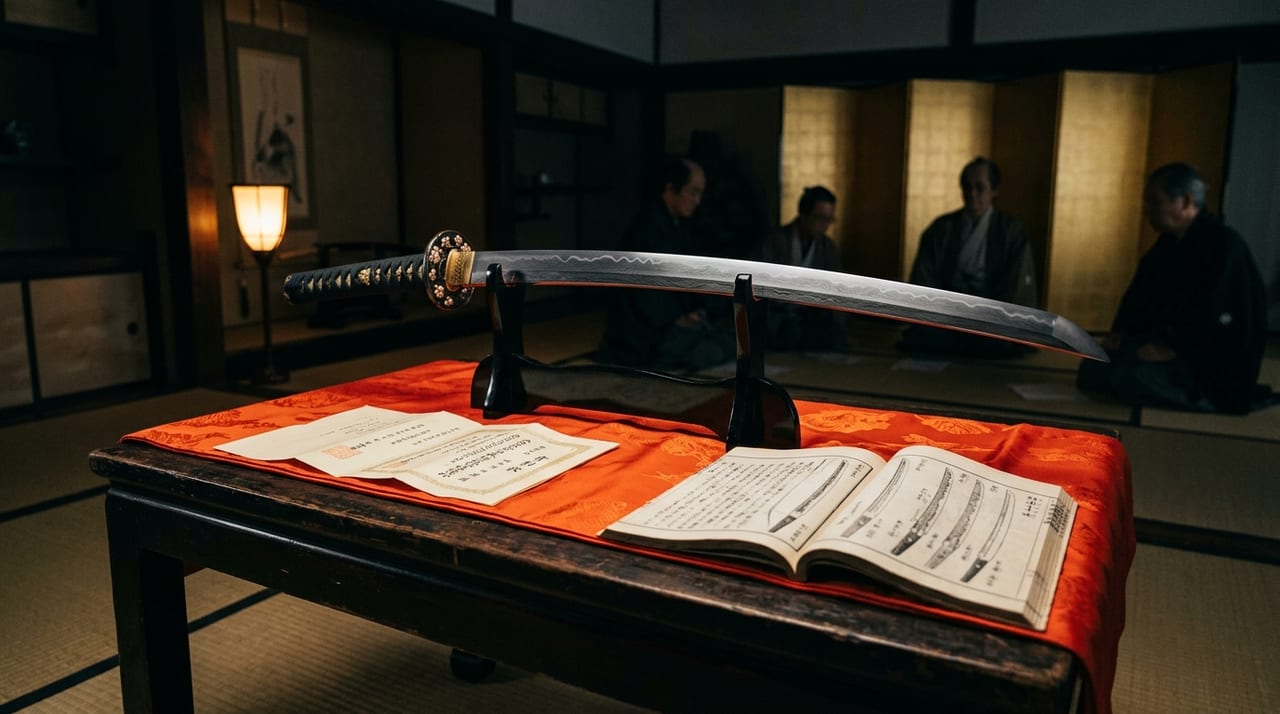 * Image is for illustrative purposes only.
Table of Contents
Why Are Japanese Sword Prices So Varied?
The market price of Japanese swords ranges widely from tens of thousands to hundreds of millions of yen, making it difficult for first-time buyers to establish pricing criteria. The five main factors determining price are "certification rank," "sword type," "era (period of manufacture)," "swordsmith reputation," and "condition." Understanding these factors makes it possible to make rational purchasing decisions within your budget.
In particular, certification rank and era classification have a major impact on price, and even works by the same swordsmith can vary significantly in appraised value depending on preservation condition and provenance. When purchasing for the first time, it is important to take a comprehensive approach that goes beyond just looking at the quoted price range—verify the issuing organization of the certification, the certification year, the rank designation, the basis for the era classification, and the presence or absence of accompanying documentation.
Overall Price Range by Rank (2026 Market Reference Values)
Entry Level: ¥1,000,000–¥5,000,000
This price range primarily centers on unsigned Edo period wakizashi and tanto, or small works without certification (or with preservation sword rank). Purchases in this range are often made for appreciation and iaido training purposes.
Characteristics:
- Sword type: wakizashi, tanto, kodachi
- Certification: none, or preservation sword (NBTHK lowest rank)
- Condition: may include worn blades, uncertified pieces, and items with unknown provenance
- Important note: verification of the registration certificate (proof of lawful possession under the Firearms and Swords Law) is essential
When considering purchases in this price range, always verify that the details noted on the registration certificate (blade length, curvature, era classification, etc.) match the actual piece. While uncertified items may occasionally be exceptional finds, determining authenticity and era is challenging, so beginners are best advised to purchase through a trusted sword dealer.
Mid-Level: ¥5,000,000–¥30,000,000
The thickest segment of the market. NBTHK preservation sword to special preservation sword ranks form the core. Edo period uchigatana and tachi, as well as wakizashi with confirmed swordsmith signatures fall into this range.
Characteristics:
- Sword type: uchigatana (including wakizashi), tachi
- Certification: NBTHK preservation or special preservation
- Era: primarily Edo period (shinto and shinshinto)
- Liquidity: relatively high, tradable through sword specialty dealers and auctions
In this range, the presence or absence of a swordsmith signature becomes a key price determinant. When a signature is present, cross-reference the swordsmith name recorded in the certification with the actual signature on the tang (nakago), and consult expert opinions.
Upper Level: ¥30,000,000–¥200,000,000
The NBTHK Important Sword rank serves as a benchmark for this tier. Works with confirmed signatures of renowned swordsmiths (Bizen Osafune, Soshu tradition, Yamato tradition, etc.) and high evaluations for both hamon and jihada converge here. This is also an active zone for foreign collector participation.
Characteristics:
- Certification: NBTHK Important Sword
- Era: koto (Kamakura through Sengoku) and renowned shinto works
- Swordsmith evaluation: high-ranking wazamono grade, renowned swordsmiths
- Liquidity: international auctions and specialty dealers are primary trading venues
Since swords in this tier possess both aesthetic and historical value, reviewing provenance documentation and past certification history before purchase can serve as important material for assessing future asset value.
Top Tier: ¥200,000,000 and Above
NBTHK Tokubetsu Juyo Tōken (Special Important Sword) rank and above serves as a benchmark. Masterpieces from the limited extant swords of the Kamakura and Nanboku-cho periods, and works by top-tier swordsmiths such as Masamune, Nagamitsu, and Masatsune fall within this range.
Characteristics:
- Certification: NBTHK Tokubetsu Juyo Tōken
- Era: primarily Kamakura through Nanboku-cho periods
- Swordsmith: documented works by National Treasure or Important Cultural Property swordsmiths
- Market: international fine art auctions such as Bonhams and Christie's
Swords in this tier have extremely limited circulation, and purchasing opportunities themselves are rare. International auction transactions are the primary venue, making it desirable to thoroughly verify the supporting information through advance viewing and consultation with specialists.
Supporting Elements That Significantly Impact Price
Completeness of the koshirae: A complete koshirae (blade plus sheath, handle, and metalwork) can account for a price increase of 30 to 100 percent or more compared to a bare blade (blade only).
Provenance: Blades formerly owned by daimyo families, imperial families, or renowned collections command high market valuations. The mere record of "formerly in the ○○ family" can add a premium of roughly 20 to 50 percent to the price.
Polishing condition: A beautifully polished blade maximizes the appreciation value of the hamon and jihada. Swords requiring professional polishing incur polishing costs (ranging from hundreds of thousands to over one million yen) as a post-purchase expense.
Completeness of supporting documentation: Swords with complete documentation beyond a certificate—including materials supporting provenance, exhibition records, and publication history—often fare better when undergoing re-evaluation after purchase or when being transferred to the next owner.
Purchase Scenarios by Budget
¥5,000,000 budget: An Edo period wakizashi in NBTHK preservation sword class with registration certificate is easily within reach. A suitable choice for initial collecting focused on appreciation and learning.
¥20,000,000 budget: Special preservation class tachi or uchigatana, or wakizashi by renowned swordsmiths come into view. Consultation with sword dealers offers the most reliable approach.
¥50,000,000 and above budget: Entry into the Important Sword tier. Participation in domestic and international auctions and building long-term relationships with sword dealers become key.
Regardless of budget, avoid making judgments based solely on price. Instead, verify the content of the certification, consistency with the registration certificate, and the presence of supporting documentation before proceeding with consultation from a trusted sword dealer—this is the surest path to avoiding mistakes.
Documents and Points to Verify Before Purchase
When purchasing a Japanese sword, verifying the content of accompanying documentation is as important as the price itself.
- Registration certificate: A document demonstrating lawful possession under the Firearms and Swords Law; verify that details recorded (blade length, curvature, era classification, etc.) match the actual piece
- Certificate of authenticity: Verify that the issuing organization, the year of certification, and the assigned rank are clearly stated
- Provenance documentation: Verify whether materials remain documenting previous owners or transmission history
- Inventory of included items: Confirm the list of accessories included with the purchase, such as koshirae, shirasaya, and sword bags
The more complete these documents, the easier it is to avoid post-purchase problems and the better the material for assessing future asset value.
Perspectives for Selecting a Trustworthy Sword Dealer
Choosing a sword dealer is a more critical process than price negotiation. Consider the following perspectives.
- Are they experienced in working with public certification bodies such as the NBTHK?
- Are return and warranty policies clearly stated?
- Is an opportunity provided to examine the actual piece in hand?
- Are explanations regarding provenance and supporting materials specific and detailed, with thoughtful answers to questions?
Comparing multiple sword dealers and discerning the care of their service and specificity of explanation will lead to a satisfying purchase.
Storage and Basic Care After Purchase
The condition of a sword after purchase is greatly affected by how it is managed. Basic points to note are as follows:
- Store in a location away from direct sunlight and high humidity
- Prevent rust with regular care using uchiko and nuguigami (polishing powder and cloth)
- Store the koshirae and blade separately, ensuring that moisture does not accumulate inside the sheath
- If rust or damage appears, do not attempt polishing on your own; consult with a professional polisher
Neglecting daily maintenance risks diminishing the blade's value, so it is advisable to understand the basic care methods before making a purchase.
Frequently Asked Questions
Q. Should I avoid purchasing swords without a certificate? The presence or absence of a certificate is one consideration, not the sole determinant of whether to purchase. Even uncertified pieces can be evaluated and purchased after confirming provenance and condition with a specialist.
Q. Should I purchase through an auction or a sword dealer? Each has its advantages. Sword dealers allow you to purchase while consulting with them, and offer peace of mind through return policies and warranties. Auctions offer broader selection, but may limit opportunities for examining the actual piece, making preliminary research especially important.
Q. Is it possible to export to overseas? Exporting Japanese swords overseas may require procedures related to cultural properties, so it is advisable to consult specialists or dealers beforehand.