The Battles of Bun'ei and Kōan (the Mongol Invasions) and the Japanese Sword — How the Battles Against the Mongol Forces Influenced Sword-Making in the Mid-Kamakura Period
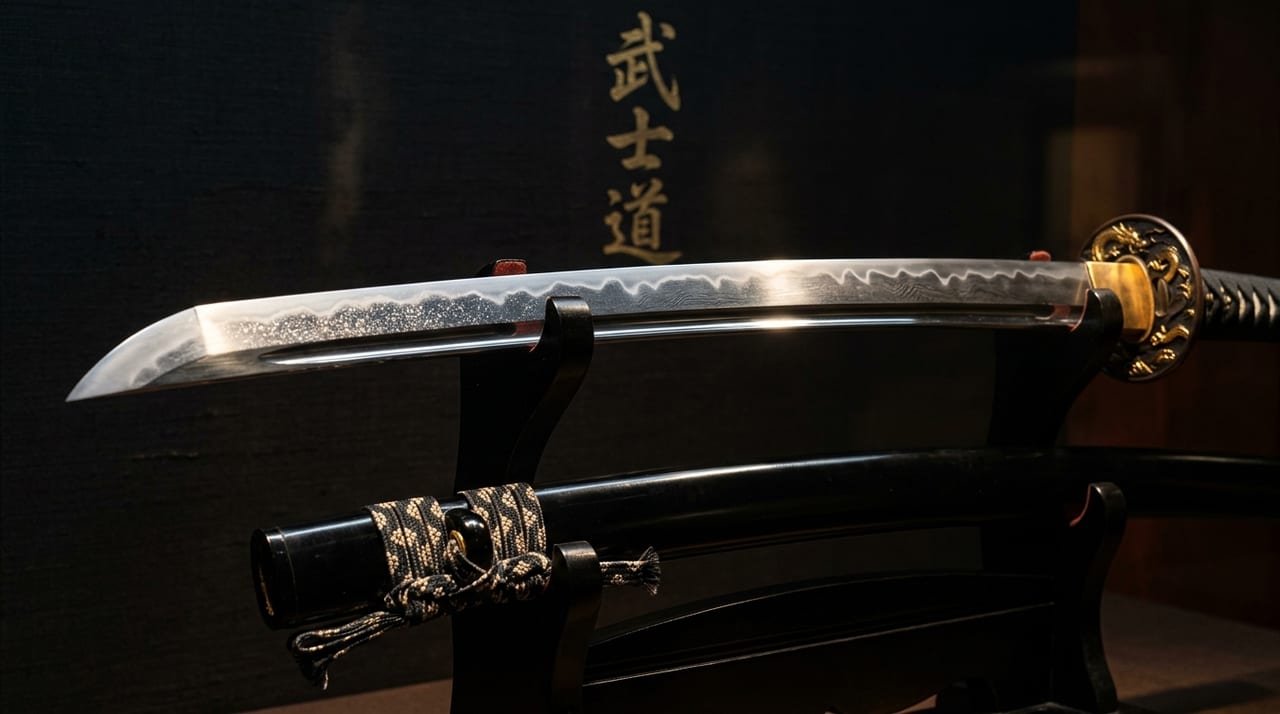 * Image is for illustrative purposes only.
Table of Contents
What Were the Mongol Invasions? — Two Foreign Military Incursions
In Bun'ei 11 (1274) and Kōan 4 (1281), a joint force of the Mongol Empire (Yuan) and Goryeo landed in northern Kyushu. These two incursions, known as the "Battle of Bun'ei" and the "Battle of Kōan," were the largest-scale foreign military threat in Japanese history, delivering a profound shock to the Kamakura shogunate and its warriors. The broader historical context is also covered in The Mongol Invasions and the Revolution in Swords.
Although the Mongol invasions are remembered militarily as ending when typhoons ("divine winds") forced the invading armies to withdraw, the close-quarters and archery combat that took place over those few days of actual fighting brought definite changes to warrior society's view of battle and weaponry.
The Mongol Army's Tactics — The "Alien Warfare" Japanese Warriors Faced
The warfare of Kamakura-period warriors was based on mounted combat with the bow as the primary weapon, combined with individual challenges and tachi-to-tachi duels. The Mongol forces' tactics were fundamentally different.
- Group tactics (massed formations): The Mongol infantry moved in massed formations, acting in unison at the signal of drums (taiko) and gongs (kanera). Their tactics, which prioritized collective coordination over individual valor, threw Japanese warriors — warriors who had expected single combat (ikki-uchi) — into confusion.
- Use of gunpowder weapons (tetsuhau): Records exist of exploding projectiles called "tetsuhau (iron bombs)" being used. The blasts and flashes startled horses and neutralized the warriors' cavalry charges. These were the first "gunpowder weapons" Japanese warriors had ever encountered, and their psychological impact was immeasurable.
- Poisoned arrows and massed archery: The Mongol bow was shorter than the Japanese bow and had a shorter range, but the Mongol forces excelled at massed-fire area suppression. Records also note the use of poisoned arrows (Mongol arrows), with some struck warriors unable to heal from their wounds.
The Direct Impact of the Mongol Invasions on the Japanese Sword — Historical Records and Archaeology
The Problem of Cutting Ability — Mongol Armor and the Japanese Sword
From the Battle of Bun'ei, multiple records state that Japanese warriors "struck Mongol soldiers with their tachi but could not cut through them" (see the Hachiman no Mōkoki, etc.). The following factors can be considered.
- Heavily armored Mongol troops: Yuan infantry wore armor similar to "haraate" and "kusari katabira"; though smaller in scale than the "yoroi-musha" Japanese warriors had anticipated, it was designed to withstand thrusting more than cutting. The possibility that the demand shifted from the tachi's "cutting" function to its "thrusting" function may have influenced later changes in blade shape.
- Blade damage: Records also remain of "swords breaking" and "edges chipping" after fierce combat with the Mongol forces. There is also the theory that this influenced later reinforcement of the blade body (increased kasane and weight).
Changes in Sword Shape After the Mongol Invasions — Archaeological and Oshigata Sources
After the Mongol invasions (the Battles of Bun'ei and Kōan: 1274–1281), the following changes are observed in swords from the late Kamakura period (late 13th–early 14th century).
- Trend toward larger kissaki: A shift is seen away from the typical pre-invasion "inokubi kissaki (boar's-neck point)" toward a larger kissaki. Some researchers interpret this as an adaptation to the Mongol forces' massed close-combat fighting, since a larger kissaki enhances thrusting capability.
- Increase in kasane: A trend toward increased blade thickness (kasane) is observed. In the Mongol forces' massed close-quarters combat, swords were prone to chipping and breaking from repeated contact with shields and armor. This experience likely raised the demand for "sturdiness," possibly pushing sword construction toward thicker and heavier blades.
- Acceleration of the fusion of Bizen-den and Sōshū-den: From the late Kamakura period through the Nanbokuchō era, the Sōshū-den's "powerful hamon with nie," as represented by Masamune, came into fashion. This development coincides with the period's backdrop of heightened interest in "practical strength" in the wake of the shock of the Mongol invasions.
The Legend of "Swords of the Mongol Invasions" — Reality and Mythologization
Many swords and anecdotes said to be connected to the Mongol invasions were created in later ages. However, most of them do not go beyond the realm of "legend."
- Collection of "Mongol Swords": Some of the weapons and armor left behind by the Yuan forces were brought back by warriors and shrines and temples as war trophies. There are records of Mongol-made blades (curved swords and saber-type weapons) entering Japan and being prized as "exotic swords." Some of these are said to be held today in museums and shrines and temples, but few swords can be definitively identified as connected to the Mongol invasions.
- The Valor of Takezaki Suenaga and His Sword: The picture scroll "Mōko Shūrai Ekotoba," which depicts the fighting of the Japanese side during the Mongol invasions, is a pictorial record commissioned by a single warrior named Takezaki Suenaga to obtain rewards. This scroll depicts warriors with their tachi in detail and serves as a valuable iconographic source for the sword fittings (wearing style and koshirae) of the period.
The Long-Term Impact of the Mongol Invasions on Japanese Warrior Society
Historical records that directly prove the Mongol invasions changed sword shapes are scarce. However, the following indirect influences can be noted.
- Acceleration of the shift toward a group-combat orientation: The recognition spread throughout warrior society that organized collective combat was more important than individual valor, and this led to the development of "infantry-centered group tactics" during the Nanbokuchō and Muromachi periods. This change was one of the driving forces behind the "enlargement" and "emphasis on practicality" in swords.
- Reinforcement of the awareness that "Japanese swords are superior to Western and Asian swords": The recognition spread that Japanese swords had demonstrated high practical utility in combat against the Mongol forces, cultivating in warrior society the self-perception that "Japanese swords are supreme." This awareness became one of the origins of the "Japanese sword superiority" discourse that continued into and after the Edo period.
Summary — How Foreign Shock Changed the Sword
The Mongol invasions were a historical experience in which Japanese warriors faced "an unknown war." The Mongol forces' group tactics, gunpowder weapons, and different combat ethics shook the warriors' view of battle and prompted a re-examination of sword shapes and uses.
The trend toward "enlargement and increased practicality" in swords from just after the Mongol invasions through the Nanbokuchō era cannot be understood apart from this foreign shock. In understanding the history of the Japanese sword, it is necessary to give the Mongol invasions their due weight as an external stimulus. For those wishing to see the swords of this period themselves, works from the late Kamakura period onward can also be found in the online catalog.