The Kakitsu Rebellion (1441) and the Sword Industry: How the Assassination of Ashikaga Yoshinori Transformed the Muromachi Blade Market
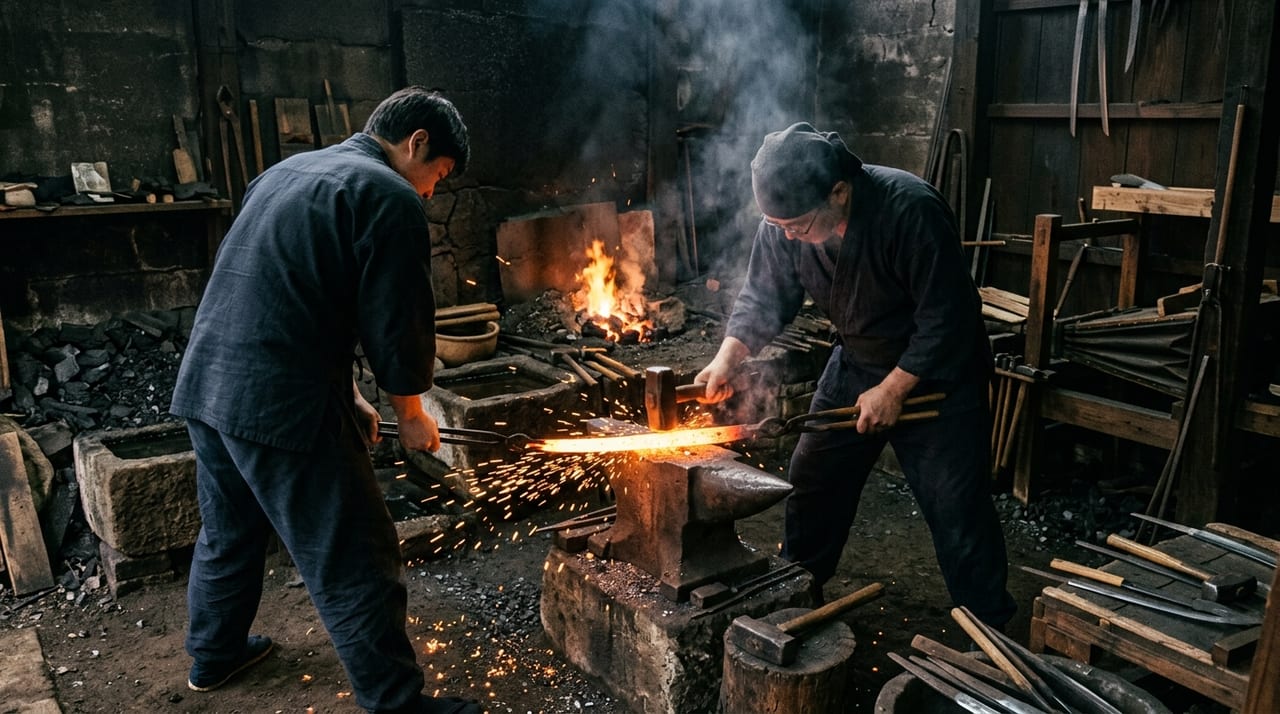
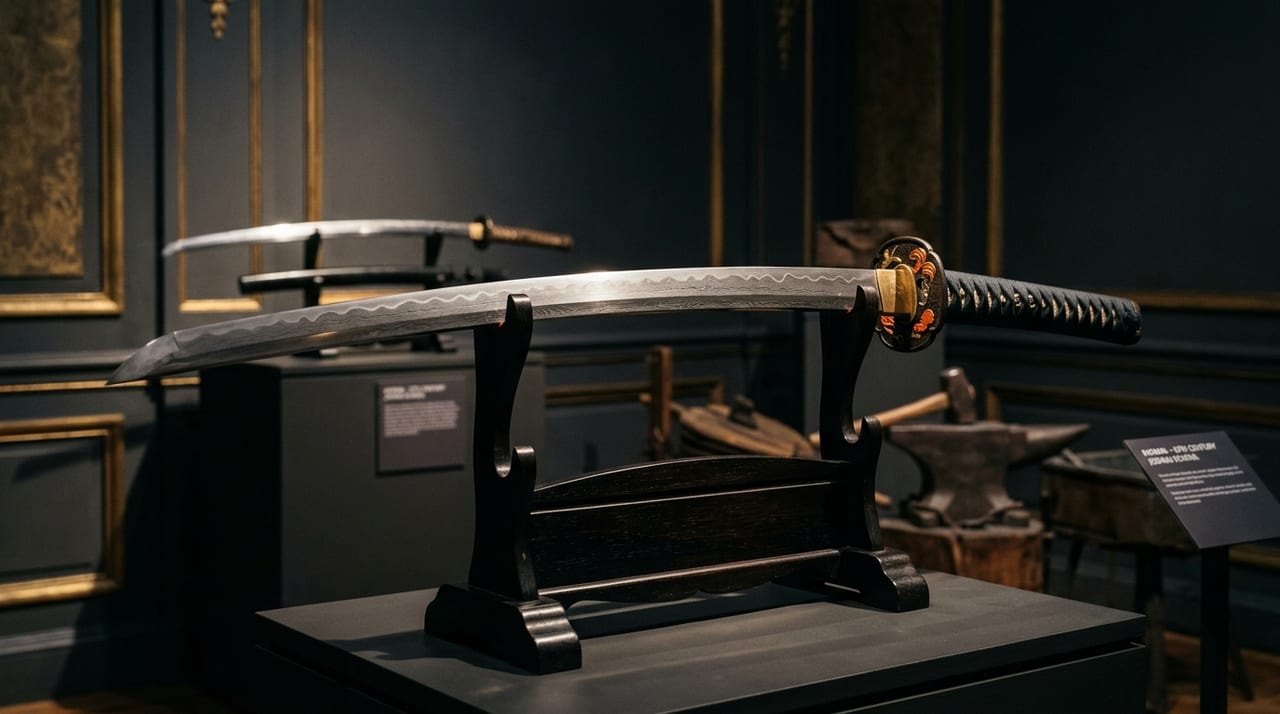 * Image is for illustrative purposes only.
Table of Contents
What Was the Kakitsu Rebellion?
In the sixth month of Kakitsu 1 (July 1441), Akamatsu Mitsusuke, shugo daimyo of Harima, Bizen, and Mimasaka, invited the sixth shogun, Ashikaga Yoshinori, to his private residence in Kyoto and assassinated him during a banquet. This was the "Kakitsu Rebellion." Yoshinori was known for his autocratic exercise of power and had pressed many shugo daimyo and temple/shrine forces, so his death was widely accepted as a kind of "liberation." However, the political vacuum immediately brought about deteriorating public order and frequent armed conflicts, triggering a dramatic change in sword demand.
Market Fluctuations in the Sword Trade Created by Political Vacuum
In the mid-Muromachi period when shogunal power temporarily waned, shugo daimyo began competing with each other for military superiority. While the Akamatsu clan perished under pursuit by shogunal forces, armed conflicts centered on Harima and Bizen intensified in this process, and demand for military equipment updates surged. According to historical records, the number of registered swordsmiths in the Osafune region of Bizen is said to have increased by approximately 30% in the 10 years following the Kakitsu Rebellion (historical conjecture/estimated value).
The sudden increase in demand also affected quality control of swords. While the retainers of shugo daimyo hastened to equip themselves, workshops that could deliver numerous swords in a short period were highly valued. This "shift toward mass production" became one factor in forming the foundation of mass-production-type sword culture on the eve of the later Ōnin Rebellion (1467).
It is thought that military equipment demand of that time had two different streams. The "custom-made" swords commissioned individually by powerful samurai and retainers were items that swordsmiths signed with their mei and finished over time. In contrast to this, swords called "mass-produced items" for responding to sudden military mobilization sometimes omitted the maker's signature, and finishing in a short period was prioritized. In the period of confusion following the Kakitsu Rebellion, demand for the latter is said to have increased relatively. Now, when handling swords from this era, comparing whether or not there is a mei and the care in finishing becomes one clue to imagining the background of orders at that time.
Regional Responses in Bizen, Mino, and Yamato
Bizen (Osafune): The swordsmith collective of Osafune had built an organized division-of-labor system since the Kamakura period and was able to respond relatively smoothly to the increased demand following the Kakitsu Rebellion. During this period, the workshop lineages of Osafune Morimitsu and Yasumitsu took on the core of supply, and transition progressed from the "Ōei form" with restrained curvature to designs emphasizing practical combat.
Mino (Seki): Swordsmiths of Seki received backing from the Mino shugo, the Toki clan, and strengthened their supply to samurai in the Tōkai and Kantō regions. Demand in particular for single-edged, lightweight uchigatana increased, and Seki's "practical swords" became widely distributed among middle and lower-ranking samurai. The expansion of demand during this period became the foundation for establishing mass-production techniques in the later Mino tradition.
Yamato (Nara): Yamato swordsmiths had strong ties with temple and shrine forces and were protected by powerful institutions such as Kofukuji and Kasuga Taisha even amid political instability following the Kakitsu Rebellion. Demand for votive and ceremonial swords remained relatively stable, and the delicate suguha techniques of the Yamato tradition continued unchanged.
The differences in regional responses were largely due to the nature of their patrons. Bizen and Mino, which directly responded to the practical combat needs of shugo daimyo and local samurai, and Yamato, which continued to have stable support from temples and shrines, occupied different positions even during the same period of turmoil. This difference is also evident when viewing swords from each region today, as it is thought to be reflected in the tendencies of shape and finishing.
Changes in Sword Distribution and Commission Sales
Another influence the Kakitsu Rebellion had on the sword industry was a change in distribution channels. Because the custom of sword exchanges and donations under the direct control of the shogunate temporarily fell into disrepair, shugo daimyo began establishing their own procurement routes. It is also thought that it was during this period that "official merchant"-type relationships formed, with sword dealers (sword merchants) visiting the camps and castle towns of daimyo for direct transactions.
Additionally, with the fall of the Akamatsu clan, seized swords from parts of Harima and Bizen entered the secondary market, and the volume of used sword circulation increased. The shogunate's controlled "famous sword" system relaxed, and the commodification of swords in the market advanced, as one aspect of the industry's structural changes during this period.
Appraisal Points for Kakitsu-Period Swords from a Modern Perspective
When actually examining swords made around the time of the Kakitsu Rebellion, there are several points of focus.
- Presence or absence of mei: Whether a mei remains on the nakago in its original state (unaltered since manufacturing) is regarded as one clue to determining whether it is a custom-made or mass-produced sword.
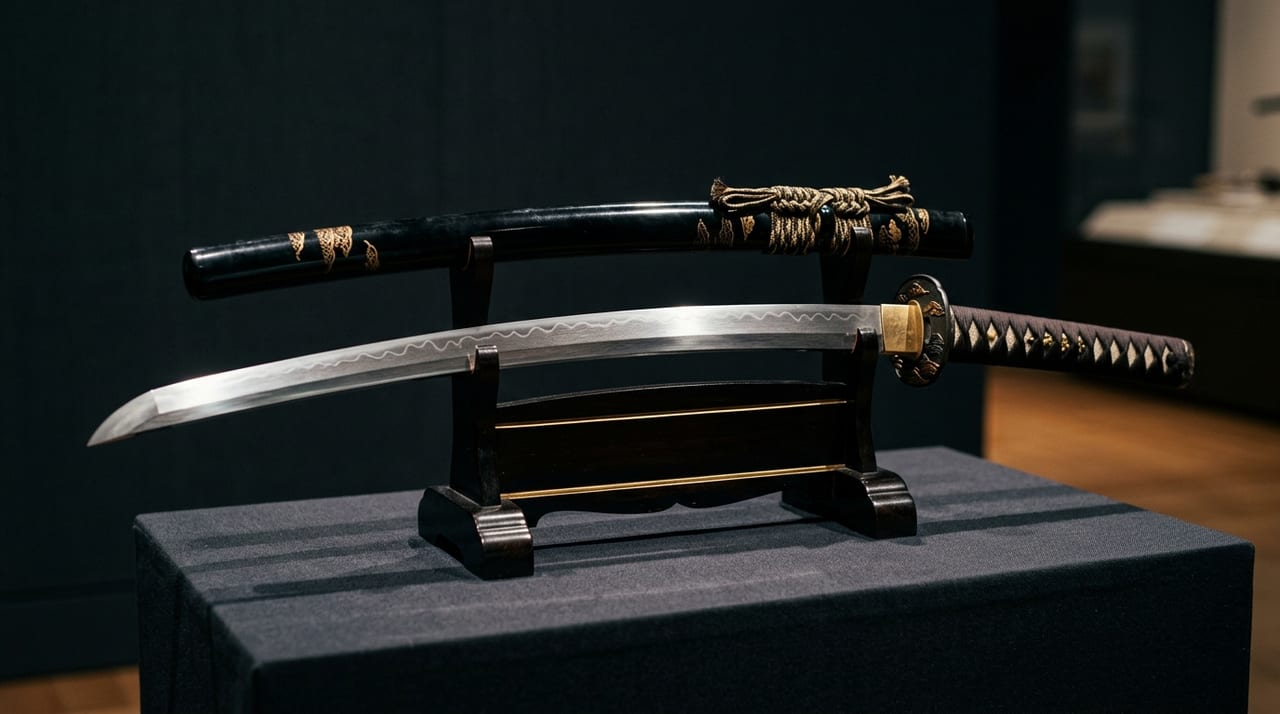
- Taihai (shape): From the gently curved shape called the Ōei form to shapes more conscious of practical combat, this was a period of transition, and examining the balance of the entire blade can reveal characteristics of the era.
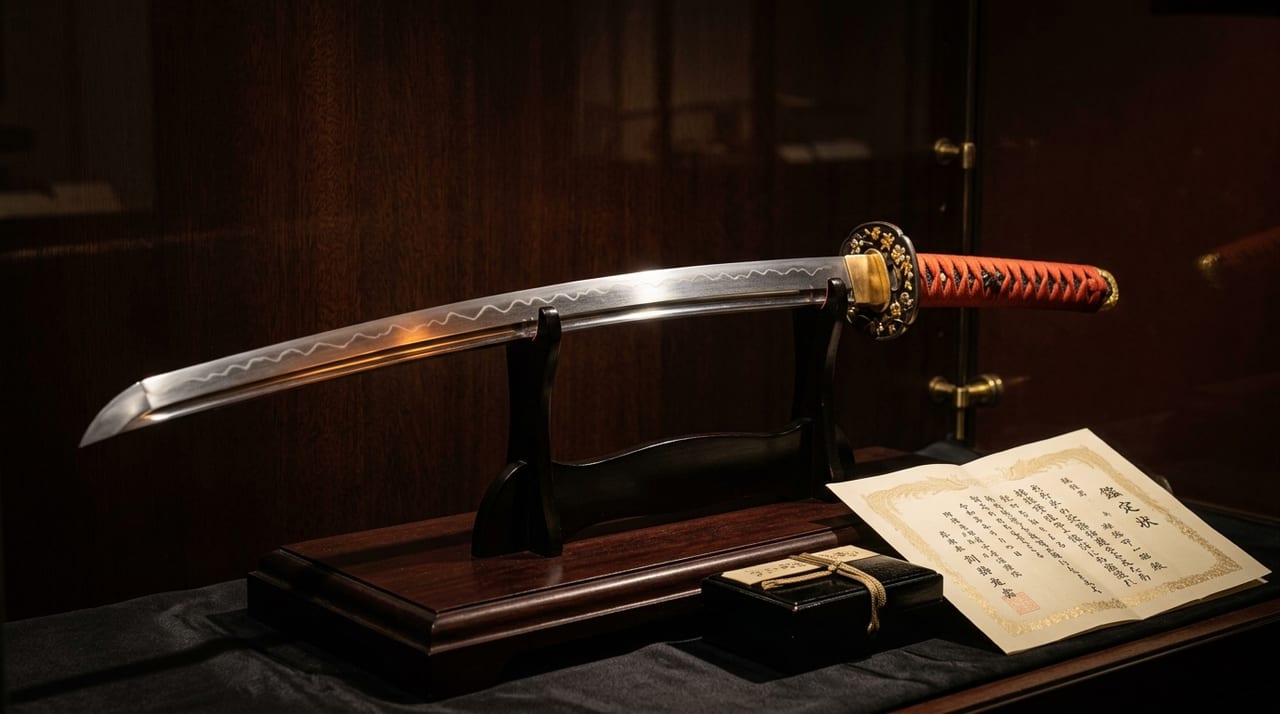
- Presence or absence of certification: A certificate of authentication from the NBTHK (Society for Preservation of Japanese Art Swords) shows expert evaluation regarding the era, province, and swordsmith, and serves as important reference information when handling swords from this period.
- Condition of preservation: The presence or absence of rust and damage, and the state of polishing, are basic points to confirm when purchasing or viewing.
These points of focus are practical starting points when viewing swords in light of the impact that political turmoil following the Kakitsu Rebellion had on sword manufacture and distribution. In particular, for swords from a period when distribution channels diversified through shugo daimyo and sword dealers, because their provenance is not uniform, careful verification of history along with certification is indispensable.
Historical Significance Left by the Kakitsu Rebellion in Sword History
The Kakitsu Rebellion was not merely a political change but also a structural turning point in the sword industry in the mid-Muromachi period. A shift from dependence on shogunal authority to a sword market led by shugo daimyo and regional samurai, a swinging back from mass production to quality, and the diversification of distribution channels—these changes accumulated over approximately 30 years leading to the Ōnin Rebellion and underpinned the transformation of Japanese swords from "exclusive possessions of the warrior class" to "widely circulating commodities."
Understanding this era is important context for appreciating and collecting swords from the Muromachi period, for accurately interpreting the relationship between production background and quality. Swords after Kakitsu carry within them the traces that political turmoil etched into steel.