Dedicated Swords at Shinto Shrines — Japanese Swords as Sacred Objects and the Reality of Dedication and Return Procedures
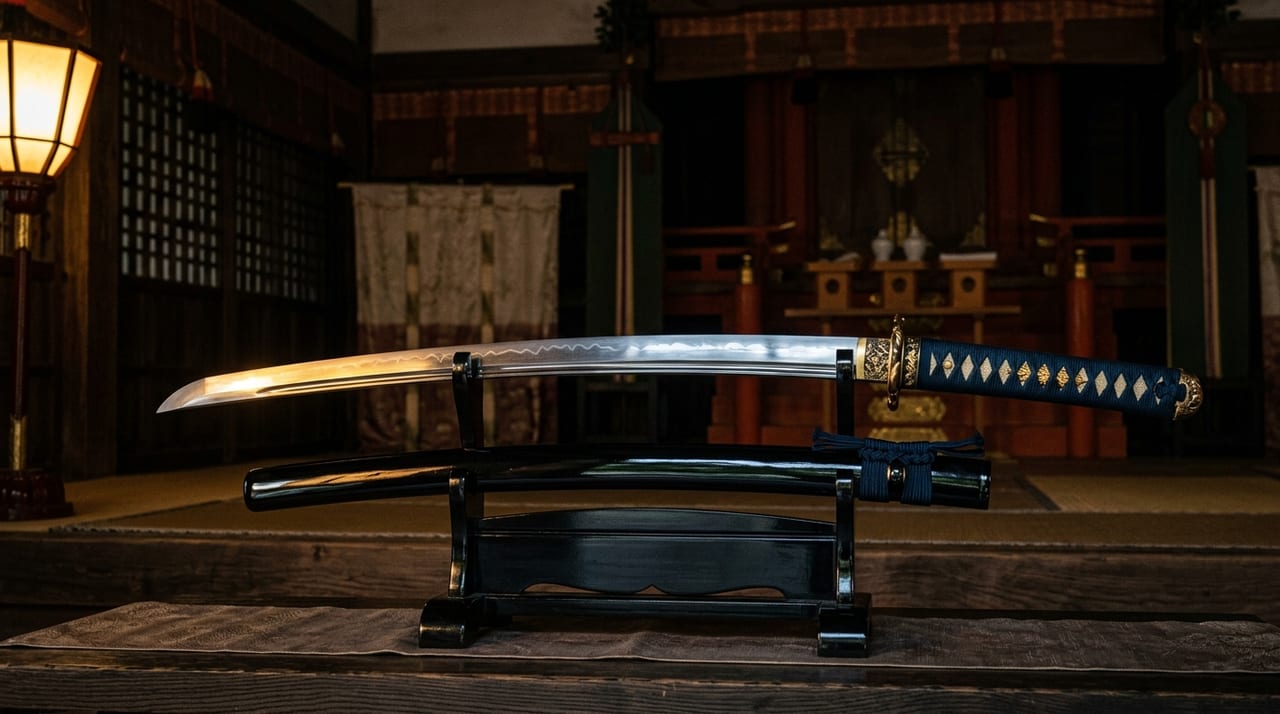 * Image is for illustrative purposes only.
Table of Contents
Shinto Shrines and Swords — From Tools of Faith to Sacred Objects
In Japan, swords have never been mere weapons; since ancient times they have been venerated as "sacred regalia" possessing divine power. The Kusanagi-no-Tsurugi (Ame-no-Murakumo-no-Tsurugi), one of the Three Sacred Treasures, is the most widely known symbol of this, but countless other swords have been dedicated to and kept at shrines throughout the country, with their total number said to reach tens of thousands.
The reasons behind sword dedications to shrines are wide-ranging. The motivations are various.
- gantō: swords offered by warriors departing for battle in prayer for victory
- hōshatō: swords offered in gratitude upon safe return
- those given out of pure faith, as an offering of the finest things to the gods
Even in the aristocratic society of the Heian period, the dedication of swords to prominent shrines, beginning with Ise Jingū, had become established as a kind of customary act of courtesy.
Types of Dedicated Swords and Their Historical Evolution
Swords dedicated to shrines can be broadly divided into three categories.
- goshintaitō: enshrined as a yorishiro (vessel for a divine spirit), normally stored deep within the sanctuary where they are never seen by the public
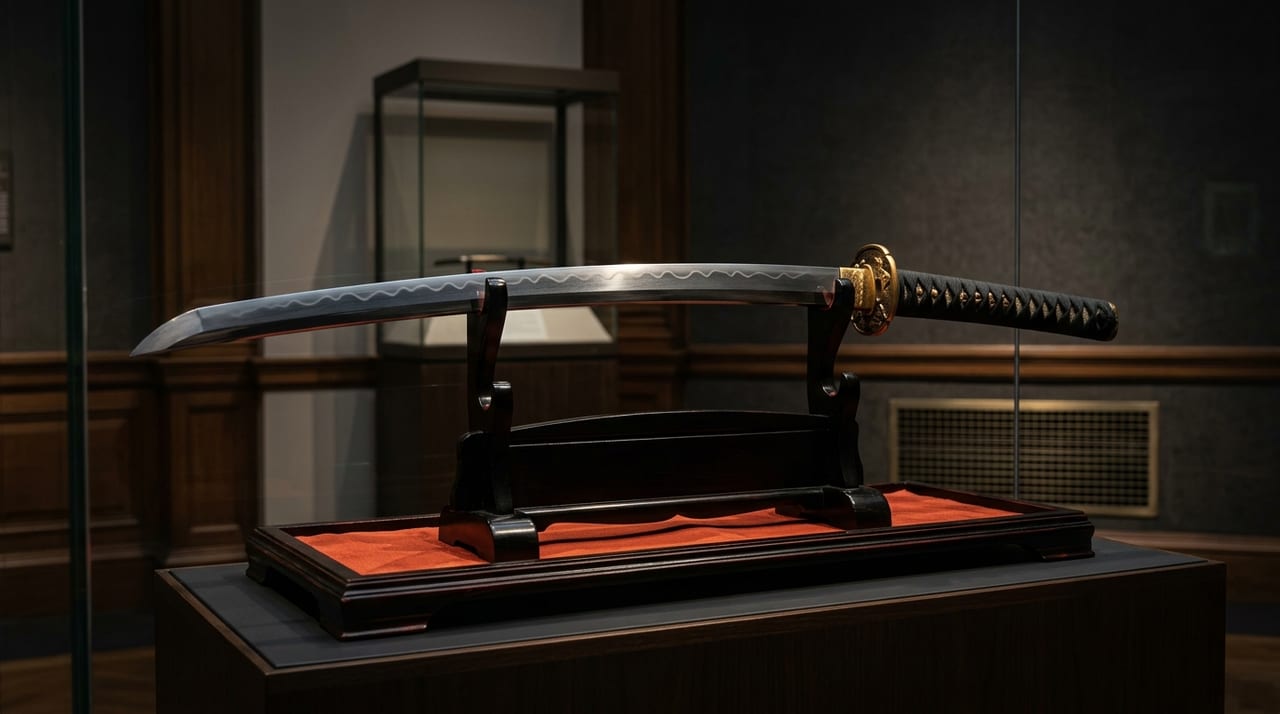
- shinpōtō: managed as shrine treasures, and sometimes displayed during festivals or special ceremonies
- hōnōtō: brought and offered by the faithful, many of which are stored in the treasure repository
Historically, sword dedications by the warrior class were most prolific from the Kamakura through Muromachi periods. Swords said to have been dedicated by Minamoto no Yoritomo to Tsurugaoka Hachimangū appear in multiple records, and these acts also carried a political intent of demonstrating the shogunate's authority before the gods. In the Edo period, regular dedications by the shogunal and daimyo families were institutionalized, and renowned swords were offered almost every year to prestigious shrines such as Ise Jingū, Kasuga Taisha, and Sumiyoshi Taisha.
The Reality of Modern Dedication Procedures
In modern Japan, possession of a sword requires a registration certificate under the Act for Controlling the Possession of Firearms or Swords and Other Such Weapons (Jūtōhō), and the handling of this registration certificate is also important when dedicating a sword to a shrine. Dedication takes two broad forms: "permanent dedication" and "temporary dedication."
| Form of Dedication | Transfer of Ownership | Required Procedures |
|---|---|---|
| Permanent dedication | Transferred from the dedicator to the shrine | A "notification of change of owner" is submitted to the prefectural Board of Education, and the shrine is registered as the new owner. A shrine can become the registered owner on the certificate as a legal entity. |
| Temporary dedication (custody dedication) | Not transferred | No change-of-name procedure is required. However, if the custody extends over a long period, the shrine may be held responsible for storage, so it is advisable for both parties to prepare a custody receipt or storage agreement. |
Storage and Maintenance of Dedicated Swords
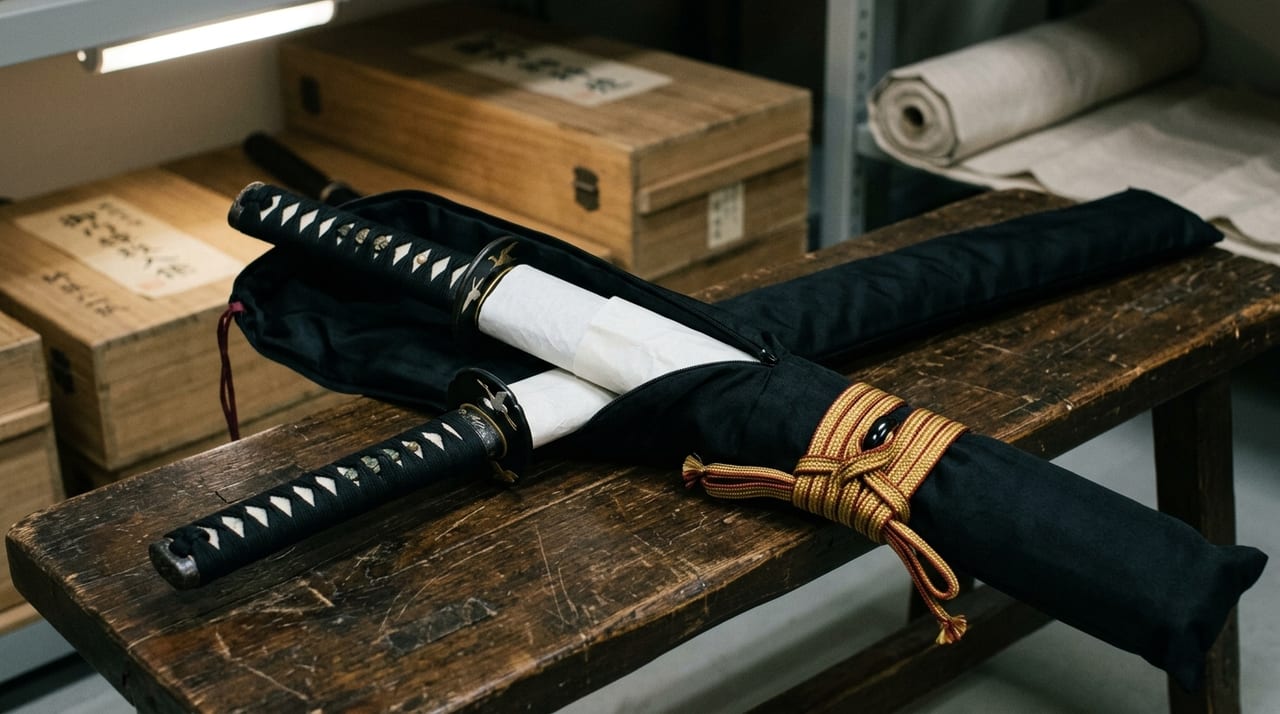
The storage conditions of swords dedicated to shrines vary greatly depending on the size and financial resources of the shrine. At large shrines, swords are kept in a dedicated treasure repository with controlled temperature and humidity, but at small shrines, simple storage in a wooden box is not uncommon.
Regular "re-oiling" (abura-biki) and "wiping" (nugui) are essential for sword preservation. A thin coat of chōji oil or camellia oil is applied to prevent rust, and unless the degraded oil is periodically removed, rust will form and damage the blade. Shrine priests do not necessarily possess specialist knowledge in sword preservation, however, and it is not uncommon for swords to be discovered in poor condition decades after dedication.
To address this problem, NBTHK conducts sword preservation workshops and traveling instruction programs for shrines nationwide. Restoration using subsidies from the Agency for Cultural Affairs is also being carried out, and for dedicated swords designated as jūyō bunkazai (Important Cultural Property), restoration is funded by the national government.
Issues Surrounding the Return of Dedicated Swords
There are cases where swords dedicated to shrines are subsequently demanded back as "returns." The most common are claims by descendants of the original dedicator, but legally, once ownership has been transferred, the shrine has no obligation to return the sword. However, shrines sometimes voluntarily comply out of ethical considerations or in order to maintain their relationship with the faithful.
More complex is the issue of swords that the military compelled shrines to "supply" during the war. Toward the end of the Pacific War, large numbers of swords were collected from shrines throughout the country, and some that escaped being melted down were confiscated or sent overseas after the war. Negotiations for the return of these dedicated swords continue to this day, and some have been realized through diplomatic channels.
In recent years, the handling of swords at closed shrines has also become a problem. Unmanned shrines without priests sometimes have dedicated swords remaining in them, unknown to anyone. Many of these swords, which should be protected as local cultural assets, are left in a situation where ownership and management responsibility are unclear, and this has become a challenge from the perspectives of public administration and cultural property protection.
Preserving Sword Culture Through Dedicated Swords
The practice of sword dedication has not been confined to religious acts; it has also played an important role in transmitting Japan's sword culture to future generations. Even through the many crises of war, haibutsu-kishaku, and postwar confiscation, swords stored in shrine treasure repositories have in many cases continued to be protected.
Even among today's tōshō (swordsmiths), many regard dedication to a shrine as the highest act of craftsmanship. Dedicating a commission-forged sword to a shrine is said to mean that the tōkō's skill and spirit are preserved forever before the gods, carrying a significance on a different level from swords that are bought and sold.
The culture of dedicated swords continues vibrantly to this day, with newly made dedicated swords being presented at shrines across the country every year. It is customary for new swords to be dedicated at the time of "sengū" (shrine relocation), and at Ise Jingū's shikinen sengū, dedicated swords have been made by contemporary tōshō. The deep bond between swords and Shinto faith is passed on unchanged across the ages.