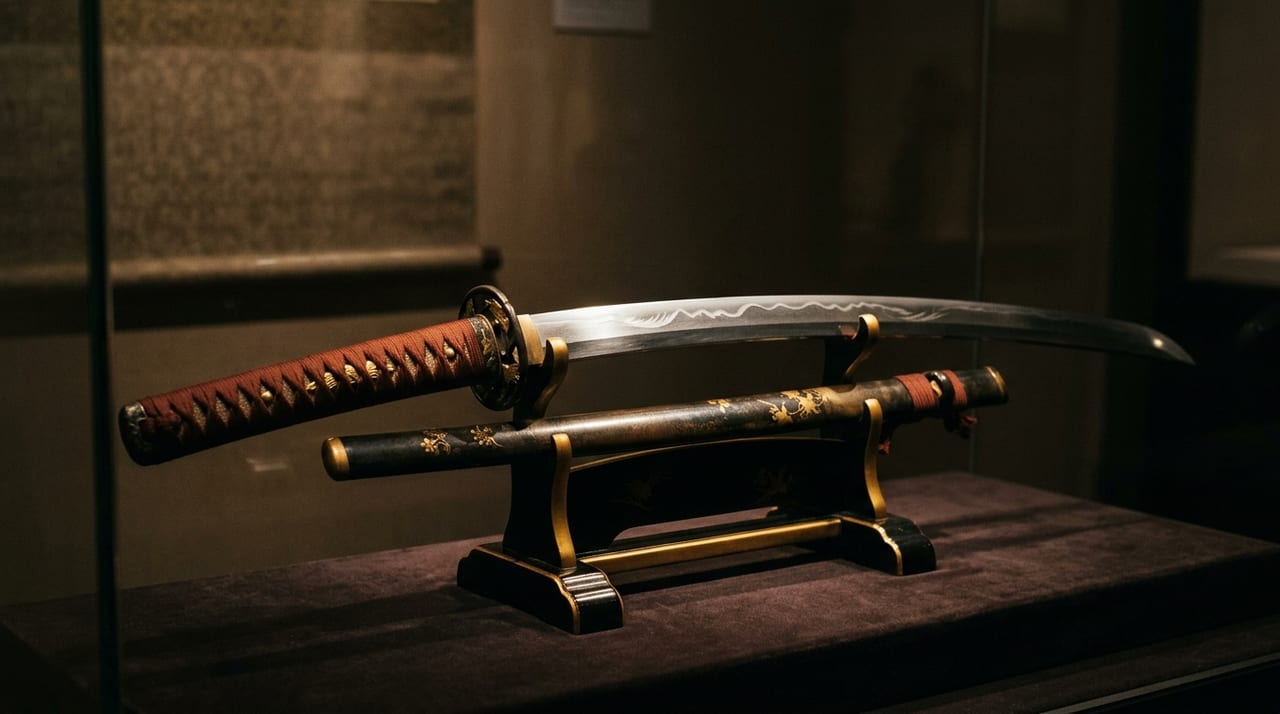
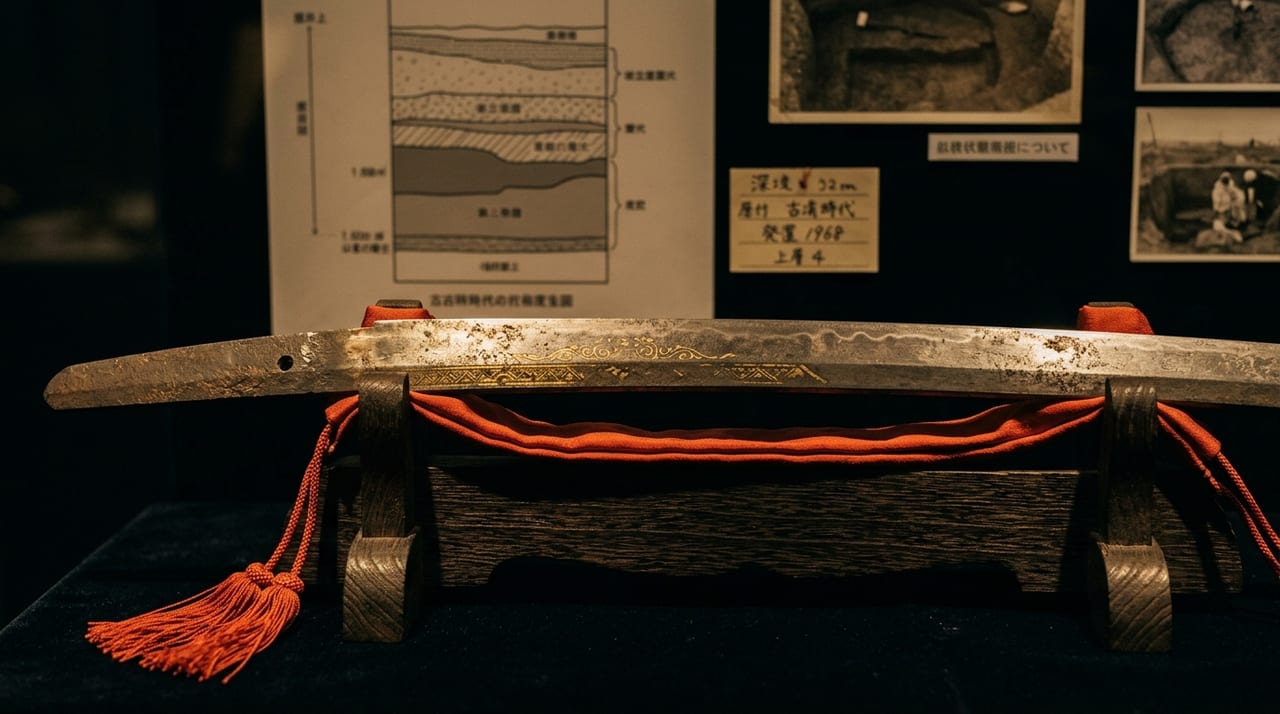
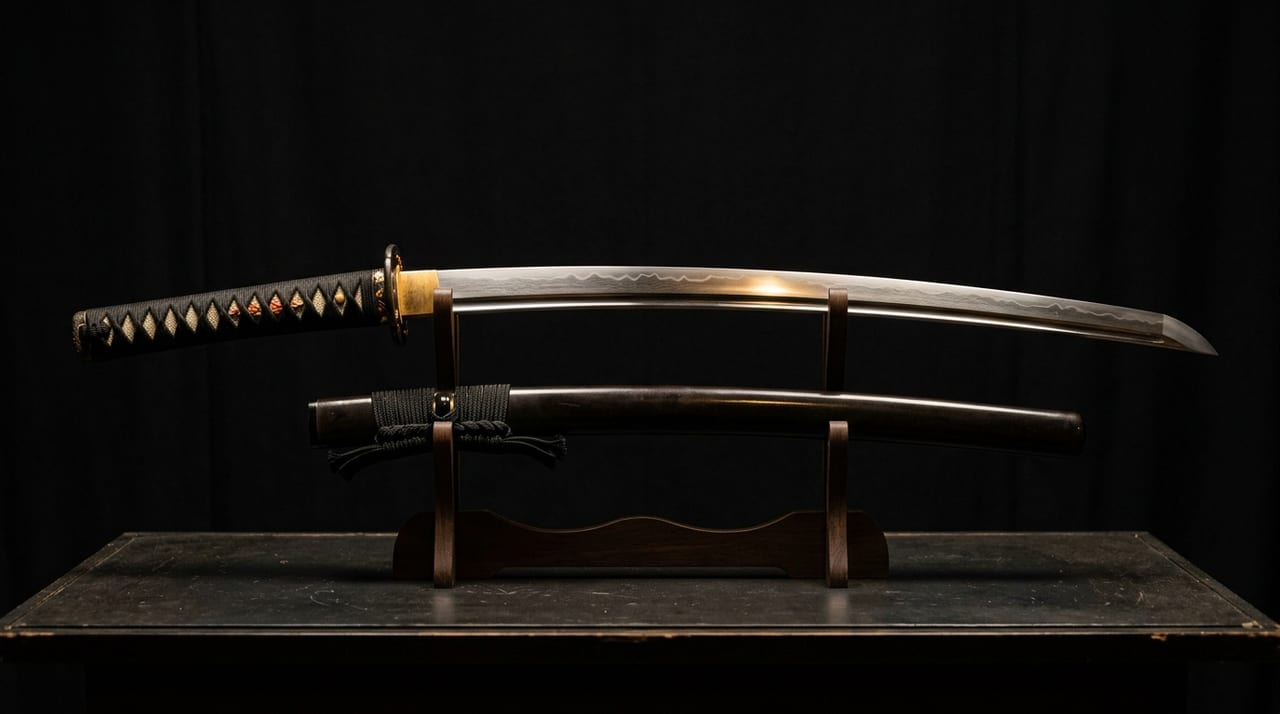
Honjo Masamune's Provenance and Transmission: Seven Hundred Years from Kamakura to the Shogunal House and Its Loss
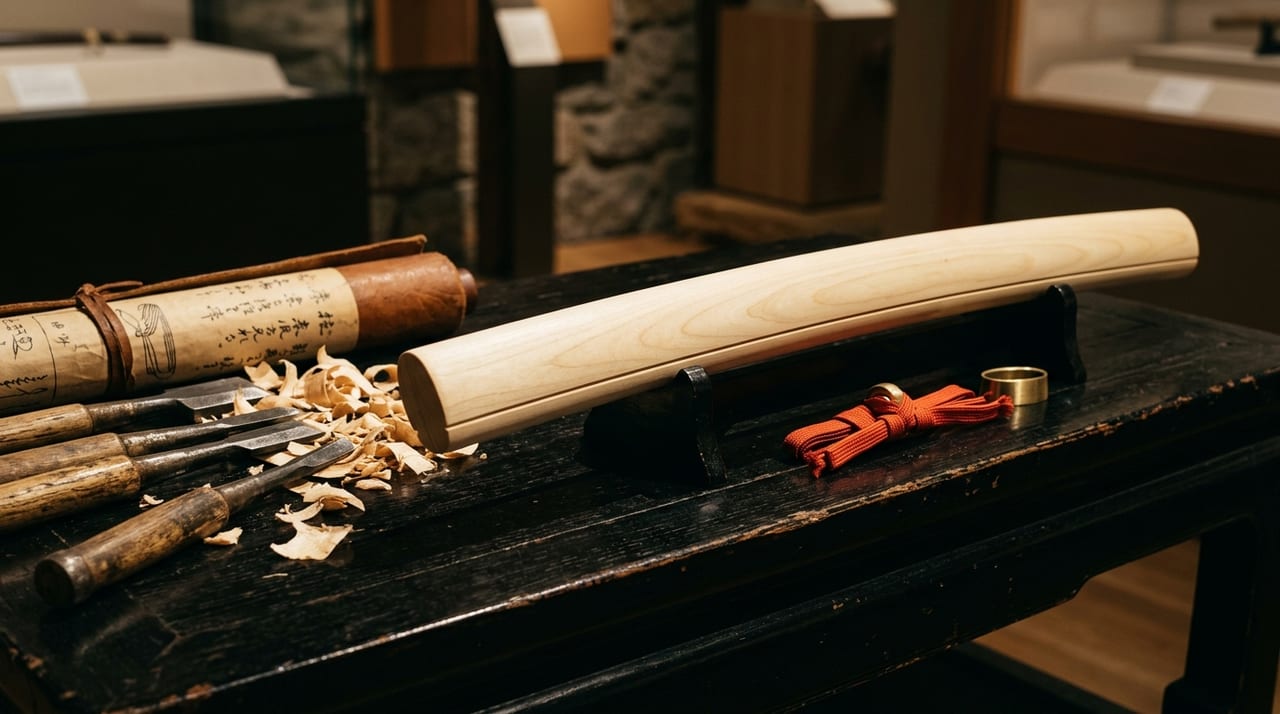 * Image is for illustrative purposes only.
Table of Contents
What Kind of Swordsmith Was Masamune? His Position in Sword-Crafting History
To speak of Honjo Masamune, one must first establish the position of the swordsmith Masamune (Okazaki Masamune) in the history of Japanese sword craftsmanship. Masamune was a master swordsmith active in Kamakura, Sagami Province, from the late Kamakura period through the early period of the Northern and Southern Courts (late 13th to early 14th century), and is regarded as the pinnacle of Japanese sword history as the "perfector of the Soshu tradition."
The character of Masamune's blades lies in the fusion of an intensely irregular temper pattern, sometimes described as a "collapse" in the surface marking and exceptional precision in the metal's forging. He established a new style—the "Soshu tradition"—that departed from the Bizen and Yamato traditions, exerting immense influence on subsequent swordsmiths. Masamune's disciples became known as the "Ten Greats of Masamune" and shaped sword-making culture throughout the nation.
Surviving examples of Masamune's work are scarce; the Japan Sword and Art Preservation Society (NBTHK) has authenticated only a handful of blades as definitively from Masamune's hand across Japan and abroad. Among these, Honjo Masamune is numbered among the "Five Legendary Swords"—the finest of them all.
Honjo Masamune Among the Five Legendary Swords
The "Five Legendary Swords" is a collective term for five particularly renowned swords in Japanese sword history, typically referring to the following five:
| Sword Name | Swordsmith | Current Status |
|---|---|---|
| Doji-Kiri Yasutsuna | Ohara Yasutsuna | Tokyo National Museum collection (surviving, Important Cultural Property) |
| Oni-Maru Kunitsuna | Awataguuchi Kunitsuna | Imperial Household Agency collection (surviving) |
| Mikazuki Munetsugu | Sanjo Munetsugu | Tokyo National Museum collection (surviving, National Treasure) |
| Daitokutai Mitsuyoshi | Miike Mitsuyoshi | Maeda Ikutoku-kai Foundation collection (surviving, National Treasure) |
| Honjo Masamune | Okazaki Masamune | Whereabouts Unknown (since the postwar period) |
Of the five, four survive and are publicly displayed. Honjo Masamune alone remains unaccounted for—a fact that has only heightened interest in this legendary blade.
Detailed Provenance: From Kamakura to the Uesugi Clan
The name "Honjo Masamune" derives from Honjo Shigenaga, a fierce Uesugi clan warrior of the Sengoku period. Shigenaga served Uesugi Kenshin and later his successor Kagekatsu.
The blade's early provenance is unclear, but it is presumed to have passed from Sagami to the Kanto and Echigo regions sometime during the Northern and Southern Courts through Muromachi periods. The Uesugi clan was known to be avid collectors and custodians of Japanese swords during Kenshin's era, and it is conceivable that Honjo Masamune was among the "Kenshin-associated" treasures held in Echigo.
No reliable historical records survive concerning when or how the blade came into the possession of Honjo Shigenaga. Because "Honjo" forms part of its name, it is believed that this designation became established during the period when Shigenaga held the sword.
From the Uesugi Clan to the Tokugawa Shogunal House: Transmission After Sekigahara
Following the Battle of Sekigahara (1600), the Uesugi clan suffered a dramatic reduction in power, their domains shrinking from 1.2 million koku in Aizu to merely 300,000 koku in Yonezawa. During this period, many of the treasures held by the Uesugi clan likely became candidates for sale or presentation to the victorious powers.
Honjo Masamune was presented to the Tokugawa Shogunal House by the Uesugi clan—a fact supported by surviving records. During the Edo period, it was preserved as an imperial treasure (omono) within the shogun's personal collection. The sword holdings of the shogunal family were managed by an institution known as the "Sword Stewards' Office" (Onkensho), and blades of the caliber of the Five Legendary Swords received special custodial care.
Throughout the Edo period, Honjo Masamune remained in the hands of the shogunal family. After the Meiji Restoration, it passed into the custody of the former shogunal house, the Tokugawa family.
Postwar Loss: GHQ Confiscation and After
In late 1945, following the end of the Pacific War, the Allied Occupation Forces (GHQ/SCAP) confiscated numerous swords from the former shogunal Tokugawa family (the Shimizu branch). Honjo Masamune was included on this confiscation list and, according to surviving records, came into the possession of a U.S. Army officer named Coldy Bimore in 1946 (Showa 21).
From that point forward, however, all trace of Honjo Masamune vanished entirely. While some of the swords confiscated by the GHQ were eventually returned, Honjo Masamune did not appear on any repatriation list and remains missing today.
Postwar investigations have considered the following possibilities:
- Taken to America: Possibly removed to the United States as the personal property of an individual officer
- Lost or Stolen: Disappeared due to administrative negligence during the confiscation process
- Sold Secretly: Possibly sold unofficially to a wealthy collector
- Survives but Remains Hidden: Currently held by a private owner unaware of its historical significance
Japanese sword heritage organizations and sword enthusiast groups have conducted periodic investigations, yet as of 2026, the location of Honjo Masamune remains unknown.
Why Honjo Masamune Remains Special
Interest in Honjo Masamune stems not merely from the mystery of a "lost legendary blade." Masamune's swords represent the absolute pinnacle of Japanese sword history, and Honjo Masamune, counted among the Five Legendary Swords, would constitute—if discovered and authenticated—one of the most momentous discoveries in the history of Japanese art.
Furthermore, the blade serves as a symbolic case study of how cultural treasures were lost amid postwar turmoil. The confiscation and loss of cultural artifacts remains an active topic of international discourse, and Honjo Masamune stands as one of its most dramatic examples.
For sword enthusiasts and historical researchers alike, the discovery of Honjo Masamune remains "the greatest romance of the Japanese sword."