Habaki Fabrication Techniques: The Core Metalwork That Secures the Blade, and the Modern Realities of Material Selection
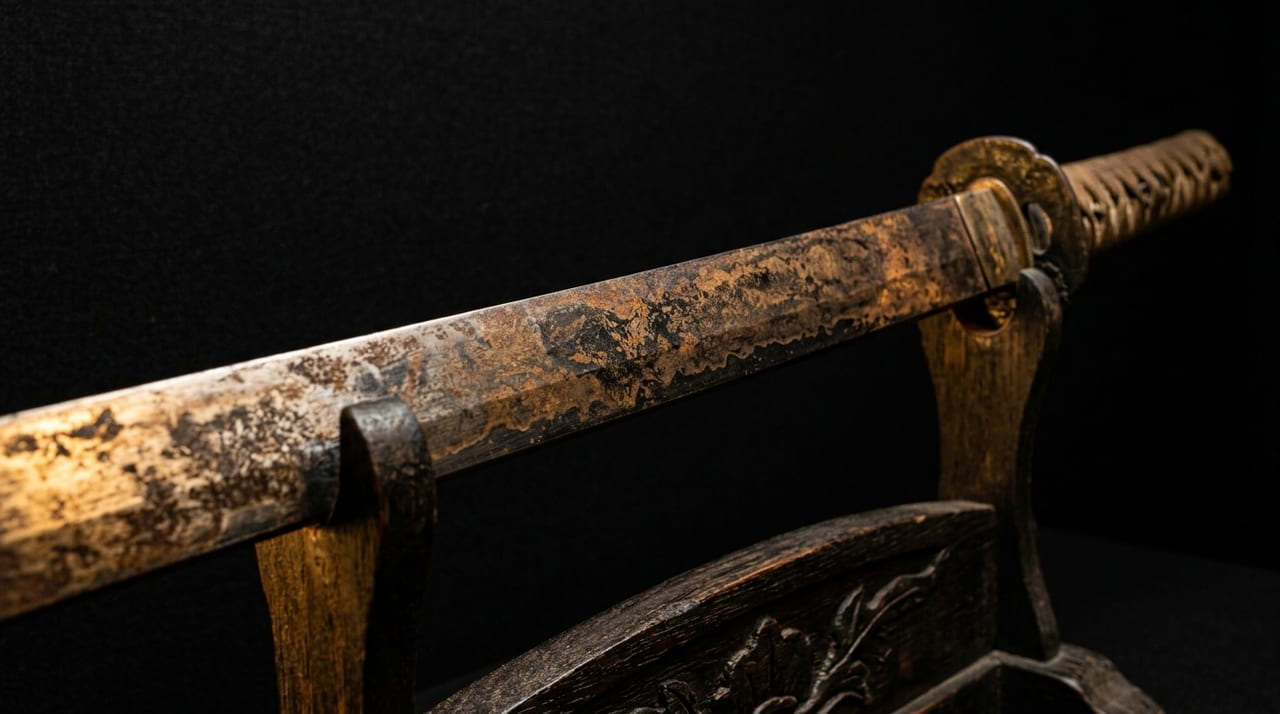 * Image is for illustrative purposes only.
Table of Contents
What Is the Habaki? The Outsized Role of a Small Fitting
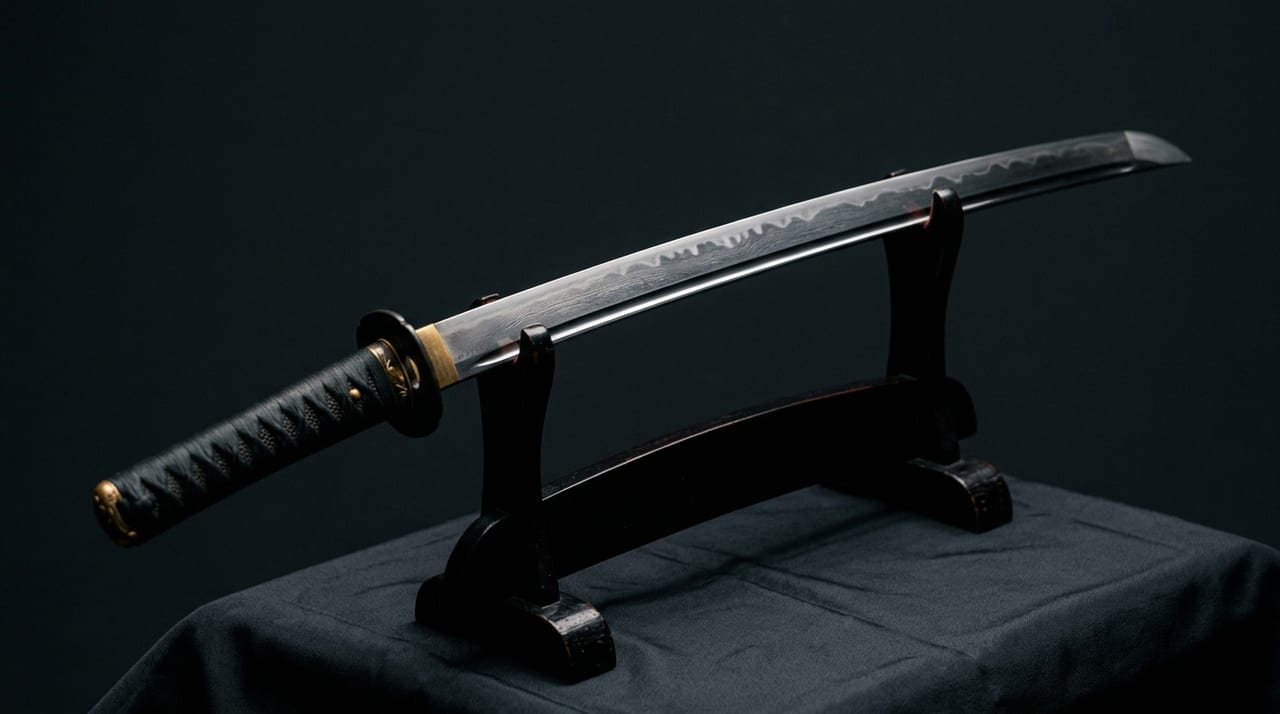
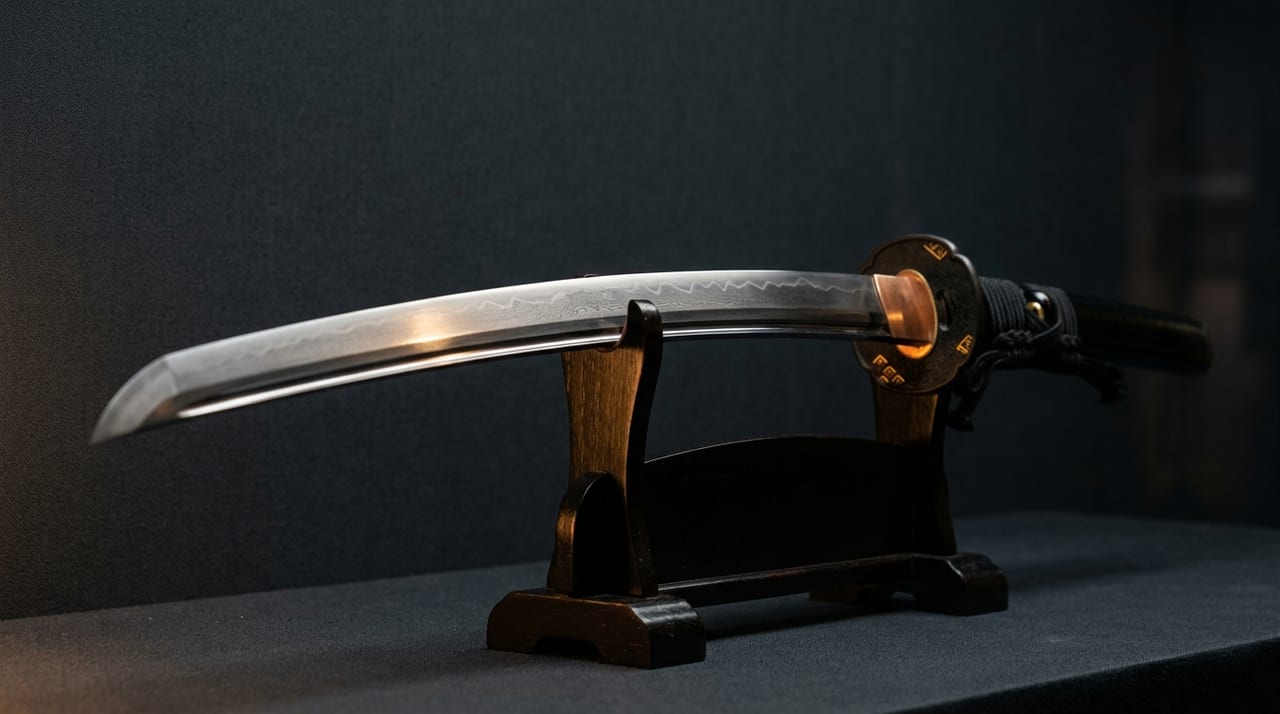
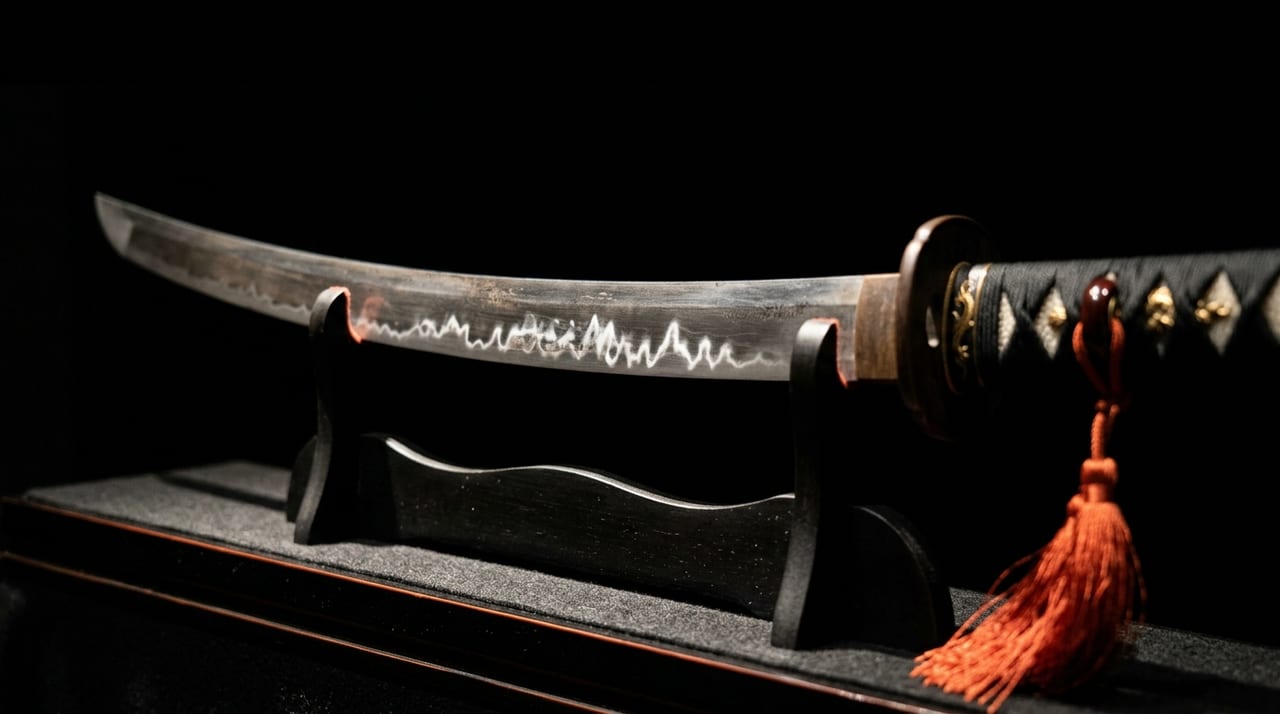
At the junction of the blade and saya on a Japanese sword sits a small metal collar fitting called the habaki. It fits snugly against the mouth of the saya (the koiguchi), preventing the sword from falling out, and while it may appear modest at first glance, it is an indispensable element in the functional completeness of the Japanese sword.
Among the many parts that make up the sword's outer fittings — tsuba, tsuka, menuki, fuchi-kashira, saya, and others — the habaki is the only metalwork component that comes into direct contact with the blade. Accordingly, it demands a precision fit perfectly matched to the blade's shape. Craftsmen who make habaki are called shirogane-shi (silversmiths) or habaki-shi; they may operate as independent specialists, or the tōshō may fabricate the habaki themselves.
The Structure of the Habaki and the Names of Its Parts
The structure of the habaki appears simple, but the precision it demands is exceptionally high.
| Part | Description |
|---|---|
| Hamachi section | The section that fits snugly against the hamachi (the notch on the cutting-edge side where the blade begins). It is precisely formed to match the blade angle. |
| Munemachi section | The section that fits into the notch on the mune side. Both the hamachi and munemachi sections require that the interior of the habaki exactly match the cross-sectional shape of the blade. |
| Outer circumference of the habaki | Corresponds to the inner diameter of the saya's koiguchi (the mouth of the sword). The outer circumference is designed to be slightly larger than the koiguchi, so that the ideal "tightness" — just stopping when inserted into the saya — is achieved. |
| Height (thickness) of the habaki | Generally around 10 to 20 millimeters. Depending on the intended use, there are hitoe habaki (single habaki) and futae habaki (double habaki); the futae habaki is a higher-ranked form used on important swords. |
Habaki Materials: Copper, Silver, Gold, Shakudo, and Shibuichi
The material of the habaki is chosen according to the rank and intended use of the sword.
| Material | Characteristics |
|---|---|
| Copper | The most widely used material. Inexpensive and easy to work, it is used broadly from entry-level and practice swords to ordinary iai swords. |
| Silver | Used in mid- to high-grade koshirae. It has a beautiful luster and is softer and easier to work than copper. Because pure silver is too soft, alloys (such as sterling silver) are often used. |
| Shakudo | An alloy of gold and copper (gold content 4–5%), characterized by its deep, blackish hue. It is a high-grade material widely used in daimyo koshirae of the Edo period. |
| Shibuichi | An alloy of silver and copper (silver content approximately 25%). It has a distinctive grayish tone and is used in high-end pieces combined with engraving and inlay. |
| Gold | Used in the highest-ranked koshirae. Because pure gold is too soft, it is often used as an alloy or applied as gold plating (gold gilding) over a silver base. |
| Brass | An alloy of copper and zinc, used primarily for the habaki of replica and practice swords. |
The Habaki Fabrication Process: The Core of Precision Metalwork
Habaki fabrication is one of the processes in which the skill of the metalwork craftsman (shirogane-shi) is most clearly revealed.
- Step 1: Material preparation: The chosen metal is rolled into a flat sheet. The thickness is set slightly greater than the finished product to allow for adjustment during polishing.
- Step 2: Fitting to the blade: The hamachi, munemachi, and cross-sectional shape of the blade are measured and templated. Modern craftsmen use precision calipers and caliper gauges, measuring to an accuracy of 0.1 millimeters.
- Step 3: Shaping (rough form): Based on the measurements, the metal sheet is cut out and bent into a ring shape matching the blade's cross-section. This stage is called aragata (rough form).
- Step 4: Fitting: The aragata is fitted onto the blade, and areas that do not match are gradually filed down and adjusted. This fitting work is the most time-consuming and skill-intensive step. The goal is a state in which the habaki fits snugly on the blade with no play, yet can still be put on and taken off.
- Step 5: Fitting to the saya: The habaki that now fits the blade is next adjusted to match the saya's koiguchi. The outer circumference is finished so that the habaki produces the satisfying resistance known as habakigotae — stopping just right when inserted into the saya.
- Step 6: Surface finishing: The surface is polished using files, whetstones, cloth paper, and similar tools. On high-grade pieces, decorative work such as engraving, inlay, and maki-e metalwork (kineshi) is applied.
Habaki with Engraving and Decoration: As Works of Metalwork Art
In high-ranking koshirae, the habaki is adorned with delicate engraving and inlay. This is not mere decoration but an important element that enhances the overall aesthetic unity of the sword.
Typical decorative motifs include dragons, phoenixes, plum blossoms, waves, and family crests. In Edo-period daimyo koshirae, a soroi koshirae — in which the tsuba, fuchi-kashira, menuki, and habaki were all matched with the same design — was considered the highest rank.
Particularly prized were habaki decorated with engraving techniques such as katakiribori, kebori, and takabori. These highly decorated habaki have become collectibles on a par with the blades themselves.
Modern Habaki Fabrication and the Challenges Facing Craftsmen
Shirogane-shi who specialize exclusively in habaki fabrication are few in number nationwide. Many tōshō outsource habaki production, but with the number of shirogane-shi available for commissions declining, problems have arisen in both delivery time and quality.
In response to this problem, several developments have been observed.
- In-house habaki fabrication by the tōshō themselves: Among younger tōshō, there is a growing number who also learn habaki fabrication techniques from their masters and train to make them on their own.
- Collaboration with metalwork artists: Contemporary craftsmen specializing in engraving and metalwork have been entering the world of sword fittings, with an increasing number of cases in which they co-produce work together with tōshō.
Overseas interest has also been growing. Collectors of Japanese swords in Europe and North America have begun paying attention not only to the blade but to the quality of the koshirae as a whole, including the habaki, and demand for high-quality habaki is emerging from overseas markets.
The Precision Engineering of the Japanese Sword as Seen Through the Habaki
This small component, the habaki, reflects the essence of the Japanese sword as a precision craft object. The fitting precision that tolerates no gap of even 0.1 millimeters, the functional design that simultaneously satisfies blade, saya, and user, and the decoration as aesthetic pursuit — all of this is condensed into a piece of metal just a few centimeters on a side.
When sword enthusiasts appreciate a habaki, we hope they will see it not as a mere "fitting" but will read in it the precision metalwork technique it embodies and its contribution to the aesthetic harmony of the sword as a whole. By becoming aware of the habaki's presence, one's understanding of the Japanese sword as a comprehensive work of art will surely deepen.