From Chokuto to the Curved Blade: The Origins of Nihonto Curvature and Continental Influences
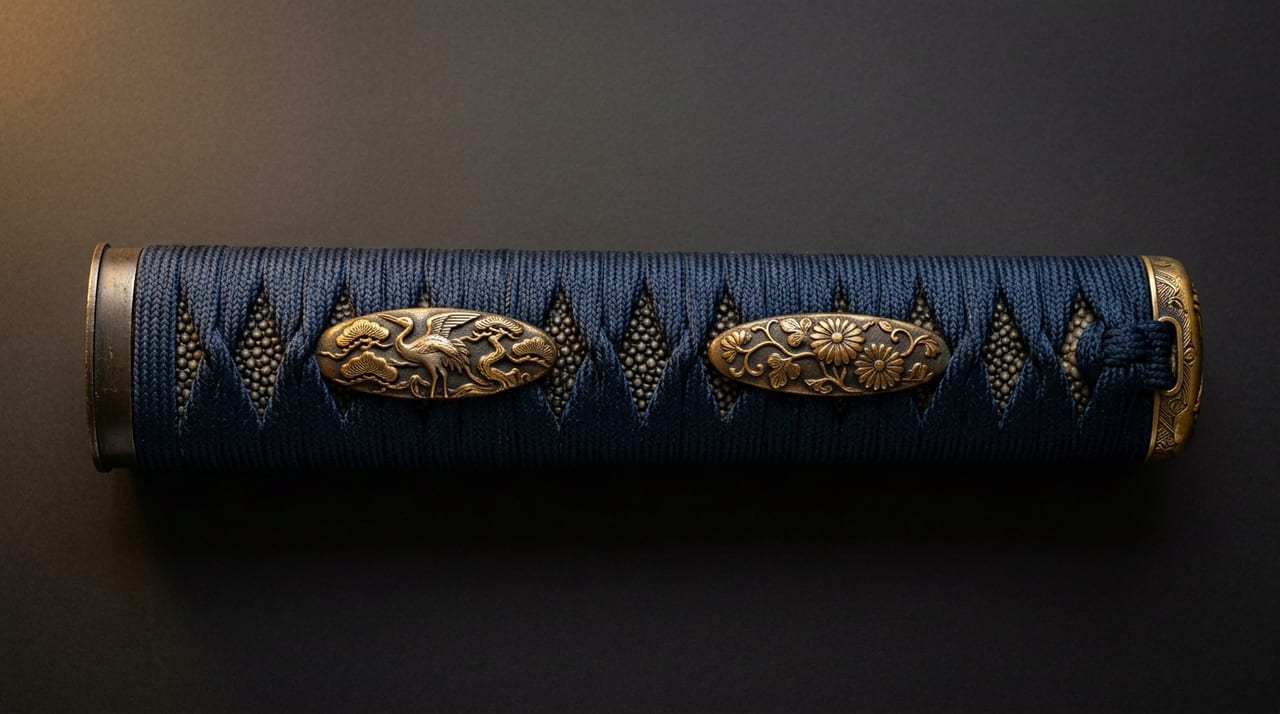 * Image is for illustrative purposes only.
Table of Contents
The Problem of Japanese Sword Origins
"When and why did the Japanese sword become curved?" — This question is one of the most fundamental and contested themes in the history of Japanese swords. Current scholarship is divided into two major positions.
Continental Influence Theory: The position that the concept of curved blades was transmitted from China, the Korean Peninsula, and Central Asia (Persian-style curved sword traditions). This view finds precedents for curved blades among imported goods and gifts presented to the imperial court from the Nara through early Heian periods.
Independent Development Theory: The position that curvature arose naturally from functional necessity within Japan's unique development of forging technology, iron-smelting methods (tatara smelting), and equestrian culture. This view emphasizes the technical aspects of curvature emerging during the hardening and tempering processes.
The Reality of Ancient Swords (Straight Blades)
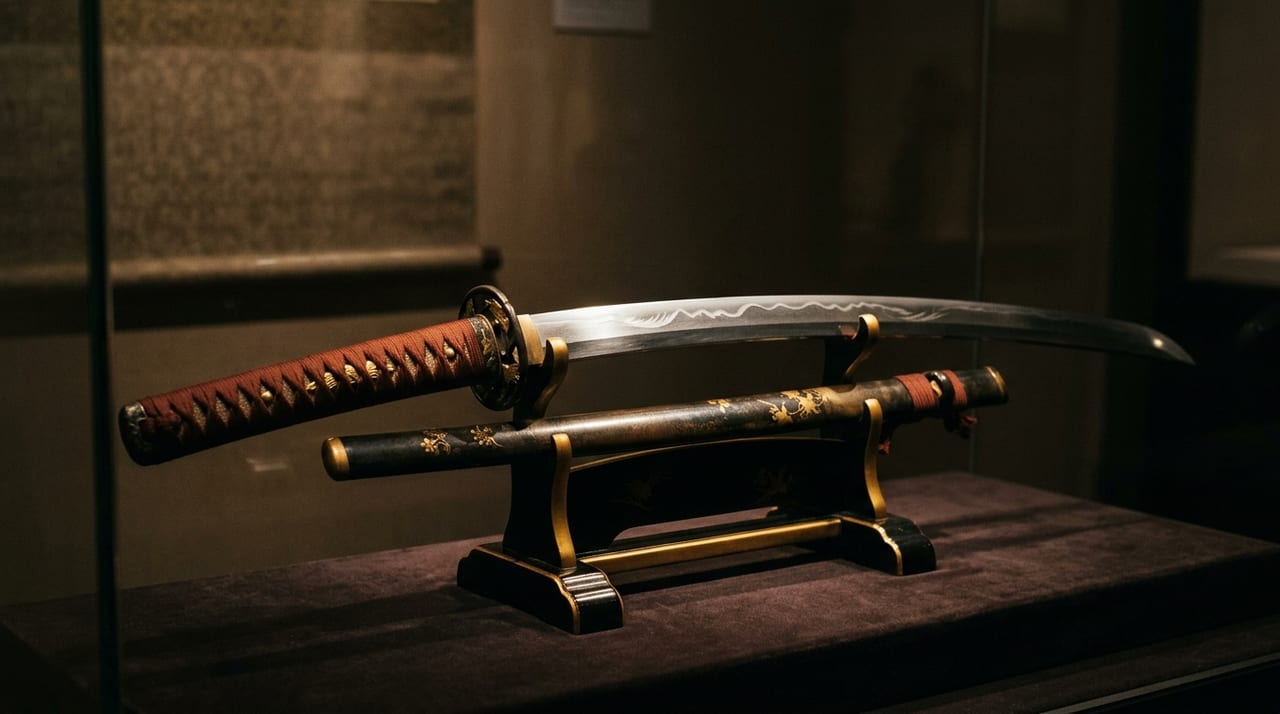
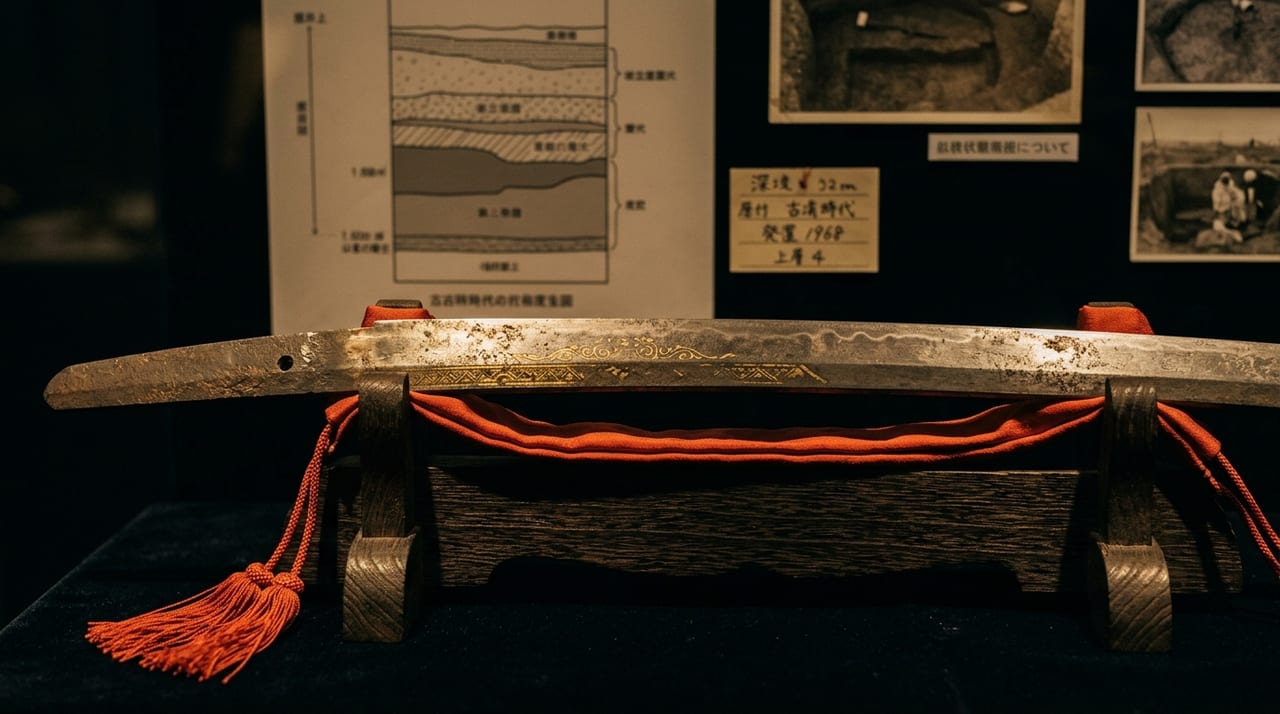
Ancient swords were produced in Yamato, Kawachi, Settsu, Bizen, and other regions, with specifications for blade length and curvature that differed significantly from later Japanese swords. The ancient swords preserved as treasures of the Shosoin are almost entirely straight blades or those with shallow curvature, and the deep curvature characteristic of later Japanese swords is not observed. The Shosoin houses many bladed weapons including the "Kuro-zukuri great sword," along with decorative blades incorporating the finest techniques of metalwork and lacquerware. These straight blades were modeled on continental (Tang) sword systems and are understood to have been regulation blades organized according to the military system under the ritsuryō legal code.
It should be noted that "straight blade" encompasses diverse structures — both-edged "ken (swords)," single-edged "katana (blades)," and short both-edged "nmaakura (dull blades)" and other forms coexisted in antiquity. The process by which these evolved into curved tachi of the Heian period and beyond represents an evolution responding to changes in military technology and demand.
The Warabite Sword — A Bridge to Curvature
An essential element in discussing the transition from straight blades to curved Japanese swords is the "warabite sword." Distributed mainly in the Tohoku and Hokkaido regions from the late 7th century (end of the Kofun period) through the early 9th century (early Heian period), approximately 250 examples have been confirmed nationwide to date, with the majority from Hokkaido and Tohoku, and the remainder concentrated in the northern Kanto region.
The defining characteristic of the warabite sword is that the end of the hilt curls in a whorl-like manner toward the blade tip, resembling a young bracken frond. The blade is approximately 40 cm long, with both curved and straight examples existing. The structure features a "tomogane-zukuri (integrated iron construction)" in which the hilt and blade are made from a single piece of metal, differing from later Japanese swords that have wooden hafts attached separately. Distribution of surviving examples suggests the Gunma prefecture area (Kozuke) as a strong candidate for the warabite sword's place of origin.
It has long been believed that the warabite sword was a weapon used by the Emishi, but recent scholarship has been revising this understanding. The Emishi refined this warabite sword through successive improvements, increasing the curvature of the hilt, lengthening the blade, and adding curvature to the blade itself to increase combat effectiveness. The Yamato people adopted this highly effective blade and its production techniques extensively, and these are thought to have formed the foundation for the emergence of curved Japanese swords in the late Heian period.
The "Kemukingatachi (tweezers-shaped great sword)" is believed to have existed during the transition from the warabite sword to the Japanese sword. It is an iron great sword with a hilt head shaped like tweezers, formed as an integrated piece, with Heian period early-to-middle period examples surviving in various locations. Many researchers view this as a transitional form that inherited the structural characteristics of the warabite sword's "integrated iron construction" while developing toward curvature and elongation of the blade.
The Functional Superiority of Curvature
Curved bladed weapons possessed superior performance compared to straight blades in terms of draw speed and cutting efficiency in mounted warfare. Particularly:
- Ease of drawing when worn at the waist
- Expansion of cutting surface area through the "draw-cut" method of striking
- Balancing rigidity and elasticity of the blade
The rise of the warrior class and spread of mounted warfare from the mid-Heian period onward certainly elevated demand for curved bladed weapons. The concentration of warabite sword distribution in Tohoku and northern Kanto aligns with the hypothesis that the Yamato warrior class recognized the effectiveness of curved bladed weapons through combat with the Emishi in Tohoku.
Tatara Smelting and Sword Steel
Tatara smelting, Japan's unique iron-smelting technology, is a method using iron sand as raw material and reducing it with charcoal, producing steel of varying hardness (tamahagane) through temperature control within the furnace. This technology developed primarily in regions rich in iron sand such as Bizen, Izumo, and Iwami, and its distribution is deeply connected to the distribution of sword-producing regions throughout the country. The tamahagane produced by tatara smelting is material ideally suited to the "folded forging" of Japanese swords, which combines core steel and outer steel, and the hardening process that produces the characteristic hamon of Japanese swords is a technical system maximizing the properties of this steel. During hardening, differences in blade cross-sectional shape and carbon distribution in the steel create differential shrinkage, which also contributes to the formation of the "curvature" unique to Japanese swords.
What Can Be Learned from Surviving Ancient Swords
Investigation of ancient swords housed in the Shosoin, national museums, and various shrines throughout the country provides important clues for understanding the level of forging technology on the eve of Japanese sword development. The high level of decorative techniques such as gold inlay and fine carving demonstrates both the influence of continental culture and its Japanese assimilation and development. Japan's continuous sword culture from antiquity to the present is the product of staged evolution — from the era of straight blades, through the warabite sword's experiments with curvature, to the establishment of curved Japanese swords in the late Heian period — and was born not from a single origin but from multiple overlapping technical and cultural influences.