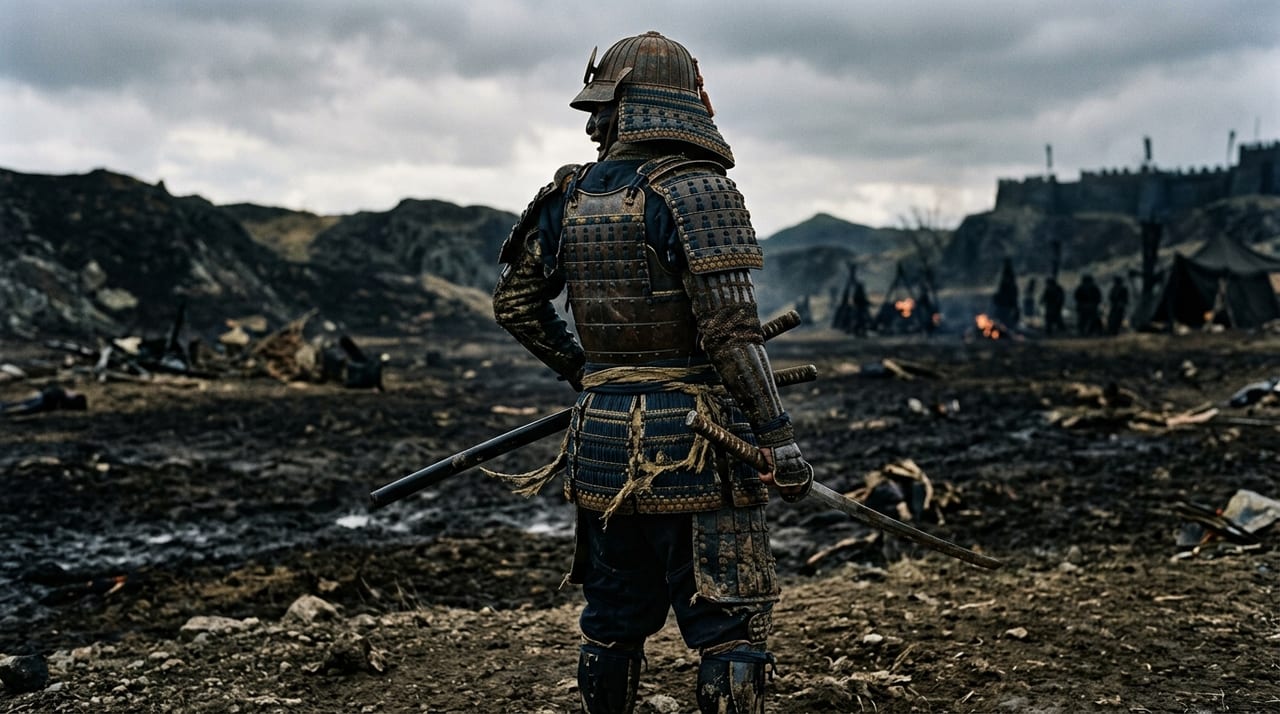
 * Image is for illustrative purposes only.
Sengoku Hidehisa
仙石秀久
One of Toyotomi Hideyoshi's Oldest Retainers, a Warlord of 'Fall Seven Times, Rise Eight'
Description
Sengoku Hidehisa (1552-1614) was a warlord who rose from being one of Toyotomi Hideyoshi's oldest retainers to become a daimyō. His life was turbulent, marked by many setbacks and comebacks, and it is often summed up as 'fall seven times, rise eight.' His military record in Shikoku, Kyūshū, and at Odawara includes both notable achievements and serious failures. The large swings in his fortunes are a major reason he is remembered in later times as a figure of unusual appeal.
Hidehisa came from the Sengoku family, a family of local strongmen in Mino. In Eiroku 10 (1567), at the age of 14, he became a yoriki (attached retainer) of Kinoshita (later Toyotomi) Hideyoshi on the orders of Oda Nobunaga, and from then on he served Hideyoshi as one of his oldest retainers. Having gained Hideyoshi's trust and risen to prominence, he was granted 50,000 koku in Awaji Province in Tenshō 11 (1583), making him the earliest of Hideyoshi's retainers to become a daimyō. For his contribution to the 1585 campaign against Shikoku, he was given all of Sanuki Province. However, this was the peak of his career, and the next campaign would change his life greatly.
In the 12th month of Tenshō 14 (January 1587), Hidehisa committed a grave blunder at the Battle of Hetsugigawa. Although cautious views had been raised at the war council, he ordered an attack on the Shimazu army on his own authority. This reckless assault led to the deaths of many officers and men, including Chōsokabe Nobuchika, Motochika's eldest son. Hidehisa was held responsible for the defeat and received a harsh punishment: all of his domains were confiscated, and he was exiled to Mount Kōya.
But Hidehisa did not end there. While living in seclusion on Mount Kōya, he waited for a chance to recover his position. In the Odawara campaign of 1590, he served as an ordinary warrior. His performance caught Hideyoshi's eye, and he was granted 50,000 koku at Komoro in Shinano and returned to the rank of daimyō. It was truly a revival worthy of 'fall seven times, rise eight,' and it is famous as an episode that shows both Hidehisa's unbending spirit and Hideyoshi's broad magnanimity.
Hidehisa was a warrior with real battlefield experience, having fought in many campaigns in Shikoku, Kyūshū, and Odawara. At Odawara, he is said to have led the vanguard in the attack on Yamanaka Castle in Izu, and to have fought hard, personally wielding a cross-bladed spear (jūmonji-yari).
At the Battle of Sekigahara (1600), he sided with the Eastern Army (the Tokugawa side). He ended his life still as lord of the Komoro Domain, with 57,000 koku at Komoro. (The transfer of the Sengoku family to Izushi in Tajima took place in Hōei 3 (1706), in the time of his descendant Sengoku Masaaki.) The Sengoku family then continued as lords of the Izushi Domain until the Meiji Restoration. Hidehisa's later years were relatively stable, and he died in 1614 at the age of 63.
One reason Hidehisa's life still attracts attention today is his story of failure and recovery. Although he made an irreparable blunder at Hetsugigawa, he accepted fault, held himself in seclusion, and waited for the chance to rise again. His way of life embodies the Japanese bushidō value of recovering from failure. As a symbol of the phrase 'fall seven times, rise eight,' the name of Sengoku Hidehisa is still passed down today.