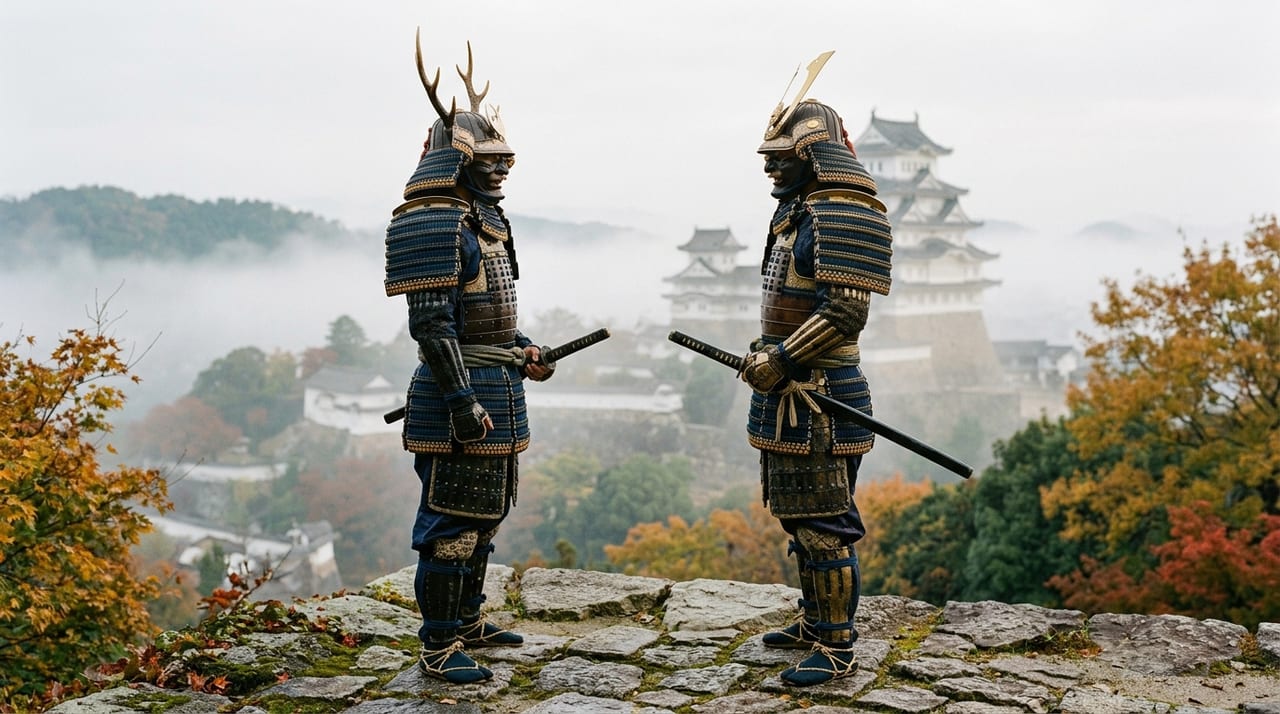
 * Image is for illustrative purposes only.
Kikkawa Hiroie
吉川広家
Sengoku Daimyo and Key Figure in the Battle of Sekigahara
Description
Kikkawa Hiroie (1561-1625) was a samurai commander who was active from the Sengoku period into the early Edo period. A member of the Mōri clan, he played a major role in the Battle of Sekigahara (1600), where his actions significantly altered the course of events. He was born as the third son of Kikkawa Motoharu. After his father Motoharu and his eldest brother Motonaga died in succession in the field during the Kyushu campaign, he succeeded to the Kikkawa family in Tenshō 15 (1587).
Hiroie's greatest achievement and enigma lies in his actions at the Battle of Sekigahara (1600). Although he joined the battle as one of the Mōri forces on the Western Army side, he secretly negotiated with Tokugawa Ieyasu and, on the condition that the main Mōri house would be preserved, arranged for Mōri Hidemoto's army, which was stationed on Mount Nangū, not to move. Because of this non-participation, the Western Army fought without a major part of its strength, and this contributed to the Eastern Army's victory.
However, although Hiroie's actions were intended to secure the future of the main Mōri house, the result was that Mōri Terumoto was held responsible, and the clan was forced to give up a large part of its territory. Hiroie himself was granted a 30,000-koku holding at Iwakuni in Suō Province, but the losses to the main Mōri house were great, and some later observers view him as a 'traitor'. The Kikkawa family has handed down the National Treasure tachi 'Kitsunegasaki' (made by Tametsugu), which is now held by the Kikkawa Museum (Iwakuni, Yamaguchi Prefecture). The judgment he made, which laid the foundations of the Iwakuni fief, continues to show today how complex rational choice in history can be.
Notable Swords
- Kitsunegasaki (tachi made by Tametsugu, National Treasure, handed down in the Kikkawa family, held by the Kikkawa Museum)
Related Warriors
仙石秀久
Late Sengoku to Early Edo PeriodSengoku Hidehisa
One of Toyotomi Hideyoshi's Oldest Retainers, a Warlord of 'Fall Seven Times, Rise Eight'
金森長近
Late Sengoku to Early Edo PeriodKanamori Nagachika
Lord of Echizen Ono Castle, Senior Retainer of Nobunaga, Tea-Ceremony Daimyo
浅野幸長
Late Sengoku Period / Early Edo PeriodAsano Yoshinaga
Son of One of the Five Taiko Bugyo (Toyotomi's Five Administrators), First Daimyo of Kii (Wakayama) Domain