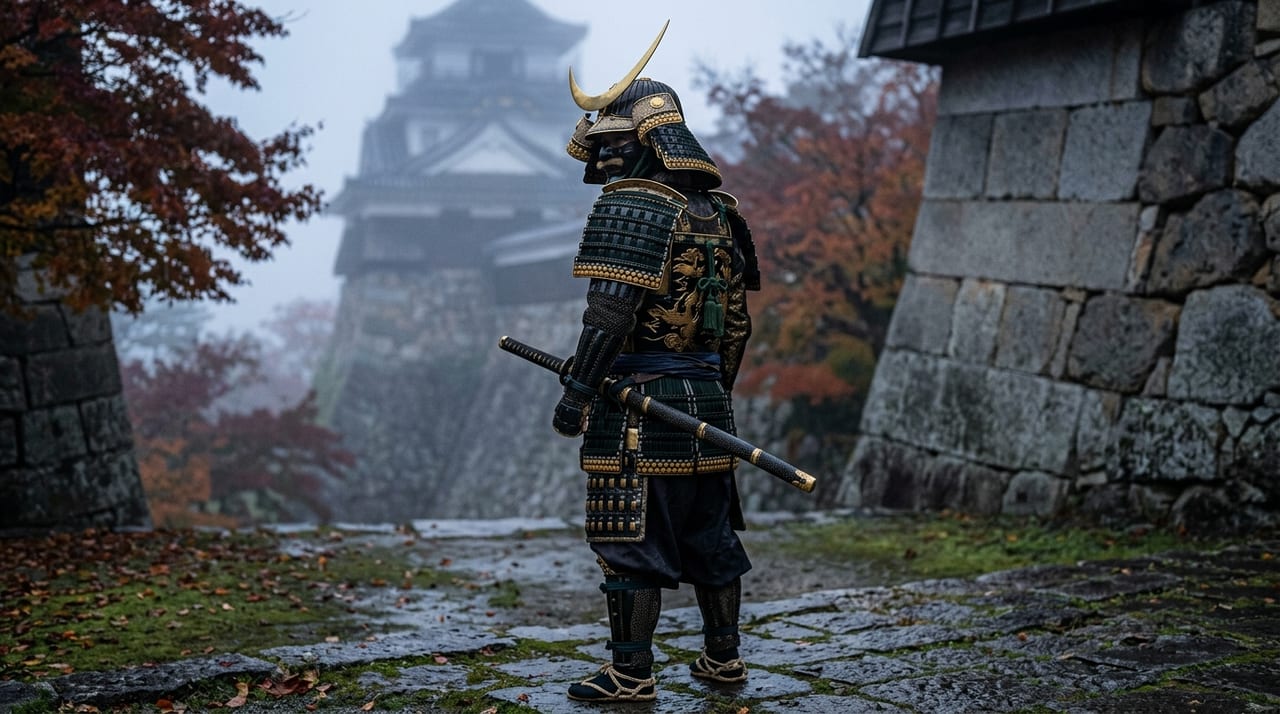
 * Image is for illustrative purposes only.
Sakakibara Kenkichi
榊原鍵吉
The Sage of Striking Sword Exhibitions — Last Guardian of Jikishinkage-ryū in the Meiji Era
Description
The Strongest Swordsman of the Bakumatsu Period
Born in Edo in Bunsei 13 (1830), Sakakibara Kenkichi was a swordsman of the Jikishinkage-ryū who was regarded as one of the most outstanding masters from the Bakumatsu period through the Meiji era. The Jikishinkage-ryū is a prestigious old-style school of swordsmanship transmitted through Matsumoto Bizen-no-kami Masanobu, and Kenkichi had a career instructing the shōgun, Tokugawa Iemochi, in swordsmanship. In Ansei 3 (1856), on the recommendation of his teacher, Otani Nobutomo, he became a swordsmanship instructor at the Kōbusho, and he later advanced to the position of master instructor.
Inheritance and Development of the Jikishinkage-ryū
The Jikishinkage-ryū takes its name from “jiki” (a straightforward heart) and “kage” (the essence of the sword, the power to see what cannot be seen), and it is a school that fuses spiritual discipline in sincerity of mind with practical technique. Kenkichi succeeded to the 14th headmaster position of this school. In training, he is said to have swung a furibō (heavy practice club) six shaku (about 1.8 m) long and weighing three kan (about 11 kg) two thousand times. His skill was outstanding in the Bakumatsu swordsmanship world, and many swordsmen spoke of him with reverence.
The Meiji Restoration and the Crisis for Swordsmanship
The Meiji Restoration (1868) brought fundamental change to Japanese society, but with the dissolution of the samurai class, swordsmanship too faced a crisis of survival. The Haitōrei (sword-abolition edict) of 1876 banned the carrying of swords, and swordsmanship lost its practical utility and was increasingly alienated from society as an “outdated martial art.” As many swordsmen lost their livelihoods and it became difficult to maintain their schools, Kenkichi devised a groundbreaking method to keep swordsmanship alive.
Gekiken Kōgyō: The Great Enterprise That Saved Swordsmanship
From Meiji 6 (1873) through the Meiji 10s (1877–1886), Kenkichi staged gekiken kōgyō (public fencing exhibitions). These were events in which swordsmen performed bamboo-sword (shinai) matches before the general public as spectacles, equivalent to modern sporting exhibitions. Famous swordsmen gathered from across the country for the exhibitions Kenkichi organized, and he also realized a jōran shiai (a match viewed by the emperor) before Emperor Meiji. These exhibitions were more than mere spectacles: they reaffirmed the value of swordsmanship in society and played an important role as a bridge to the modernization of swordsmanship and kendō.
The Jōran Shiai Before Emperor Meiji
Kenkichi’s gekiken kōgyō reached its historic peak with the realization of a jōran shiai before Emperor Meiji. In Meiji 11 (1878), at a tenran shiai (a match viewed by the emperor) held when Emperor Meiji visited Ueno, Kenkichi served as organizer and referee. This jōran shiai contributed greatly to raising the social standing of swordsmanship and kendō, and it was one factor that paved the way for kendō to be introduced into school education in Meiji 44 (1911). The flame of swordsmanship that Kenkichi protected through his gekiken kōgyō was thus passed on to modern kendō.
Tenran Kabuto-wari and the Dōtanuki
When the Haitōrei was issued in Meiji 9 (1876), Kenkichi wore a wooden sword called the Yamato-zue in place of a sword, and he never let down his topknot until his death. In November 1887, when Emperor Meiji visited the residence of Prince Fushimi, a tenran kabuto-wari (helmet-splitting) match was held. While Henmi Sōsuke and Ueda Umanosuke failed, Kenkichi used the famous sword Dōtanuki to split a helmet made by Myōchin.
The Legacy of the Last Guardian
In Meiji 27 (1894), Kenkichi passed away at the age of sixty-five. The lifeline of swordsmanship that Kenkichi protected through the innovative means of gekiken kōgyō was passed on to his disciples and came to fruition in the founding of the Dai Nippon Butoku Kai (established 1895) and the establishment of modern kendō. Tracing the history of kendō, which established its position as a quasi-national sport of Japan through the Meiji, Taishō, and Shōwa eras, one of its wellsprings invariably lies in the gekiken kōgyō of Sakakibara Kenkichi. As a figure who stood at the decisive turning point at which swordsmanship was elevated from a mere martial art into the path of spiritual discipline known as “kendō,” Kenkichi has earned a name deserving special mention in the history of kendō.
Notable Swords
- Dōtanuki — the famous sword with which Kenkichi split a helmet made by Myōchin in the tenran kabuto-wari match of Meiji 20 (1887)