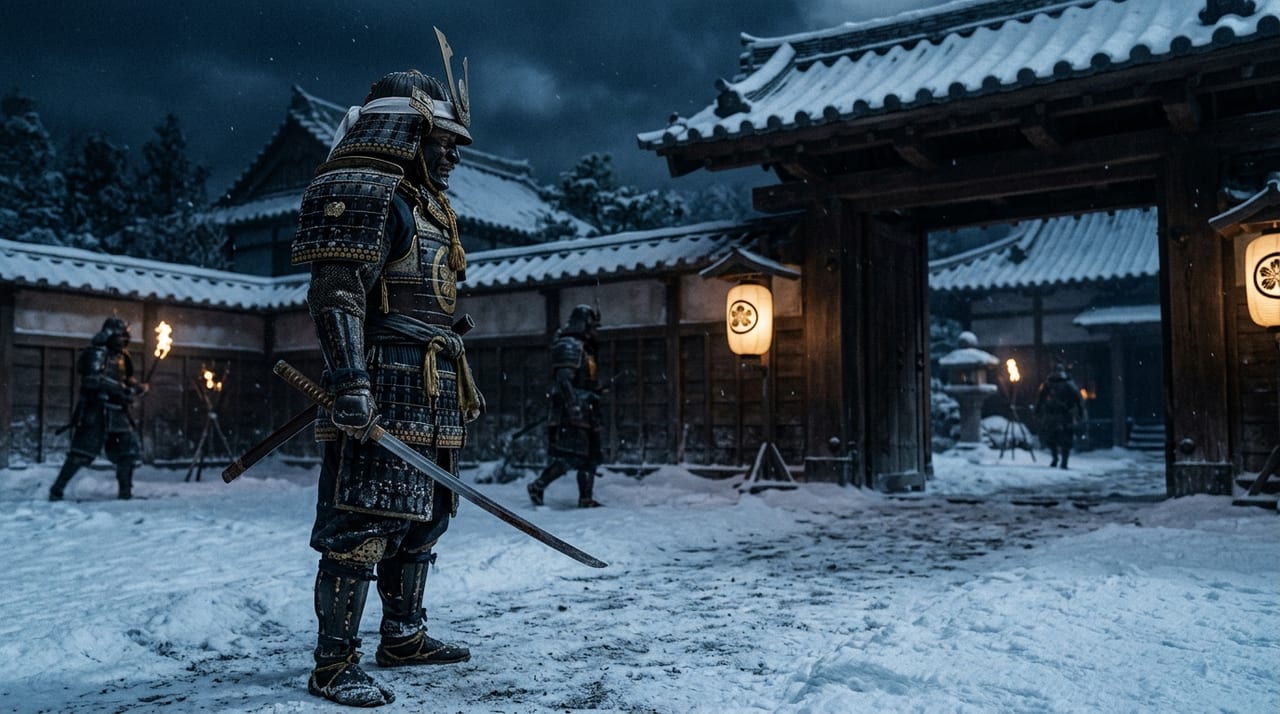
 * Image is for illustrative purposes only.
Ōishi Kuranosuke
大石内蔵助
Leader of the Forty-Seven Rōnin — The Living Embodiment of Samurai Loyalty
Description
The Supreme Commander of the Chūshingura
In Manji 2 (1659), Ōishi Yoshio, commonly known as Ōishi Kuranosuke, was the chief councillor (karō) of the Akō domain in Harima Province (present-day Akō, Hyōgo Prefecture), and he is remembered in history as the most renowned practitioner of bushidō in Japan. When his lord, Asano Takumi-no-kami, attacked Kira Kōzuke-no-suke, chief of the kōke masters of ceremony, with a drawn blade (ninjō) in the Pine Corridor (Matsu no Rōka) of Edo Castle, Asano was ordered to commit seppuku and the Akō domain was abolished. To avenge his lord, Ōishi, after a year and nine months of patience, led 47 former retainers in a raid on Kira's residence and carried out the revenge. Later, this “Genroku Akō Incident” became “Chūshingura,” the story most frequently depicted in Japanese culture and the arts, including kabuki, bunraku, and film.
The Lord's Attack and the Collapse of Akō Domain
On the 14th day of the 3rd month of Genroku 14 (1701), Asano Takumi-no-kami attacked Kira Kōzuke-no-suke with a drawn blade (ninjō) within Edo Castle. Asano, who had violated the shogunate's supreme prohibition against drawing a blade and causing disorder within the castle (denchū no ninjō rōzeki), was ordered to commit seppuku that same day, and the Akō domain was abolished (kaieki). Kira, who had only been wounded, faced no punishment at all. Ōishi and the other Akō samurai felt deep indignation at this one-sided judgment, known as “ippō seibai” (one-sided punishment). Ōishi retreated to Yamashina in Kyoto, where he outwardly indulged in pleasure while secretly gathering allies and advancing plans for revenge.
A Year and Nine Months of Patience and Scheming
The greatest feature of Ōishi's plan for revenge lies in its year and nine months of patience and thorough preparation. To deceive the shogunate's watch, Ōishi frequented courtesans in Kyoto and took steps that included separating from his wife and children. As many allies dropped away while the shogunate's surveillance continued, Ōishi kept binding the hearts of his allies together with a will like steel. This long patience demonstrates the true worth of Ōishi as a military leader of wisdom and courage as well as martial valor, and embodied the samurai teaching that “patience is the greatest weapon.”
The Raid in the 12th Month of Genroku 15
On the night of Genroku 15/12/14 (30 January 1703), Ōishi led 47 allies in carrying out the raid on Kira's residence. On a snowy, cold night, the rōnin surrounded the residence from two directions, and after a fierce battle they located Kira Kōzuke-no-suke and succeeded in killing him. The swords the 47 rōnin used in this raid came to be passed down to later generations as the very soul of the samurai. In particular, the sword Ōishi carried holds symbolic meaning as a “sword of loyalty to one's lord,” and after completing the raid, Ōishi offered Kira's head at his lord's grave.
Symbol of Bushidō: The Final Fate of the Forty-Seven Rōnin
The rōnin who had carried out the revenge (the 46 excluding Terasaka Kichiemon, who left the group after the raid) reported to the shogunate and awaited judgment. Within the shogunate, a debate arose over whether they should be praised as “righteous men” (gishi) or punished as “those who had broken the law,” but in the end all 46 were ordered to commit seppuku. On the 4th day of the 2nd month of Genroku 16 (1703), the 46 men led by Ōishi were entrusted to various daimyō households and ordered to commit seppuku, and Ōishi was buried at Sengaku-ji. This ending was idealized as the “pure death” of those who had fulfilled the loyalty of a samurai, and it became the core value of the story “Chūshingura.”
Swords and Bushidō: The Meaning of the Swords of the Raid
In Chūshingura, swords function as something more than mere weapons. The sword Asano Takumi-no-kami drew in the Pine Corridor, the sword Ōishi brought to the raid, and the swords each of the 47 rōnin carried were all understood in Japanese culture as embodiments of the “soul of the samurai.” In particular, Ōishi's beloved sword is revered as a sacred vessel embodying loyalty to one's lord, and it became a spiritual pillar for many later samurai, swordsmen, and artists. It is no exaggeration to say that the profound meaning the concept of the “soul sword” holds in Japanese culture was most vividly embodied through the story of Chūshingura.
Notable Swords
- Ōishi's vendetta sword — the blade he carried into the Kira mansion on the night of Genroku 15/12/14 (30 January 1703); polished and kept for the single purpose of fulfilling loyalty to a dead lord; the most symbolically resonant sword in Japanese cultural history
- Asano's sword of the Matsu Corridor — the blade Asano drew against Kira in Edo Castle, the act that set the entire tragedy in motion; one of the most famous single sword-draws in Japanese history
- The forty-seven swords — the collective blades of all forty-seven rōnin on the night of the raid; the supreme collective expression of the belief that the sword is the warrior's soul, and that loyalty transcends death