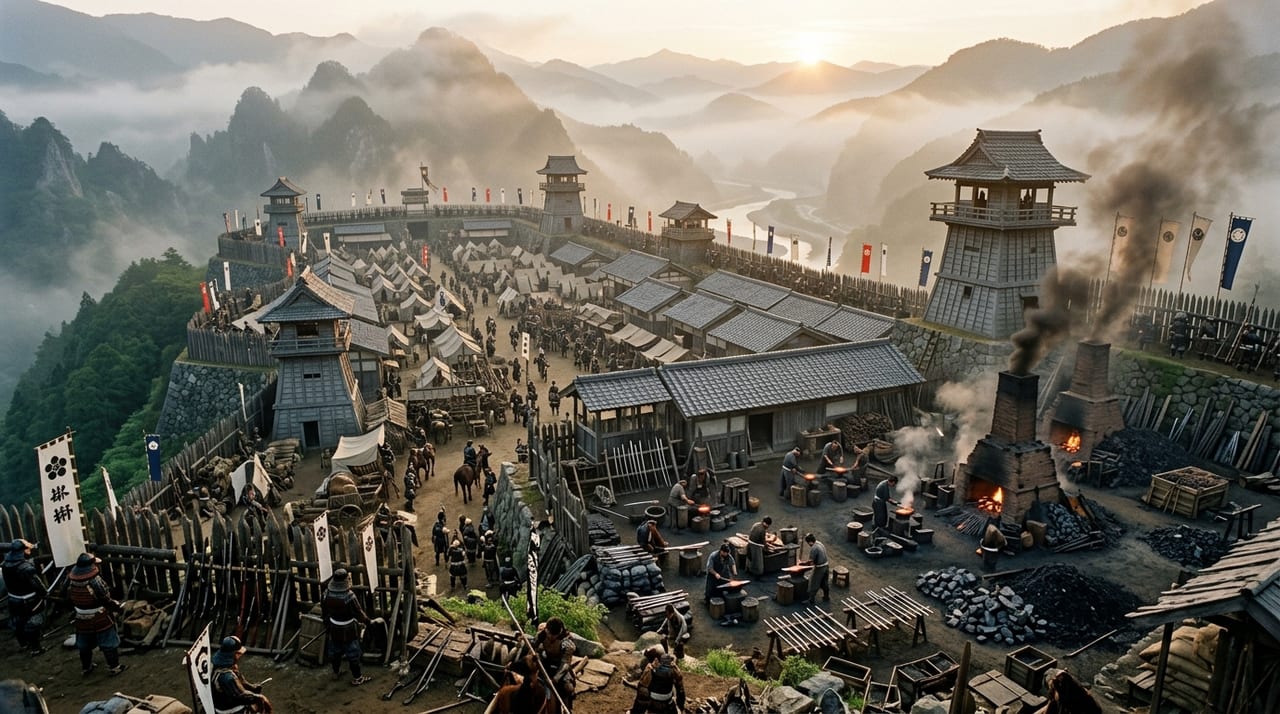
 * Image is for illustrative purposes only.
Edo Period — Overview of Japanese Swords, 1603–1868
江戸時代の刀剣(概観)
The Edo period (1603–1868) was an era of 265 years of stable Tokugawa shogunate governance during which the Japanese sword was elevated from weapon to artistic and cultural symbol. Divided into the Shintō era (1596–1780) and the Shinshintō era (1781–1876), diverse schools developed centered on the two great cities of Osaka and Edo. The warrior's sword shifted in meaning from practical utility to ritual and status marker, and the culture of sword appraisal and sword collecting developed to a sophisticated level. In the late Edo period, sword enthusiasm rekindled in conjunction with the imperial loyalist ideology, leading through the collapse of the bakuhan system to the Meiji-era Sword Abolition Edict.
Description
The Tokugawa Shogunate and Samurai Peace
In 1603, Tokugawa Ieyasu was appointed shogun and established the Edo shogunate. The Tokugawa order, consolidated through the Battle of Sekigahara (1600) and the Siege of Osaka (1615), brought some 260 years of Tenka taihei (peace under heaven). Within this lasting peace, the social role of the sword changed fundamentally.
After the declaration of peace that followed the summer campaign of the Siege of Osaka, known as Genna Enbu (1615), swords were freed from their role as weapons of actual combat and came to function as cultural symbols of samurai status and dignity. The establishment of the sankin-kōtai system (1635) gave the smiths of each domain opportunities to exchange and spread techniques through travel to and from Edo, simultaneously advancing both the homogenization and the diversification of sword culture nationwide.
Shintō Period: Osaka and Edo as the Two Major Centers
The shintō period, beginning with Keichō shintō (c. 1596–1615), was the era in which the geographic center of sword production shifted from Kyoto to Osaka and Edo. Osaka, a commercial city, enjoyed economic prosperity, and wealthy merchants and daimyo competed to acquire famous blades. The representative smiths of Osaka shintō were Tsuda Echizen-no-kami Sukehiro and Inoue Shinkai. Both displayed the highest standard of the early-to-mid Edo period, with fine jigane and striking hamon.
In Edo, centered on smiths serving the Tokugawa shogunal house, a diverse group of smiths was active, including Nagasone Kotetsu, Noda Shigeyoshi and Echizen Yasutsugu. Kotetsu's hamon is characterized by intense nie and kinsuji, and it remains highly valued today as one of the most popular Edo shintō blades in later ages.
The Development of Sword Appraisal Scholarship
The Edo period was also an era in which sword appraisal scholarship became highly systematized. The Hon'ami family, a house of sword appraisal and polishing dating back to the Muromachi period, established its position as shogunate-authorized appraisers. In 1719 (4th year of Kyōhō), it compiled the Kyōhō Meibutsu-chō. This systematic sword catalogue ranked and evaluated the famous swords of the realm, and it forms the foundation of modern sword appraisal.
Individual domains also produced their own sword records and catalogues, and sword study became established as a kind of academic field. In the late Edo period, records of more practical sword evaluation were also systematized, such as the test-cutting records kept by Yamada Asaemon.
Shinshintō Period: The Ideal of Reviving Old Swords
The shinshintō period, beginning in the late 18th century, was an era of a sword-making movement that idealized a return to kotō (old swords), especially those of the Kamakura period. Suishinshi Masahide (1750–1825) theorized the doctrine of revival. Taikei Naotane (1779–1857) and Minamoto Kiyomaro (1813–1854) worked on reproducing the old-sword styles of the Kamakura and Nanbokuchō (Northern and Southern Courts) periods.
Kiyomaro's blades are especially highly valued as reproductions of the Sōshū-den. He left many works in the Sōshū-den style and was also known as 'Yotsuya Masamune'. The master smiths of the shinshintō peak around the Tenpō era (1830–1844) technically reached a level approaching that of Kamakura-period kotō, and they occupy an important place in sword history.
Sword Craze in the Bakumatsu Period and the Sword Abolition Edict
In the Bakumatsu period (1840–1868), the ideological fervor of sonnō jōi reignited the craze for swords. Swords also became embodiments of the political ideals of patriots. The swords of armed groups that defined the bakumatsu, such as the Shinsengumi and the Satsuma Domain, still carry many legendary anecdotes today.
However, after the Meiji Restoration (1868), the Haitōrei (1876) prohibited samurai from wearing swords, and the sword culture of the Edo period, which had lasted 265 years, came to an institutional end.
Characteristics of This Era
- The Edo period (1603–1868) was 265 years during which the Japanese sword was elevated from combat weapon to the warrior's soul, artwork, and status marker; diverse schools and techniques developed across the two eras of Shintō (1596–1780) and Shinshintō (1781–1876)
- Within the enduring peace of Genna Enbu (1615), aesthetic value came to be prioritized over practical utility in swords, establishing an artistic evaluation axis in which blades with refined jihada, gorgeous hamon, and excellent horimono received the highest ratings
- The parallel flourishing of Osaka Shintō (Sukehiro, Shinkai) and Edo Shintō (Kotetsu) embodied the cultural rivalry between the two great centers of economic city Osaka and political city Edo, generating diverse sword cultures with different aesthetic tendencies by region
- The Hon'ami family's compilation of the Kyōhō Meibutsu-chō (1719) systematized sword appraisal scholarship and formed the foundation of modern sword appraisal; this established the concept of 'meibutsu' (famous objects) and created an objective standard for the cultural and economic value of swords
- The Shinshintō period's Kamakura revival movement by Suishinshi Masahide, Taikei Naotane, and Kiyomaro aimed not at mere stylistic imitation but at scientific reproduction of materials and techniques, forming the academic foundation of modern sword-making
- In the political turmoil of the late Edo period, swords again took on social significance as ideological symbols of imperial loyalism; the path to the post-Restoration Sword Abolition Edict (1876) illustrates the process by which the Japanese sword was redefined from weapon to cultural artifact with the formation of the modern state