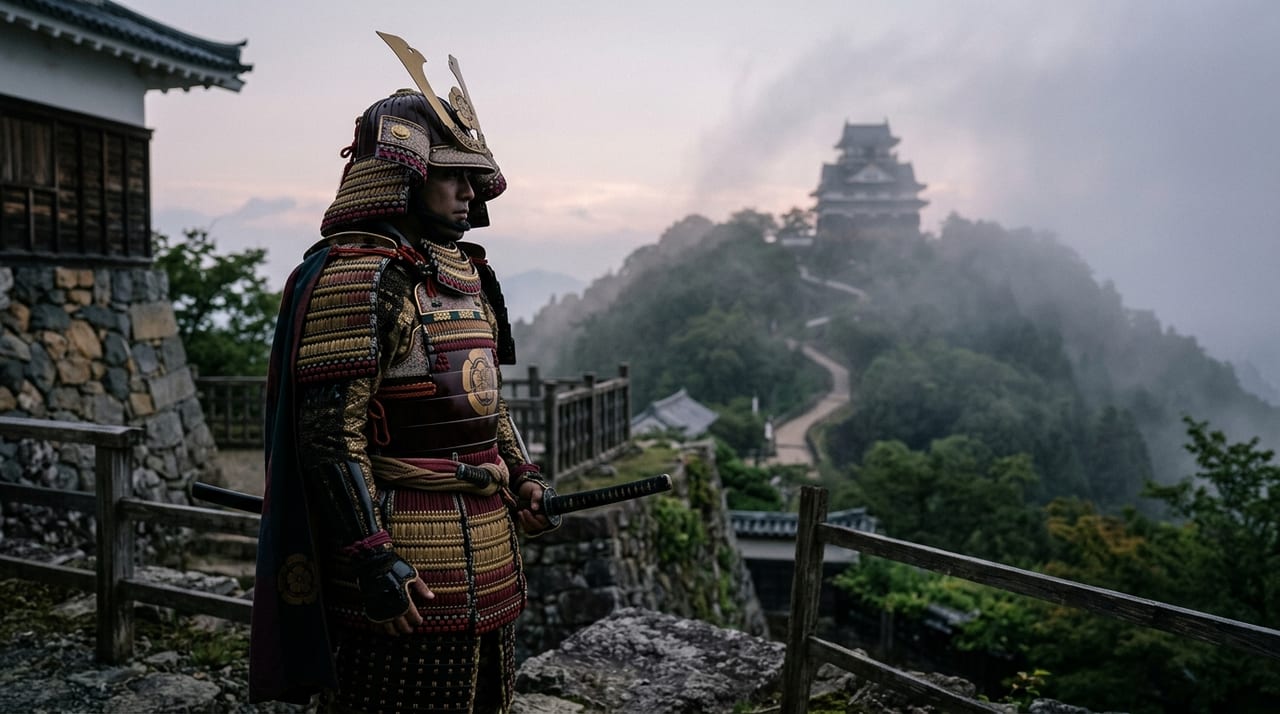
 * Image is for illustrative purposes only.
Oda Nobutada
織田信忠
Eldest Son and Heir of Oda Nobunaga
Description
Oda Nobutada (1557-1582) was the eldest son of Oda Nobunaga and was a person who was to inherit, as his father's successor, the undertaking of unifying the realm. He held a position second only to Nobunaga and, based at Gifu Castle, contributed greatly to the pacification of various regions under his father's command.
Nobutada displayed outstanding talent as a military commander, and in the fall of the Takeda clan in 1582 he played an active role as supreme commander. In the Takeda campaign, he advanced ahead of Nobunaga with the forces of Mino and Owari, invading from the direction of Ina, captured Takatō Castle, and achieved a decisive victory in the Battle of Tenmokuzan, driving Takeda Katsuyori to take his own life. Nobutada's command in this battle was highly praised, and Nobunaga bestowed upon him a nashiji-maki koshimono (a sword in a nashiji-lacquered mounting), signaling his intention of 'tenka no gi mo goyodatsu' (handing over even the rule of the realm).
However, in the 6th month of the same year, during the Honnō-ji Incident, when his father Nobunaga was killed by the rebellion of Akechi Mitsuhide, although Nobutada also resisted at Nijō Palace, the few could not withstand the many, and at the young age of 26 he took his own life. Nobutada's death shattered the dream of unifying the realm under the Oda family and became the trigger for a succession struggle involving Toyotomi Hideyoshi, Shibata Katsuie, and others. Had the Honnō-ji Incident not occurred, the possibility that Nobutada would have completed the unification of the realm was extremely high, and he is an indispensable figure when discussing the 'if' of Japanese history.
Notable Swords
- Nashiji-maki koshimono (a sword in a nashiji-lacquered mounting, given by Nobunaga for his merit in the Kōshū campaign)