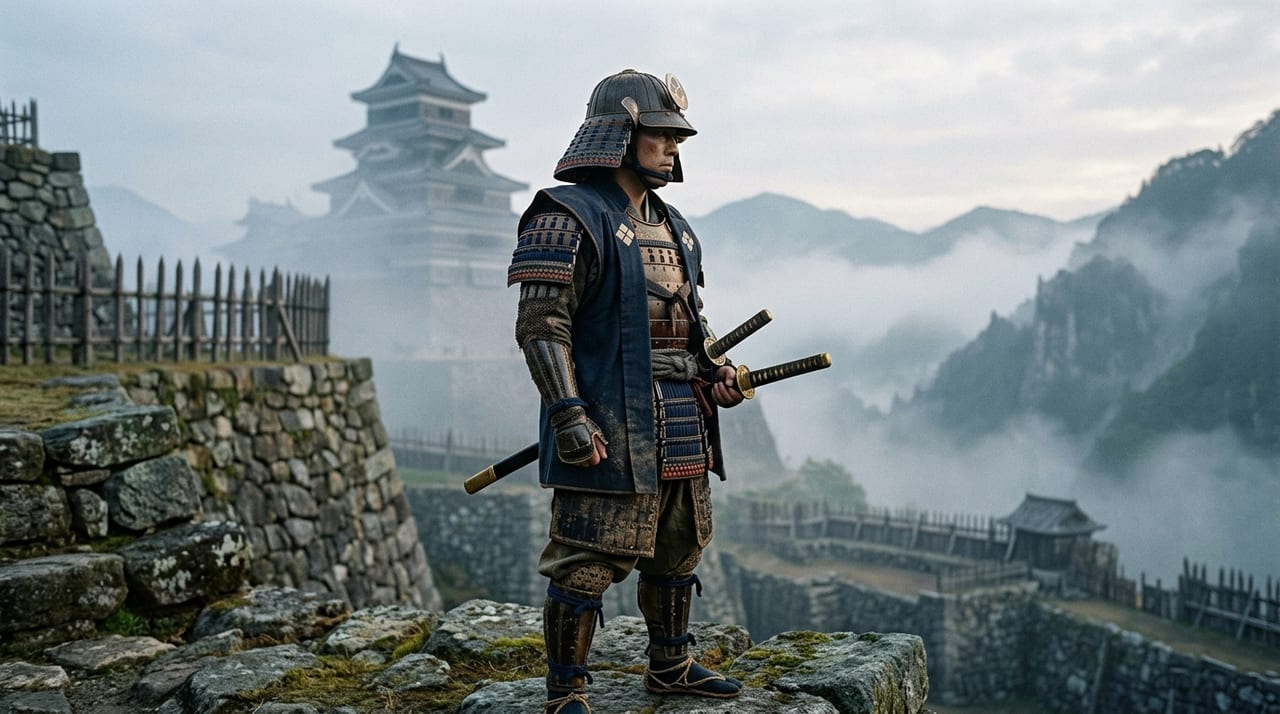
 * Image is for illustrative purposes only.
Nagakura Shinpachi
永倉新八
Captain of the Second Unit of the Shinsengumi — a master of Shindō Munen-ryū and one of the foremost swordsmen of the Shinsengumi, who rushed to the front line of the Ikedaya Incident, and one of the few senior officers who survived into the Taishō era
Description
A Gifted Swordsman of Shindō Munen-ryū
In Tenpō 10 (1839), Nagakura Shinpachi was born as the son of a retainer of the Matsumae domain. From an early age he excelled in the martial arts, and in Edo he entered the Gekikenkan of Okada Jūmatsu in Shindō Munen-ryū. Shindō Munen-ryū is a swordsmanship school whose founder was Fukui Hyōemon Yoshihira. It is a practical style characterized by bold attacks and swift techniques. Shinpachi distinguished himself here and obtained the hon-mokuroku at the age of eighteen. Later he left his domain and continued his swordsmanship training. At the dojo of Tsubouchi Shume of Shingyōtō-ryū, he served as shihan-dai (assistant instructor).
Encounter with the Shieikan and Founding of the Shinsengumi
Having honed his skills in Shindō Munen-ryū, Shinpachi maintained contact with the Shieikan, where Kondō Isami, Hijikata Toshizō and others gathered. In Bunkyū 3 (1863) he took part in the Rōshigumi's journey to Kyoto. In the Shinsengumi he served as captain of the Second Unit, and his swordsmanship was so highly regarded that he was called "one of the strongest swordsmen in the Shinsengumi." He was critical of Kondō Isami's high-handed conduct. Together with Saitō Hajime, Harada Sanosuke and others, he once appealed to Matsudaira Katamori, lord of Aizu, regarding Kondō's "five articles of misconduct." Nevertheless, as a swordsman of the Shinsengumi, he survived many actual battles.
Distinguished Service at the Ikedaya Incident
On the 5th day of the 6th month of Genji 1 (8 July 1864), in the Ikedaya Incident, Shinpachi, together with Kondō Isami, Okita Sōji and Tōdō Heisuke, was the first to charge into the Ikedaya. The sword fighting in the narrow tatami room reached extreme ferocity, and Shinpachi is said to have cut down several sonnō-jōi activists. In this battle Shinpachi himself was wounded, yet he kept fighting valiantly, and his fearlessness became legendary even within the Shinsengumi. It was also Shinpachi himself who later left a detailed record of the Ikedaya Incident, and his memoir has become an important primary source of late Tokugawa history.
The Sword Broken at the Ikedaya
It is said that in the Ikedaya Incident Shinpachi received a deep wound to the thumb of his left hand, and he kept fighting until his protective gear was in tatters and his sword had broken.
The Boshin War and Survival into the Meiji Era
After the Battle of Toba–Fushimi (1868), Shinpachi continued to fight in various engagements, but eventually came to part ways with Kondō Isami, Hijikata Toshizō and others. After the Meiji Restoration he moved from place to place, and in his later years he settled in Otaru, Hokkaido. Until his death at the age of seventy-seven in Taishō 4 (1915), he played an important role as a living witness who passed on the memory of the Shinsengumi. The memoir Shinpachi left behind, "Rōshi Bunkyū Hōkoku Kiji," is one of the most valuable historical sources conveying the true state of the Shinsengumi. Shinpachi survived the upheavals of the late Edo period and lived on into the Meiji and Taishō eras, which gives his existence a special significance in the history of the Shinsengumi.