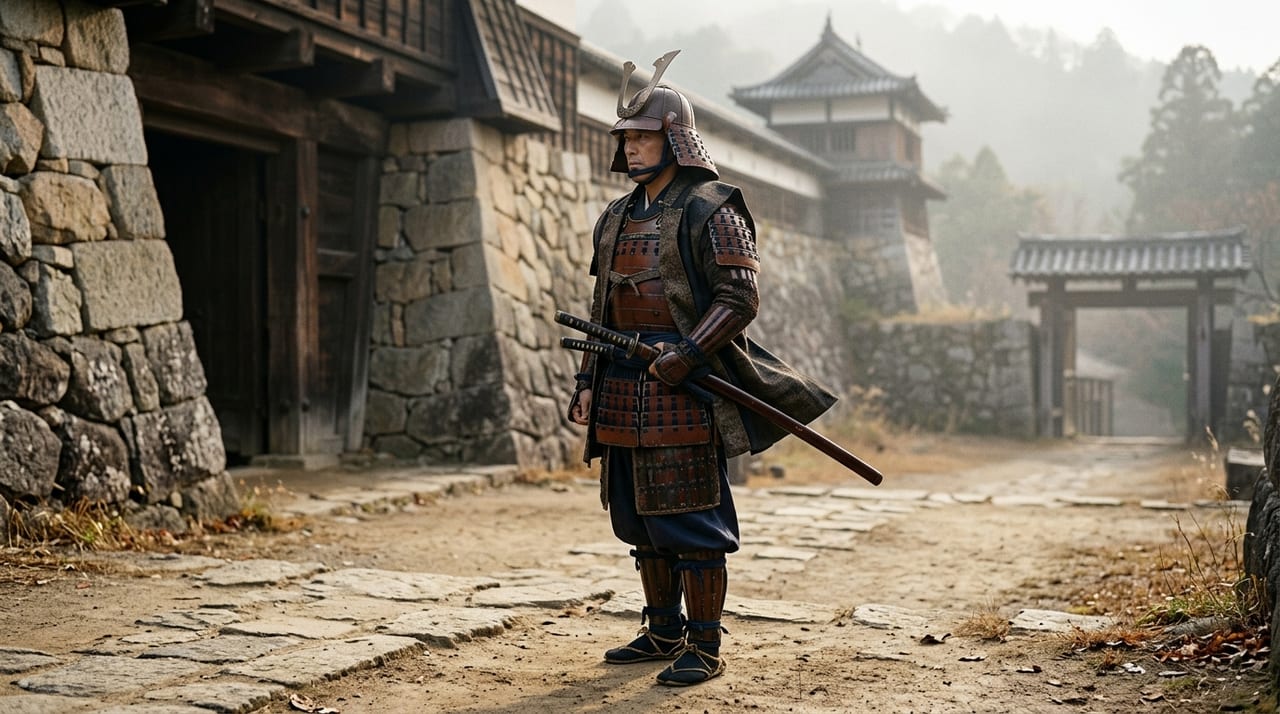
 * Image is for illustrative purposes only.
Itō Ittōsai
伊東一刀斎
Founder of Ittō-ryū — The Sword Genius Whose Philosophy of 'Single Stroke' Shaped Japanese Swordsmanship for Centuries
Description
The Man Who Created the Philosophy of Ittō
Itō Ittōsai Kagehisa, said to have been born during the Tenbun era (around 1550), is a legendary swordsman whose name is forever carved into the history of swordsmanship as the founder of Ittō-ryū. Concerning his origins, it is said that he came from Itō in Izu Province, from Izu Ōshima, from Katata in Ōmi, or from Tsuruga in Echizen, and from childhood he showed outstanding talent for the sword. The legend that he secluded himself at Tsurugaoka Hachimangū and awakened to the Musō-ken symbolizes that Ittōsai's sword was the product of spiritual inquiry that went beyond a mere technical system. The name “Ittō-ryū” embodies the profound philosophy of returning all techniques to the principle of “one sword,” and this thought had an incalculable influence on the sword schools of later generations.
Seclusion at Tsurugaoka Hachimangū and the Musō-ken
Among the legends associated with Ittōsai's training is the story that he secluded himself at Tsurugaoka Hachimangū in Kamakura and awakened to the Musō-ken. However, the name “Musō-ken” cannot be confirmed in the transmitted documents of Ittō-ryū other than Mizoguchi-ha. Ittōsai's sword had a direction that pursued the purity of principle rather than the diversity of technique, and this became the essence that clearly differentiated Ittō-ryū from other schools.
Transmission to Mikogami Tenzen
The most famous story of Ittōsai's transmission to a disciple concerns the transmission to Mikogami Tenzen (later Ono Tadaaki). It is said that Ittōsai had his disciple Zenki and Mikogami Tenzen fight a match at Koganehara in Shimōsa Province, and that he granted the secret teachings of Ittō-ryū to Tenzen, who won. Tenzen later became sword instructor to the shogun Tokugawa Hidetada as Ono Tadaaki, and developed Ittō-ryū into a school directly transmitted to the shogunal house. This bond between master and disciple is passed down as the most brilliant scene of transmission in the history of Ittō-ryū.
Ittōsai's Beloved Sword “Kamewari-tō” and His Philosophy of the Sword
The sword said to have been Ittōsai's beloved blade is the Kamewari-tō (“jar-splitter”). It is said to have been given to him by Mishima Shrine, and it takes its name from the story that when a bandit broke into the shrine and hid in a jar, Ittōsai cut him down, jar and all. It is said to have later been passed down to the head of the Ittō-ryū lineage, beginning with Mikogami Tenzen. The concept of “one sword” (ittō) is the idea of concentrating all power into a single cut stripped of wasted movement, and realizing it required deep understanding of the sword's performance, especially the sharpness of the edge and the balance of the blade.
Travels Through the Provinces and Records of Matches
Ittōsai traveled through the provinces throughout his life and fought matches with swordsmen in various regions. According to the Ittō-ryū Gokui, he fought thirty-three real-sword duels in his travels through the provinces. Numerous matches with swordsmen he met in various provinces were also a process of forging and refining Ittō-ryū techniques through practical combat. When Ittōsai, spreading the teachings of Ittō-ryū among the warrior households of various regions and raising many disciples, finally disappeared, his whereabouts remained unknown. Ittōsai's life, appearing like a hermit, walking the provinces, and vanishing without a trace, embodies the typical Japanese heroic image of the “wanderer of the sword.”
The Legacy of Ittō-ryū for Later Generations
Ittō-ryū, founded by Itō Ittōsai, became one of the schools with the broadest and most profound influence on later Japanese swordsmanship. Its branches, including Ono-ha Ittō-ryū, Nakanishi-ha Ittō-ryū, and Hokushin Ittō-ryū, number in the dozens. Hokushin Ittō-ryū, studied by the shishi of the late Edo period (practiced by Sakamoto Ryōma and Yamaoka Tesshū, among others), also traces its origins to Ittōsai's teachings. The influence of Ittō-ryū is deeply permeated in the technical system of modern kendō as well, and the core concept of kendō, “ippon,” is deeply connected to the philosophy of “one sword” in Ittō-ryū. The spirit of the sword that Ittōsai left behind continues to live on among modern swordsmen across more than four hundred years.
Notable Swords
- Kamewari-tō: Ittōsai's beloved sword, said to have been given to him by Mishima Shrine. It is said to take its name from the story that when a bandit broke into the shrine and hid in a jar, Ittōsai cut him down, jar and all, and it is said to have been passed down to the head houses of Ittō-ryū, beginning with Mikogami Tenzen (Ono Tadaaki).