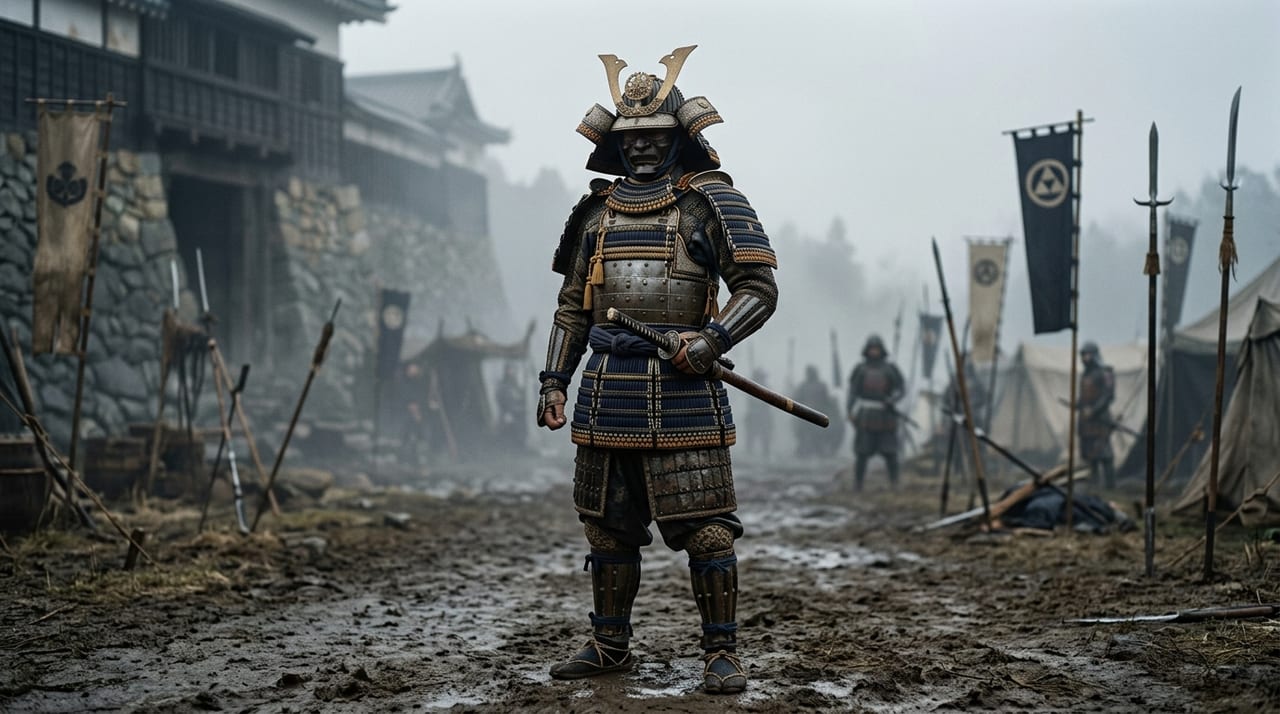
 * Image is for illustrative purposes only.
Ii Naotora
井伊直虎
Onna Jōshu: The Solitary Warlord Who Ruled Iinoya in Tōtōmi as a Female Clan Head
Description
The 'Onna Jōshu' (Woman Castle Lord)
Ii Naotora, born around Tenbun 4 (1535) in Iinoya in Tōtōmi Province (present-day Hamamatsu, Shizuoka Prefecture), is known as a female domain lord of the Sengoku period. The nickname 'onna jōshu' praises her decisiveness and drive, which rivaled those of any male warrior. She was also the foster mother of Ii Naomasa, one of the Four Heavenly Kings of the Tokugawa. Amid a harsh fate in which successors were lost one after another, Naotora, although a nun, took over the family headship and governed Iinoya, a small domain surrounded by the great powers of the Imagawa, Tokugawa, and Takeda.
A Lord in Adversity
Naotora became head of the house because the Ii men were lost one after another, through death in battle or execution by the Imagawa. Her betrothed, Ii Naochika, was also killed after the slander of chief retainer Ono Tajima-no-kami led Imagawa Ujizane to suspect him of rebellion. Protecting the young Naomasa (Toramatsu), who was left behind, became Naotora's greatest mission. Although her position was that of a nun, Naotora governed Iinoya as its head. However, when Tokugawa Ieyasu invaded Tōtōmi in Eiroku 11 (1568), Iinoya was given to the Iinoya Sanninshū (three local lords of Iinoya).
Passing the Mantle to Ii Naomasa
The true legacy of Naotora lies in her raising of Toramatsu, later Ii Naomasa, whom she protected at the risk of her own life. Naomasa was taken into service by Tokugawa Ieyasu and commanded the elite troops of the 'Ii Red Guard' (Ii no akazonae). At Sekigahara he served as vanguard of the Eastern Army and gained fame as one of the Four Heavenly Kings of the Tokugawa. The Hikone Domain in Ōmi, granted to Naomasa after Sekigahara, ultimately grew into a major domain of 350,000 koku. It became a distinguished house that produced a tairō (great elder) throughout the Edo period. The small seed of Iinoya that Naotora protected bloomed into the great flower that was Naomasa.