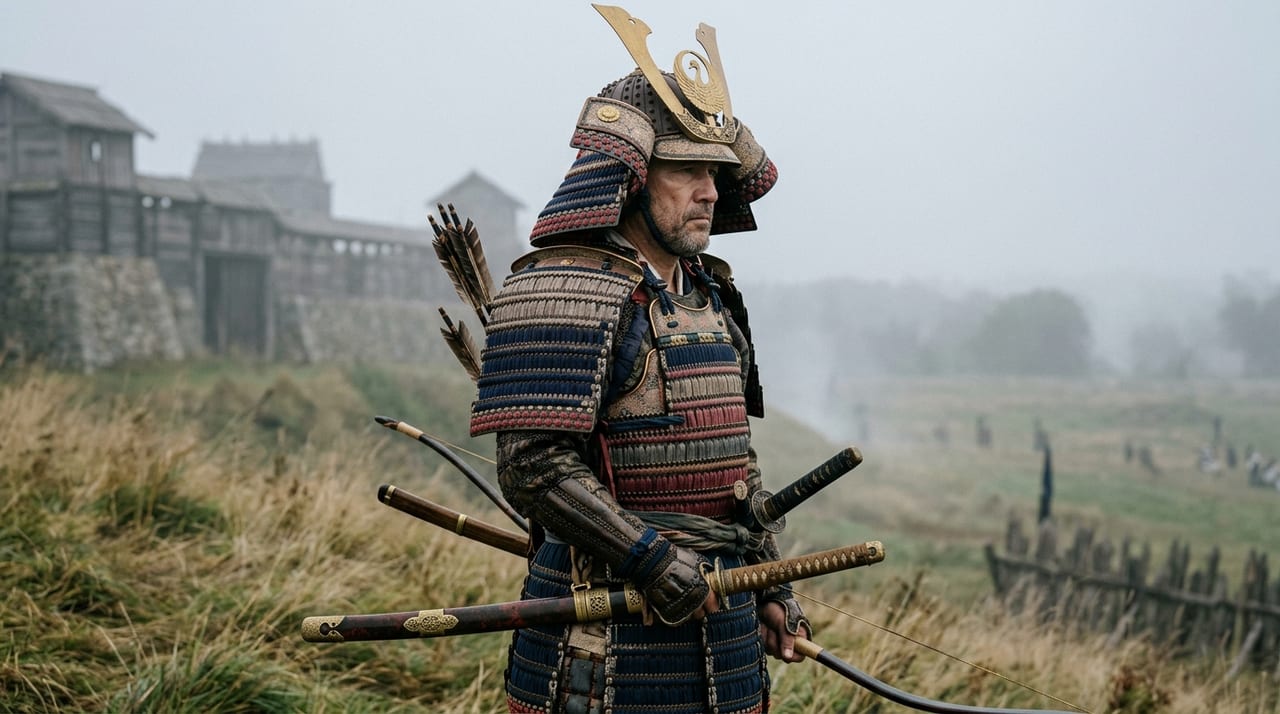
 * Image is for illustrative purposes only.
Hatakeyama Shigetada
畠山重忠
Paragon of the Bandō Warriors — The Incorruptible Hero Who Carried His Horse at Ichi-no-Tani
Description
The Birth of Shigetada, the Model of the Bandō Warrior
In the 2nd year of Chōkan (1164), Hatakeyama Shigetada was born in Hatakeyama in Obusuma District, Musashi Province (present-day Fukaya, Saitama Prefecture), the son of the local chieftain Hatakeyama Shigeyoshi. Shigetada has been remembered as one of the most upright, incorruptible, and martially accomplished generals of the period when the Kamakura shogunate was established. Known as “the model of the Bandō warrior,” his life embodies the ideal of the warrior, combining the three virtues of loyalty, integrity, and martial valor. It had a major influence on the later formation of warrior ethics (bushidō).
Exploits in the Genpei War
Shigetada initially acted on the Taira side, but after Minamoto no Yoritomo raised his army, he submitted to the Minamoto and became a prominent vassal of the Kamakura shogunate. He took part in numerous battles from the Battle of Fujigawa in the 4th year of Jishō (1180) onward, but what made his name immortal was an astonishing episode at the Battle of Ichi-no-Tani in the 3rd year of Juei (1184). During Minamoto no Yoshitsune's surprise attack, the descent at Hiyodori-goe, Shigetada faced a steep cliff that had to be descended with horses. According to the Genpei Jōsuiki, he carried his horse down the cliff on his own shoulders, unwilling to injure his beloved steed. (In the Azuma Kagami, Shigetada belongs to the main army of Minamoto no Noriyori.) His renown as “the man who carried his horse” was passed down for ages among the warriors of the east because of this single deed.
Spirit of Incorruptible Selflessness
The most distinctive quality of Shigetada's character was his spirit of incorruptible selflessness. As many vassals fell into power struggles with the establishment of the Kamakura shogunate, Shigetada rejected personal gain and upheld pure loyalty to his lord. Yoritomo placed deep trust in him, and Shigetada, praised as “the model of the Bandō warrior,” always walked the righteous path in warrior society and continued to win the respect of others. Even at critical moments for the shogunate, such as the subjugation of the Ōshū Fujiwara (the Ōshū campaign, 1189) and his mediation in the 4th year of Kenkyū (1193) of the dispute between the Tan band and the Kodama band, Shigetada's judgments and actions were always fair.
The Tragedy at Futamatagawa
Shigetada's life came to a tragic end with the Hatakeyama Shigetada Incident in the 2nd year of Genkyū (1205). Falsely accused of treason through a scheme of Hōjō Tokimasa, he was surrounded on his way to Kamakura by the shogunal army led by Hōjō Yoshitoki at Futamatagawa in Musashi Province (present-day Asahi Ward, Yokohama, Kanagawa Prefecture). Shigetada had just over 130 mounted warriors, while the shogunal army numbered tens of thousands, an overwhelming force. Yet he neither surrendered nor fled. He fought to the end and died in battle at the age of 42. This death, too, has been praised by later generations as a pure death that fulfilled the warrior's ideal. After Shigetada's death, Hōjō Tokimasa's conspiracy came to light, and Tokimasa was forced out of power.
Shigetada and Swords
The late Heian and early Kamakura periods were an age when master smiths of Ko-Bizen competed in skill as they wielded their hammers. However, concrete records of the swords Shigetada wore are scarce.
The Prototype of Bushidō
Hatakeyama Shigetada's way of life holds an important place in the formation of later bushidō thought. He possessed all three qualities of loyalty, integrity, and valor, and never betrayed his lord for personal gain. Even when misunderstood through a scheme, he did not flee but faced his accusers head-on and chose death. His figure embodied the ideal of “how a warrior ought to be.” In the Edo period, the image of Shigetada as an exemplary warrior spread through works such as the Soga Monogatari and jōruri plays, and his integrity and courage have been engraved in the hearts of the Japanese people as universal values that transcend the ages.