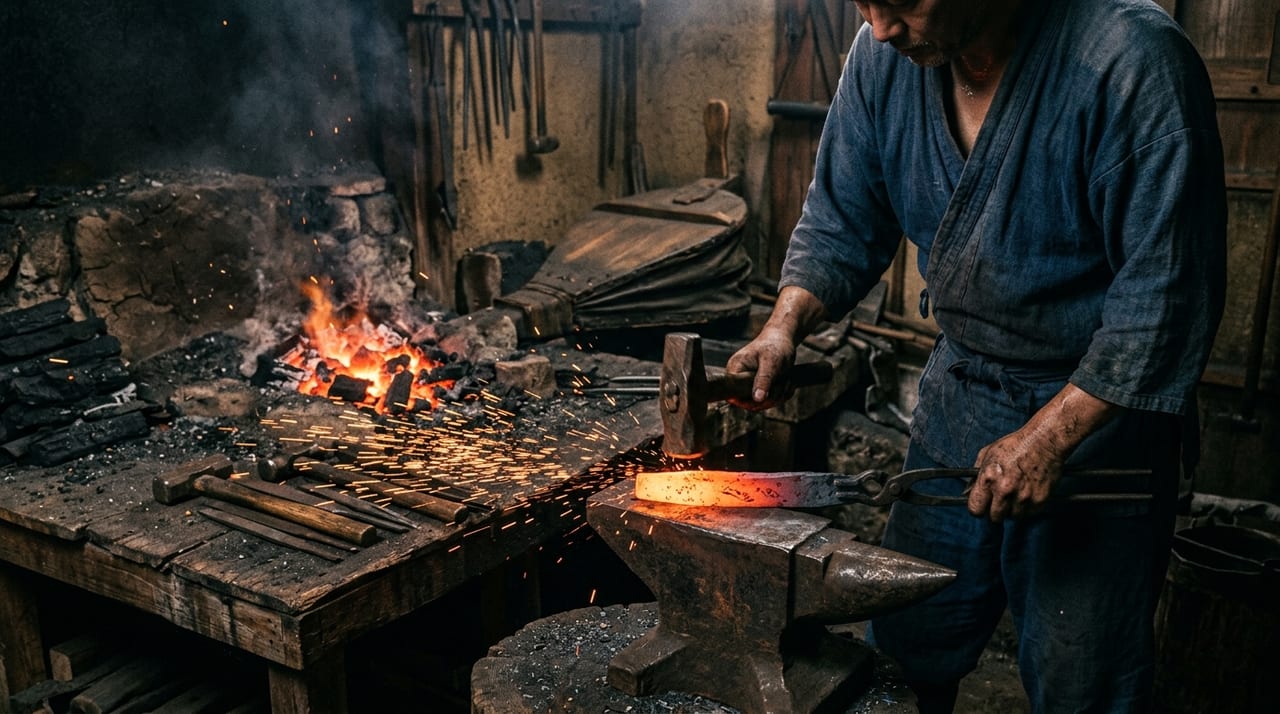
 * Image is for illustrative purposes only.
Sō Tsutomu
宗勉
Description
Career
Sō Tsutomu was a swordsmith born in 1927 in Fukuoka Prefecture. In 1946, at the age of nineteen, he entered the workshop of his father, the swordsmith Sō Masamitsu, to learn forging. He signed his blades "Chikushū jū Sō Tsutomu saku." He died in 2015.
Awards and Mukansa Status
After receiving Effort Prizes three times at the sword-forging technique exhibition, he submitted work regularly to the New Sword Masterpiece Exhibition from 1955 onward, earning one Encouragement Prize, six Effort Prizes, and four selections. On the strength of this record he was certified mukansa in 1990.
Style
His work centers on the Sōshū tradition, characterized by lively nie activity within the temper line such as kinsuji and sunagashi. He is especially celebrated for his utsushi (faithful copies) of Minamoto Kiyomaro, the renowned late-Edo master.
Range of Work
Besides Sōshū work he produced many blades in the Bizen and Yamashiro traditions. In his later years he also took up tōranba, the wave-like temper pattern originated by Echizen-no-kami Sukehiro of the Osaka shintō school.
Assessment
He is positioned as a contemporary smith who, building on the Chikuzen forging he inherited from his father, worked fluently across several of the Gokaden traditions and reached a distinctive level of accomplishment in his Kiyomaro copies.