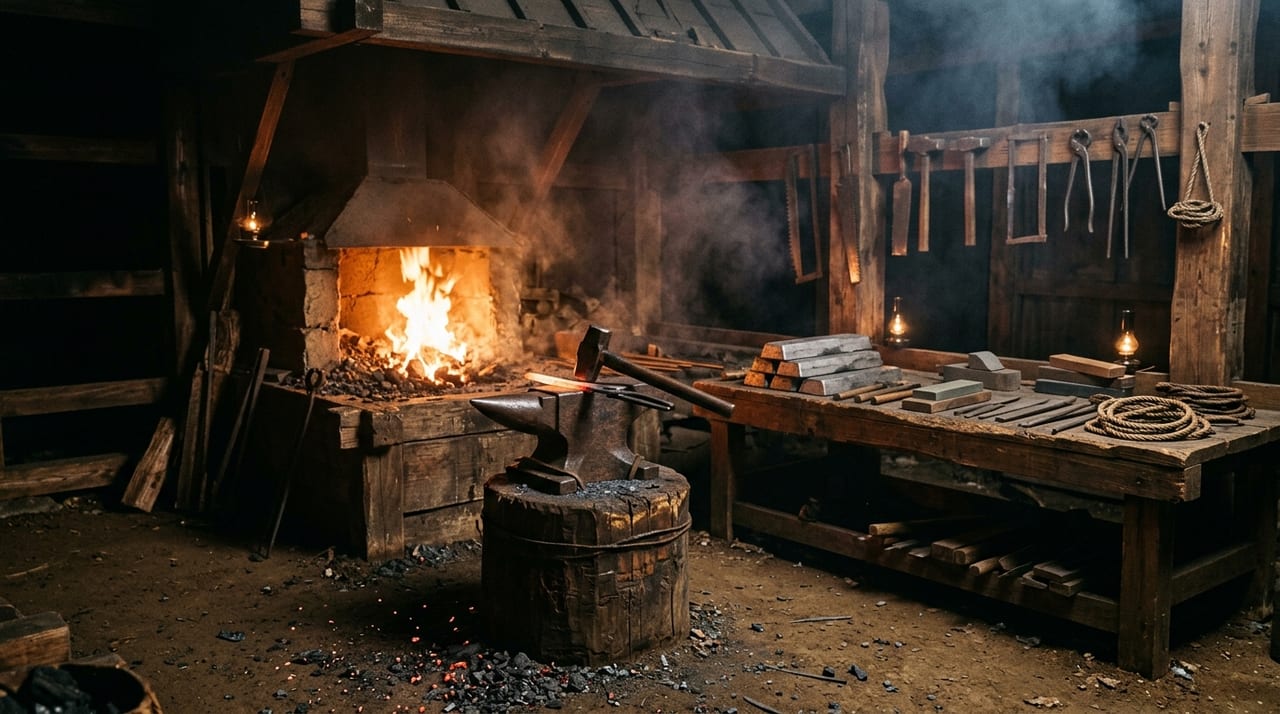
 * Image is for illustrative purposes only.
Seki Zenjō
関善定
Description
Seki Zenjō is the Buddhist name of the swordsmith Kaneyoshi (the first generation), who was active in Seki in Mino Province (present-day Seki City in Gifu Prefecture) from the Nanboku-chō period through the Muromachi period. He is regarded as the founder of the Zenjō school, one of the Seven Schools of Seki (Seki-kaji). Seki is still a renowned city for cutlery production today, but its tradition rests on the techniques of the Seki smiths that flowered during the Sengoku period, and the Zenjō school is one of the schools that carried forward that prosperity.
Swords made by the Zenjō school inherit the characteristics of the Mino tradition. The jigane (base steel) is mainly itame, showing a flowing surface texture, and the sturdiness of the forging for practical swords is pursued above all else. The hamon shows the Mino tradition style centered on gunome. Furthermore, the hamon consisting of pointed gunome lined up regularly, called "sanbonsugi," is the signature of Magoroku Kanemoto (the second-generation Kanemoto), and it is a style of the Seki smiths from a lineage separate from the Zenjō school.
In the Sengoku period, when the Zenjō school continued, Seki was a center of sword production to which orders poured in from warrior households and merchants across the country. Seki smiths' swords had a good balance of quality and mass-producibility, and they met a wide range of demand, from ordinary samurai to senior generals. Of the first-generation Kaneyoshi, the founder of the Zenjō school, a work dated Kōō 1 (1389) is known, bearing the inscription "Nōshū-jū Kaneyoshi."
Smiths of the Mino tradition, through the nationwide dispersal of the Sengoku period, put down roots in various places and formed local smith groups. Records remain of Mino-born smiths who moved to Hizen, Kaga, Echizen and other provinces and influenced the sword-making culture of those regions. Among the Seki smiths, the starting point of this "dispersal of Mino smiths" phenomenon, the Zenjō school holds an important place as one of the Seven Schools.
The Seki Kaji Shichiryū no Koto held by Kasuga Shrine in Seki, which records the lineage of the Seki smiths, lists seven schools: Zenjō (Kaneyoshi), San'ami (Kanetaka), Nara (Kanetsune), Tokuin (Kanehisa), Tokunaga (Kanenobu), Ryōken (兼舟), and Muroya (兼在). The Zenjō school is one of them.
Famous Works
- work signed Nōshū-jū Kanekichi (Kōō 1, 1389)