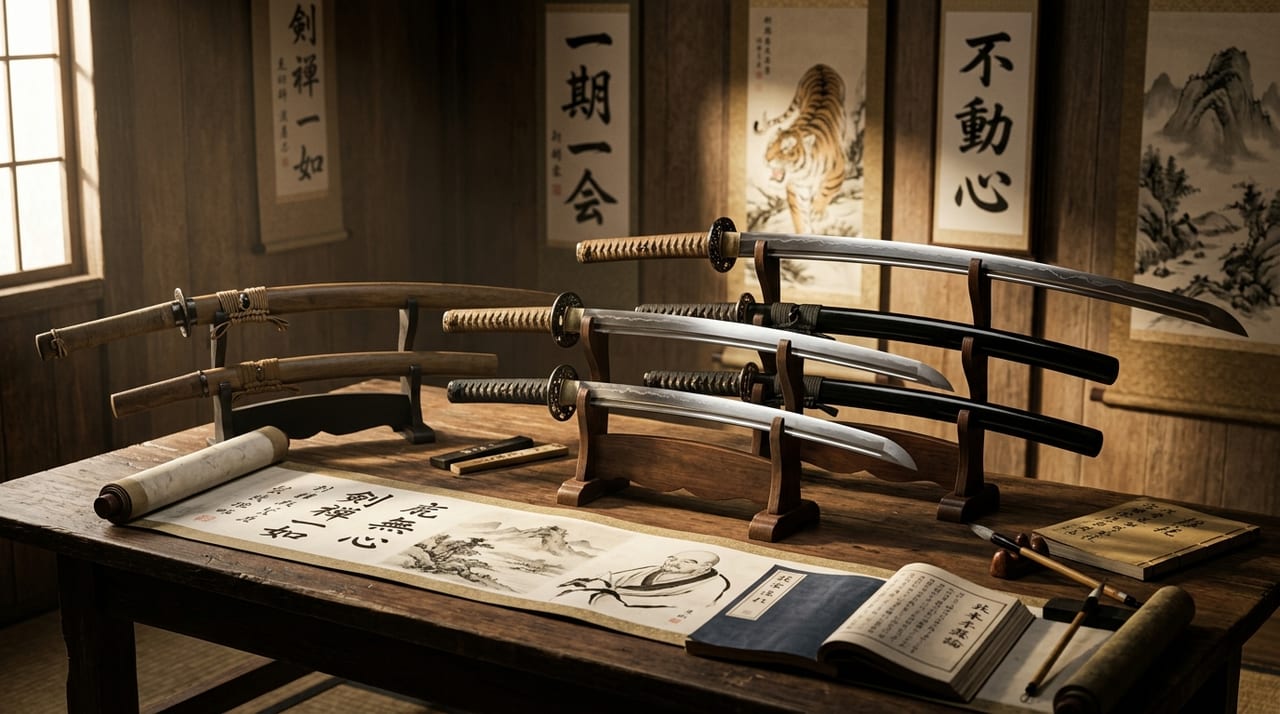
 * Image is for illustrative purposes only.
Vagabond
バガボンド
Takehiko Inoue's epic manga biography of Miyamoto Musashi, serialized in Weekly Morning (Kodansha) from 1998. With over 82 million copies in print, its photorealistic depiction of sword technique and its meditation on the philosophy of the sword are unmatched in the medium.
Description
Overview
Vagabond is a historical manga by Takehiko Inoue based on Eiji Yoshikawa's novel Musashi. Serialization began in Weekly Morning (Kodansha) in 1998, and with over 8.2 million copies in circulation, it has become a national work. The protagonist, Miyamoto Musashi—childhood name Takezo, real surname Fujiwara, personal name Genshin—wanders the provinces seeking to become the ultimate swordsman while continuously questioning spiritual maturity and "the nature of strength." Historical swordsmen and figures including the Yoshioka dojo, Sasaki Kojirō, the Yagyū clan, and Abbot Takuan appear in succession. Through rigorous historical research and psychological portrayal, the work three-dimensionally reconstructs the world of the sword in the early Edo period.
The Innovation of Sword Technique Depiction
Among the influences Vagabond has exerted on Japanese sword culture, the most significant is the innovation of its depiction of sword technique. While conventional swordsman manga typically employ stylized and exaggerated battle representations, Vagabond opens new expressive ground by rendering actual sword theory, body axis, ma-ai (distancing), the contention for sen (initiative), and the weight of cuts onto the page. Takehiko Inoue applies the realistic bodily expression refined in the sports manga Slam Dunk to the world of the sword and succeeds in conveying on paper—in a way that can be felt physically—the trajectory of the blade, the weight of the slash, and the tension of the moment of receiving. Kendo practitioners and martial artists have praised this depiction of sword technique, saying it "captures the true principle of the sword," and the work is now recognized as having sword-fighting value that transcends the manga medium.
The Expression of Japanese Sword Beauty
In Vagabond, the depiction of the Japanese sword is not merely a weapon or symbol, but is portrayed as a living being unified with the spirit of its wielder. The expression of the strength and spirit that Musashi cultivated manifesting through the blade visually embodies the traditional Japanese value that "the sword is the soul of the samurai." Furthermore, the swords depicted in the work are based on actual sword forms, with careful attention to the characteristics of Keichō–Genna period blades. The transformation in the styles Musashi employs—from ōdachi to two-sword technique to ultimate enlightenment—is entirely synchronized with the swordsman's spiritual growth and has earned high praise as an expression that deeply probes the spiritual relationship between the Japanese sword and its wielder.
The Depiction of Sasaki Kojirō
The portrayal of Sasaki Kojirō in Vagabond merits particular attention. Though historical records present Kojirō as an enigmatic swordsman, Inoue deliberately depicts him as deaf-mute, shaping him as a pure embodiment of the sword who engages the world solely through the blade and sensation, not language. This interpretation departs from historical fact but represents a philosophical inquiry into the fundamental meaning of the sword—"to dialogue with the world through the sword without the aid of words"—and has resonated deeply with many readers and practitioners of swordsmanship. The depiction of Kojirō's signature "monohoshi-zao" (clothes-drying pole, a long blade) also accounts for the actual characteristics of exceptionally long swords, accurately rendering the ma-ai advantage and the difficulty of wielding long swords as strategic elements of swordplay.
Real Swords Featured
Musashi's Nito-ryū (Two-Sword Style) and Ōdachi
Musashi's evolving sword philosophy — from massive ōdachi to the simultaneous two-sword Niten Ichi-ryū — is depicted with genuine philosophical grounding. Real swords associated with Musashi are held at the Sano Art Museum and Kumamoto Prefectural Museum of Art, and their forms are consistent with Keichō–Kan'ei period styles featuring notare and gunome hamon.
Sasaki Kojirō's "Clothes-Drying Pole" (Long-Bladed Tachi)
The historical Kojirō's oversized blade (3+ shaku in length) is depicted with accuracy: the enormous reach advantage offset by weight and maneuverability challenges. The famous Tsubame-gaeshi (Swallow Return) technique exploits the long blade's wide arc for a reverse-angle cut. Long-bladed tachi of this type survive in collections such as the Kikkawa family archive at Iwakuni and in various museum ōdachi holdings.
Yagyū Shinkage-ryū Sword Aesthetics
The Yagyū clan's kenjutsu in Vagabond embodies the Shinkage-ryū philosophy of katsujinken — the sword used to give life rather than take it. This doctrine, central to the Tokugawa shōguns' fencing instructors, defined the cultural shift of the sword from killing tool to instrument of spiritual cultivation. Yagyū-related swords and documents can be seen at the Yagyū Historical Museum in Yamato-Yagyū, Nara Prefecture.
Keichō–Genna Period Sword Forms (1596–1624)
Vagabond is set during the transition from Sengoku warfare to early Edo peace — the era of the Battle of Sekigahara (1600) and the Osaka campaigns (1615). Swords of this transitional period shift from purely functional Sengoku blades toward artistic and ceremonial forms, the beginning of the Shintō (New Sword) era. Representative blades of this period are held in major Japanese museums nationwide.
See authentic Japanese swords
See authentic Japanese swordsThis page is intended to introduce Japanese sword culture and is not affiliated with any of the works mentioned.