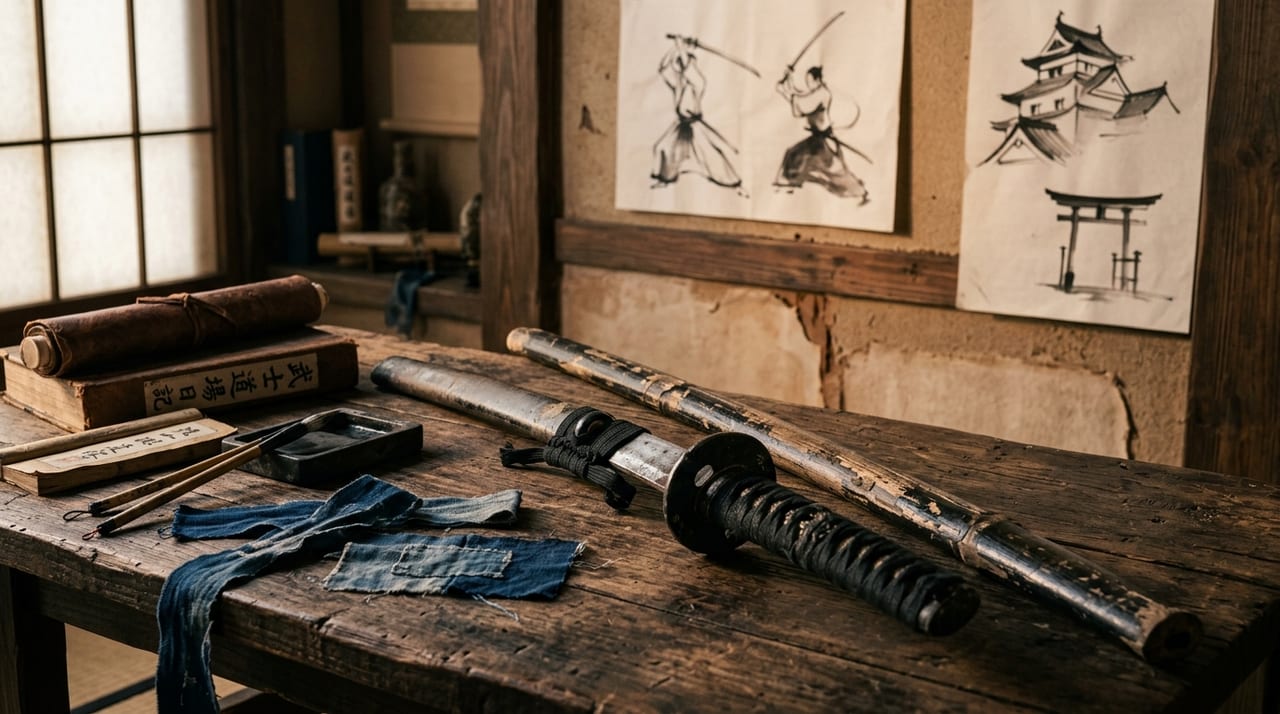
 * Image is for illustrative purposes only.
Twilight Samurai
たそがれ清兵衛
A 2002 masterpiece by director Yoji Yamada, based on Shuhei Fujisawa's short stories. It follows a low-ranking samurai in the Shōnai domain who quietly raises his daughters in poverty after his wife's death — a film that honors the human truth behind the sword rather than its spectacle.
Description
Twilight Samurai (Tasogare Seibei, 2002) is a landmark film directed by Yoji Yamada, based on short stories by Shuhei Fujisawa. It follows Iguchi Seibei, a low-ranking samurai of the Shōnai domain in northeast Japan's final Edo period, who earns the nickname 'Twilight Seibei' because he rushes home at dusk every day rather than socializing with colleagues — he is too poor, too burdened by caring for his daughters and ailing mother.
The film revolutionized the jidaigeki (period drama) genre by stripping away romanticized swordsmanship. When duty forces Seibei into a life-or-death duel, he takes not a polished blade but a bamboo-core practice sword (takezō), using nothing but desperate survival instinct. This choice crystallizes Fujisawa's literary theme: what matters is not the sword's beauty, but the human being holding it.
Nominated for the Academy Award for Best Foreign Language Film in 2004, Twilight Samurai led a global reappraisal of Japanese period cinema and launched Yamada's acclaimed samurai trilogy alongside 'The Hidden Blade' (2004) and 'Love and Honor' (2006).
At TOUKENZA, we carry Edo-period swords from exactly the type of modest but dignified samurai households Twilight Samurai depicts — practical, well-made blades without excessive ornamentation, representing the honest craftsmanship that sustained real samurai life.
Real Swords Featured
Shōnai Domain Swords (Domain Official Smithy)
The Shōnai Domain (Sakai family, modern Tsuruoka, Yamagata Prefecture) maintained a hereditary line of official swordsmiths to supply practical blades for domain samurai. Swords forged in the Shōnai region typically exhibit unadorned, straightforward craftsmanship, representing the sword lineage most consistent with the lower-class samurai life depicted in *Tasogare Seibei*. The Taidō Museum in Tsuruoka preserves numerous swords and weapons associated with the Shōnai Domain, allowing viewers to confirm the film's cultural background with authentic artifacts. Though unpretentious, Shōnai swords embody sincere craftsmanship and represent the true nature of the Japanese sword.
Hizen Tadayoshi (Early Edo Period)
Hizen Tadayoshi, descended from master smith Hashimoto Tadayoshi the First of Hizen Province (Saga and Nagasaki), represents the archetypal practical samurai sword most widely distributed throughout the Edo period. With refined steel and gentle blade patterns, Hizen swords combined utility with aesthetic appreciation, becoming the standard weapon for middle and lower-rank samurai nationwide. As the quintessential example of "not a famous sword, yet honestly crafted"—precisely the type carried by Seibei in *Tasogare Seibei*—Hizen swords offer the most historically authentic choice. Their abundance makes them accessible to beginning collectors, and they are regularly handled by sword specialists.
Takezō (Bamboo Practice Sword)
Takezō is a wooden training sword fashioned from bamboo, used for practice and as a substitute since the Edo period. In the film *Tasogare Seibei*, the impoverished Seibei sells his long sword and carries a takezō sheathed instead, embodying the historical reality of lower-class samurai poverty. At the climax, the opponent Yago Zenzaemon recognizes the bamboo sword and scorns Seibei; however, Seibei is a master of the short sword (wakizashi) and secures victory through sheer skill in desperate combat. This episode—demonstrating that spiritual strength and short sword mastery transcend the weapon's rank—perfectly visualizes Fujisawa Shūhei's humanistic worldview.
Dewa-no-kami Yoshitsugu (Tōhoku New-Sword School)
Regional domains in northern Honshu likewise maintained recognized smiths, with Dewa Province (modern Yamagata and Akita Prefectures) producing independent new-swords. Though less renowned than works of master craftsmen in major urban centers like Kyoto and Osaka, these swords possessed honest craftsmanship and practicality rooted in the life of local samurai. Within the Tōhoku samurai culture depicted in *Tasogare Seibei*, regional swordsmiths' work represents the most historically authentic sword category. Regional swords are undergoing re-evaluation among scholars and collectors, and sword specialists occasionally handle works from Tōhoku and other provincial smiths.
Minamoto Kiyomaro (Late Edo Mastersmith)
Yamauara Kiyomaro (Minamoto Kiyomaro), originally from Matsushiro Domain in Shinshū, is regarded as the greatest swordsmith of the late Edo period, known for intensely dramatic blade patterns and bold steel. During the late Edo setting of *Tasogare Seibei*, new-new swords in the Kiyomaro style were considered the finest practical blades, particularly favored by combat-oriented swordsmen. As an ideal sword should a capable lower-class samurai like Seibei ever possess a masterwork, Kiyomaro's forged blades represent one of the most fitting examples. Many collectors continue to pursue Kiyomaro works, which occasionally appear in the inventory of sword specialists.
See authentic Japanese swords
See authentic Japanese swordsThis page is intended to introduce Japanese sword culture and is not affiliated with any of the works mentioned.