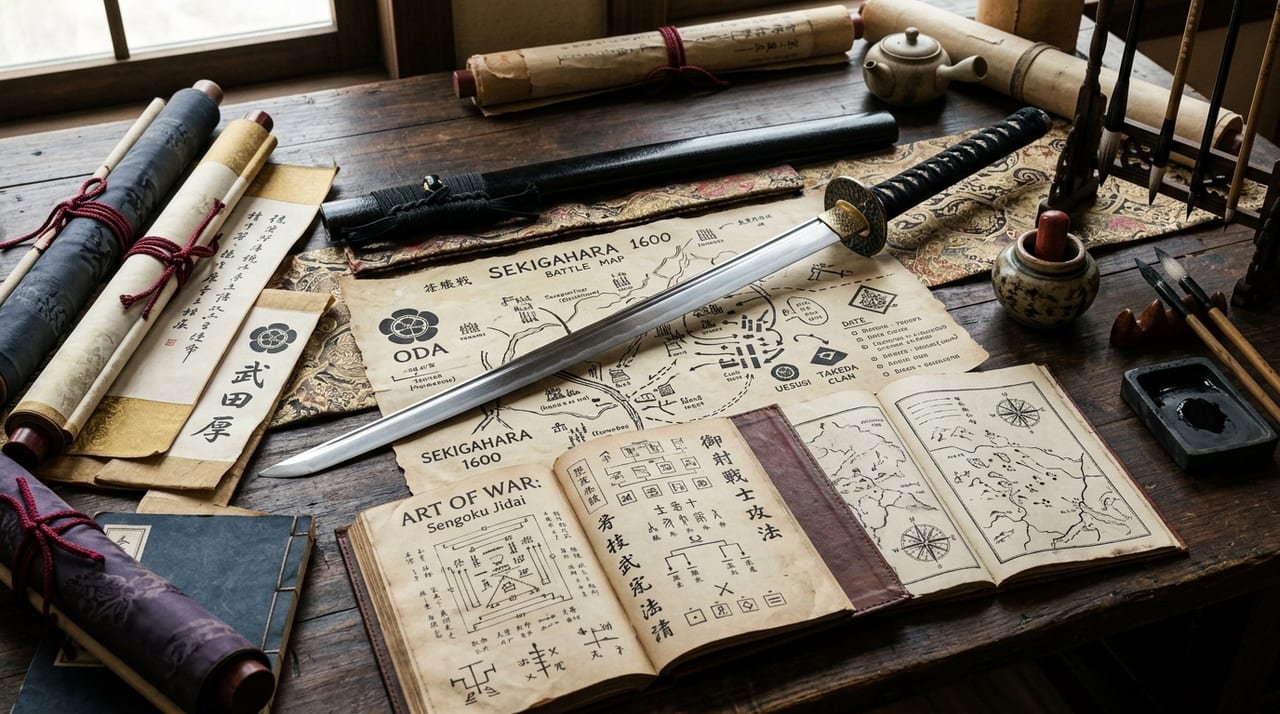
 * Image is for illustrative purposes only.
Total War: Shogun 2
トータルウォー:将軍2
A 2011 strategy game by Sega (Creative Assembly) set during Japan's Sengoku period, combining turn-based campaign management with real-time battles. Its highly detailed depiction of samurai sword units and Sengoku military culture earned critical acclaim worldwide.
Description
Overview and Evaluation of the Work
"Total War: Shogun 2" is a historical strategy game developed by Creative Assembly and published by Sega in 2011. Set in 16th-century Japan, players select one of the daimyo houses and pursue the unification of Japan through comprehensive management of diplomacy, economics, and military affairs. Upon release, it received a Metacritic score exceeding 90 points and maintains high acclaim as one of the finest titles in the Total War series. Due to strong interest in Japanese history and culture, many overseas Japanese history enthusiasts have been introduced to the Sengoku period through this game.
Samurai Units and Tactical Expression of the Japanese Sword
In this game, samurai infantry units are characterized by their high morale, destructive power in close combat, and integration with the honor system. Unit types are finely designed for each specialty—"sword samurai," "spear samurai," "naginata samurai," "bow samurai"—with sword-wielding samurai units particularly distinguished by their superior close-combat ability and robust morale. The honor-point system based on "Bushidō" influences both combat motivation and actual combat effectiveness, with the samurai spirit of treating retreat as shameful being directly implemented into the game mechanics.
Faithful Representation of Sengoku Military Culture
All unit types, tactics, fortifications, crests, and shogun titles in the game are based on actual Sengoku history. The historical characteristics of each daimyo house—such as the Takeda cavalry, the Shimazu "sutegari" (throwing away the rearguard), and Uesugi Kenshin's reputation as a righteous general—are reflected in the game's numerical parameters. The relationship between arquebus troops ("teppō ashigaru") and close-combat-focused tactics—the reality that close-range combat remained essential even as firearms proliferated—appropriately captures the complexity of actual late-Sengoku combat.
Expansion Pack and Bakumatsu Era
In 2012, the DLC "Fall of the Samurai" (spanning the Boshin War through the Meiji Restoration) was released, allowing players to experience the historical turning point where traditional sword-samurai culture collided with modern weapons—Gatling guns and steam-powered armored ships. The scenario of "obsolete samurai versus modern warfare" serves as an outstanding representation that intuitively conveys, through gameplay, the core historical truth: the moment when the Japanese sword lost its practical utility as a weapon and transitioned into a spiritual and cultural symbol.
International Enlightenment through Japanese Sword Culture
Total War: Shogun 2, with millions of copies sold worldwide, became the gateway through which numerous gamers in the West and East Asia first gained deep knowledge of the Sengoku period, samurai culture, and Japanese swords. Names of daimyo, schools of swordsmanship, castle names, and anecdotes of military commanders have spread widely among English-speaking gamers, with countless documented cases of heightened interest in Japanese swords. As one of the most successful instances of Japanese cultural export through historical gaming, the significance of this work is immeasurable.
Real Swords Featured
Sengoku-Period Daisho (Uchigatana and Wakizashi Pair)
The standard armament of the Sengoku samurai depicted in Shogun 2 was the daisho — a paired uchigatana (main sword, ~60–75 cm) and wakizashi (short sword, ~30–60 cm). The uchigatana was the primary combat weapon worn edge-up at the waist; the wakizashi served as backup, indoor weapon, and the instrument of ritual suicide. The mass-produced practical uchigatana from centers like Mino (Gifu) and Bizen (Okayama) supplied the enormous military demand of the age.
Magoroku Kanemoto (Mino School Masterwork)
The second-generation Magoroku Kanemoto of Mino Province (modern Seki City, Gifu) is among the most celebrated practical sword smiths of the Sengoku period. His blades, identifiable by the distinctive 'three-cedar-tree' (sanbonsugi) hamon pattern, were prized by commanders and foot soldiers alike for their extraordinary cutting performance. 'Seki no Magoroku' remains a byword for the finest practical katana and represents the sword standard of the world Shogun 2 depicts.
See authentic Japanese swords
See authentic Japanese swordsThis page is intended to introduce Japanese sword culture and is not affiliated with any of the works mentioned.