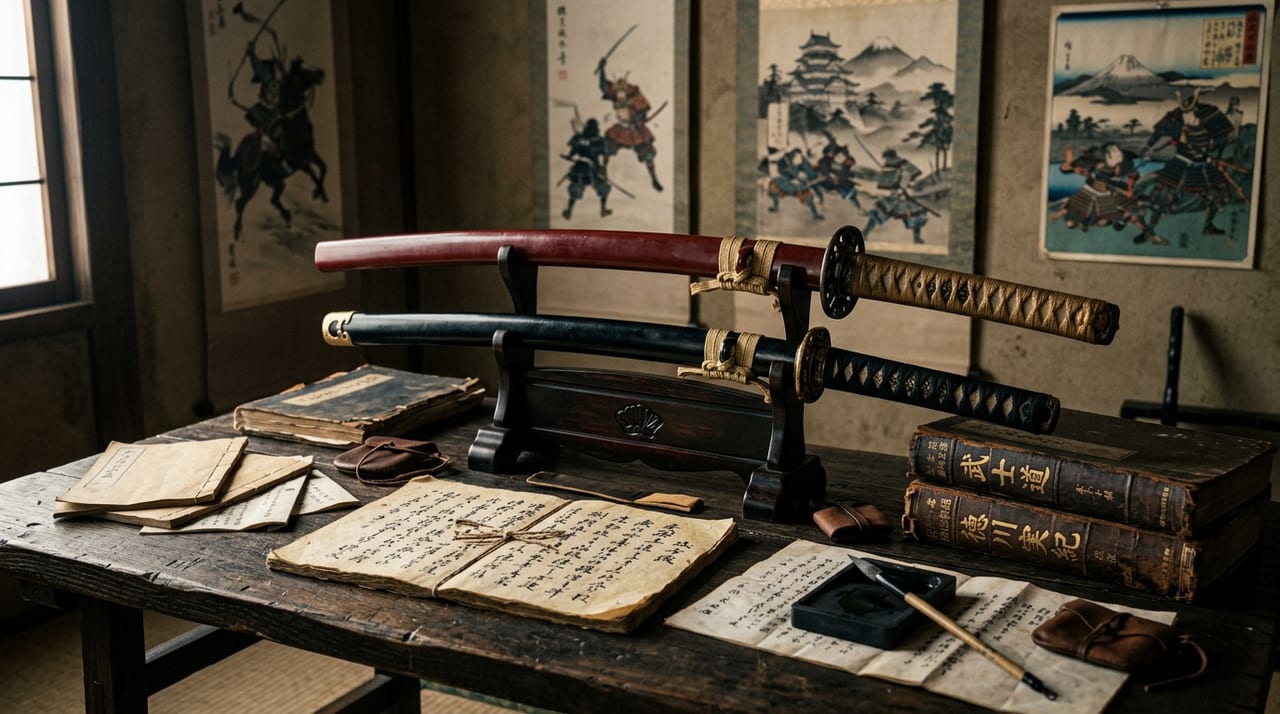
 * Image is for illustrative purposes only.
SHOGUN Shogun (FX / Hulu)
SHOGUN 将軍(FX / Hulu)
FX/Hulu's historical drama (2024, 10 episodes total) based on James Clavell's novel *Shogun* (1975). It depicts the political and personal relationship between an English sailor Anthony Blackthorne (modeled on William Adams) who drifted to Japan on the eve of the Battle of Sekigahara, and the Sengoku daimyo Yoshii Toraei (modeled on Tokugawa Ieyasu). Won 18 Emmy Awards including Outstanding Drama Series, Outstanding Lead Actor in a Drama, and Outstanding Lead Actress in a Drama at the 76th Emmy Awards, setting a record for the most awards won by a non-English language production. Received worldwide critical acclaim for the high quality of its depiction of Japanese swords and samurai culture.
Description
The 2024 Phenomenon
The 2024 FX/Hulu version of "SHOGUN Shogun" is a historic work that inscribed a new page in television drama history. At the 76th Emmy Awards, it won 18 Emmy Awards—a record for non-English-language productions—and swept major categories including Outstanding Drama Series, Outstanding Supporting Actor (Hiroyuki Sanada), and Outstanding Supporting Actress (Anna Sawai). This achievement was a groundbreaking event that demonstrated that serious and faithful depictions of Japanese culture and history are accepted by global audiences, and it greatly advanced international recognition of Japanese period drama culture.
Depiction of Japanese Swords and Samurai Culture
The depiction of Japanese swords and samurai culture in this work achieved the highest level of historical accuracy for a Hollywood-produced Japanese historical drama. Hiroyuki Sanada, serving as both lead actor and producer, strongly championed thorough historical accuracy as a Japanese period drama actor, and was meticulous about precision in every detail—from the way swords are worn, to etiquette and samurai bearing, to linguistic usage. The sword functions not as mere set dressing but as a cultural symbol conveying the character's rank, psychology, and relationships; the styles of sword-wearing in each scene (combinations of dai and shō, the formality of the mounts) eloquently speak to the character's circumstances.
William Adams and the "Foreign Swordsman"
William Adams (Miura Anjin), a historical figure, was an English sailor who drifted to Japan in 1600 and became Japan's first Western samurai, earning the trust of Tokugawa Ieyasu. The true story of Anjin, granted a rank equivalent to a major daimyo (hatamoto) by Ieyasu and permitted to wear swords, exemplifies how the Japanese sword is not merely a weapon but a symbol of social status and identity. The process by which Blackthorne in the drama receives a sword and learns samurai bearing functions as a narrative that approaches the essence of Japanese sword culture from a foreign perspective.
Historical Background: The Eve of the Battle of Sekigahara
The period in which the story is set—Keicho 4–5 (1599–1600)—coincides with the fragmentation of the Toyotomi regime and the prelude to the Battle of Sekigahara, marking a turning point in Japanese sword history. The blades of this era represent the golden age of Keicho shin-to, with master smiths like Horikawa Kunihiro, Tsuchime Akehisa, and Echizen Yasutsugi—who would later shape Edo-period sword culture—actively working. The swords used in the drama's costumes and props are based on accurate styles of the era and have received high evaluation from sword aficionados' perspectives.
Cultural Impact
Following the broadcast of "SHOGUN Shogun," interest in Japanese swords and Japanese culture in the West noticeably increased. The impact on tourism and cultural industries—including increased foreign visitors to Japanese museums, rising sales of Japanese sword-related books, and growing demand for sword experience tours—has been substantial. Touken-za has also experienced an increase in inquiries from the West following the broadcast, riding the wave of a worldwide Japanese sword boom.
Real Swords Featured
Keicho shin-to (New Swords)—Horikawa Kunihiro and Tsuchime Akehisa
The drama is set during the Keicho years (1596-1615), the golden age of Keicho shin-to. Based in Horikawa, Kyoto, Horikawa Kunihiro trained numerous apprentices and laid the foundation for later Edo-period sword culture. Kunihiro's works are characterized by their gunome and ō-gunome temper lines and flowing itame grain pattern, with their majestic appearance embodying the era's transition from Sengoku chaos to peaceful times. Tsuchime Akehisa was a master craftsman of the same period, also renowned for the precision of his carvings. Works by both are held in institutions like the Tokyo National Museum and Osaka Museum of Art, where one can confirm the historical period depicted in *Shogun* through actual examples.
William Adams (Miura Anjin) and the Meaning of Wearing a Sword
Miura Anjin (William Adams) was the first Western samurai, granted a rank equivalent to hatamoto by Tokugawa Ieyasu and permitted to wear swords and ride horses. In the Edo period, wearing a sword was not merely a martial practice but a legal and cultural declaration of belonging to the samurai class. Anjin's birthplace (the site of Miura Anjin's residence in Yokosuka, Kanagawa Prefecture) and Sagami Province (Kanagawa Prefecture) contain historical sites related to Anjin and have high value as historical tourism destinations. While the swords Anjin is said to have used have not survived, blades from the Keicho to Genna era in which he lived can be seen in museums throughout Japan.
Dai-shō—The Culture of Two Swords Worn Together
What is particularly striking about *Shogun's* visual representation is the careful depiction of how dai and shō (the pairing of a long sword and short sword) are worn and the social meaning this conveys. The dai-shō, two swords worn as the mark of a samurai, became the exclusive province of the samurai class in the Edo period and was forbidden to other social ranks as a result of the Sword Hunt policy. An important aspect of Japanese sword culture—how the quality of the koshirae (mounts), the material of the tsuba (handguard), and the design of the habaki ornament all signal a samurai's family rank and individuality—is presented here in visually clear terms, making this work an ideal introduction for foreign viewers seeking to understand Japanese sword culture.
Swords Associated with Tokugawa Ieyasu
Swords associated with Tokugawa Ieyasu, which served as models for the type of blades owned by Yoshii Toraei (modeled on Tokugawa Ieyasu), are held in large numbers in institutions such as the Nikko Tōshō-gū Treasure House, the Tokugawa Art Museum, and the Nagoya City Museum. Ieyasu's aesthetic sensibility reflected the practical values of a Mikawa samurai while gradually shifting toward a perspective that valued the formal dignity of a ruler of all Japan. The sword policies of the Edo shogunate that Ieyasu developed—the formalization of the Sword Hunt, the protection of sword smiths, and the regulation of sword-wearing—were among the most significant policy factors in shaping Japanese sword culture in the early modern period.
See authentic Japanese swords
See authentic Japanese swordsThis page is intended to introduce Japanese sword culture and is not affiliated with any of the works mentioned.