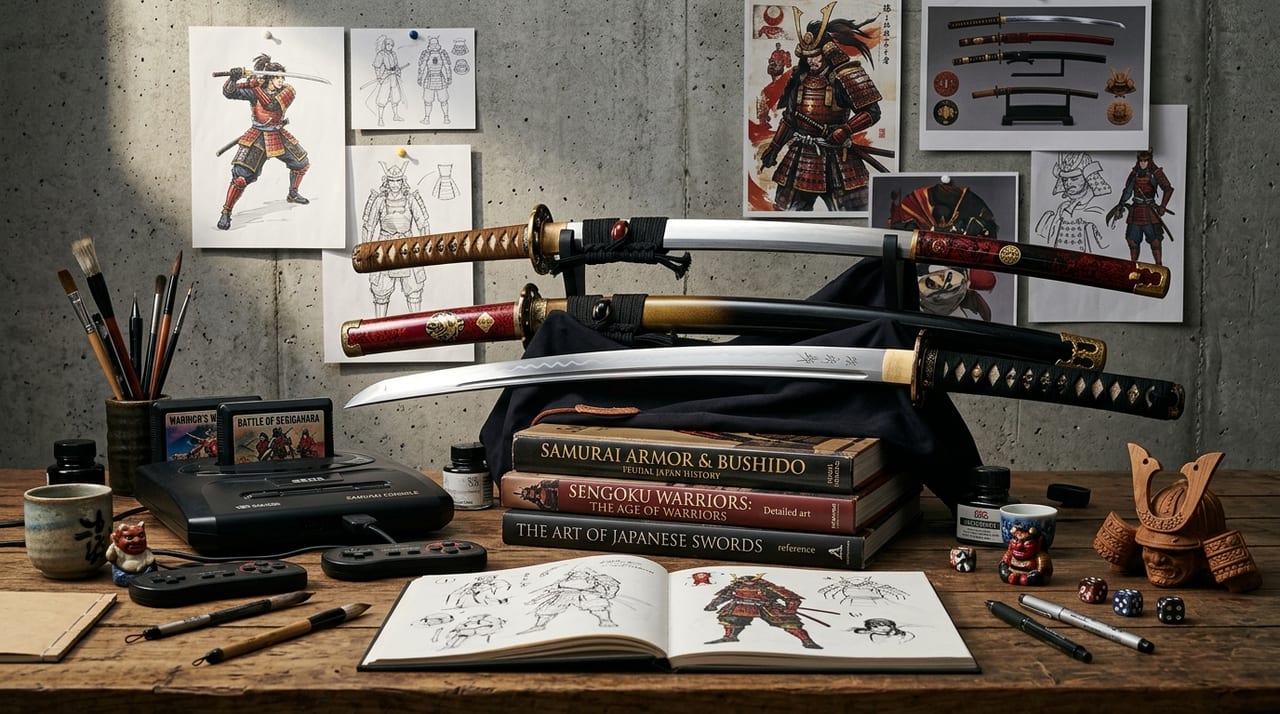
 * Image is for illustrative purposes only.
Sengoku Basara
戦国BASARA
A multimedia franchise by Capcom (2005–present) reimagining Sengoku-era warlords as larger-than-life action heroes with iconic weapons. Its exuberant style sparked worldwide curiosity about actual Sengoku history and sword culture.
Description
Sengoku Basara and Warlord Sword Culture
Sengoku Basara (Capcom, 2005) reimagines historical Sengoku-era warlords as superhuman action heroes with exaggerated weapons and fighting styles. Date Masamune wields six swords simultaneously; Sanada Yukimura swings twin fire-spears; Oda Nobunaga embodies the "Demon King of the Sixth Heaven." This bold stylization paradoxically drove millions of fans worldwide to research the actual historical figures, making Sengoku Basara an unexpected gateway into genuine Sengoku history and sword culture.
Real Warlords and Their Sword Legacies
The historical figures behind the game characters all had documented connections to real sword culture. Date Masamune was a renowned collector of fine swords; the Date clan's collection included blades like Okurikara and Shokudaikiri Mitsutada. Oda Nobunaga was famously associated with Heshikiri Hasebe. Sanada Yukimura's martial intensity is well-documented in historical sources. Each game character's weapon is an exaggerated echo of the real warlord's relationship with their arms.
DATE MASAMUNE and TOUKENZA
Date Masamune — "One-Eyed Dragon" of Oshu — is among the most popular characters in the franchise internationally. His "DATE MASAMUNE" name is directly referenced in the name TOUKENZA, which honors the legacy of the Date clan's sword culture. The historical Masamune was a sophisticated patron of sword culture in the Tohoku region. TOUKENZA carries swords from the traditions and eras that shaped Date clan sword culture, making us a direct connection point for Sengoku Basara fans seeking to engage with the real history behind their favorite warlord.
Real Swords Featured
Okurikara (Date Clan Tachi)
A tachi with a carved kurikara (dragon wrapped around a sword) on the blade, passed down through the Date clan. The kurikara represents the deity Fudo Myo-o, fusing Buddhist spirituality with martial power. The historical Date Masamune's well-documented appreciation for fine swords gives the Sengoku Basara character's sword fixation genuine historical grounding.
Shokudaikiri Mitsutada (Date Masamune's Sword)
A renowned Osafune Mitsutada blade associated with Date Masamune, famed for the legend of cutting through a candlestick along with its target. Now held at the Tokugawa Museum, it is one of the most famous swords of the Sengoku era and a key point of connection for Sengoku Basara fans discovering real Date clan sword history.
Heshikiri Hasebe (Nobunaga's Sword)
A masterwork by Hasebe Kunishige, famous for Oda Nobunaga pressing the blade through a tea servant hiding beneath a shelf. Now a National Treasure at Fukuoka City Museum. The historical Nobunaga's violent, absolute character — dramatized in Sengoku Basara — is reflected in the brutal legend behind this blade.
Muramasa (The Cursed Blade)
Swords by Ise Province smith Muramasa became legendary in the Edo period as 'blades that curse the Tokugawa clan' — family members of Tokugawa Ieyasu died in incidents involving Muramasa-signed swords. This curse legend made Muramasa the archetypal 'evil blade' in Japanese fiction, appearing in Sengoku Basara and countless other games. Muramasa swords are in reality highly regarded for their practical cutting geometry and are important cultural artifacts.
See authentic Japanese swords
See authentic Japanese swordsThis page is intended to introduce Japanese sword culture and is not affiliated with any of the works mentioned.