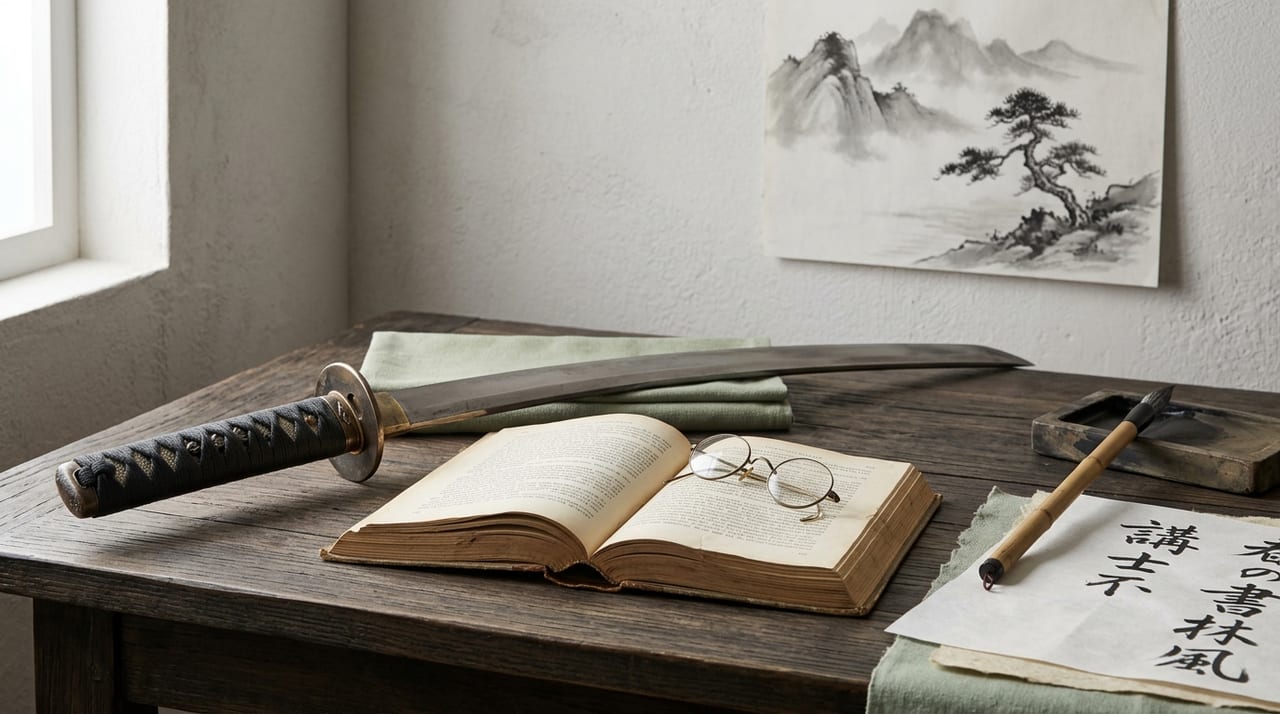
 * Image is for illustrative purposes only.
Semishigure (Cicada Shower)
蝉しぐれ
A jidai novel by Fujisawa Shuhei (1988, Bunshun Bunko) and a 2005 film directed by Kuroto Mitsuo. Set in the fictional northeastern domain of 'Unasaka-han,' it follows young samurai swordsman Maki Bunshiro through growth and tragic love, caught in the schemes of a powerful domain. One of Fujisawa Shuhei's defining works, embodying at the highest literary level the 'quiet aesthetics of the sword' — channeling the swordsman's inner life and spiritual depth into sword depiction rather than flashy combat. A story of a low-ranking samurai living by his sword alone amid great-domain intrigue that elevates the Japanese sword from 'weapon' to 'symbol of a samurai's soul and way of life.'
Description
Semishigure — The Spirituality of the Japanese Sword Embodied Through the "Aesthetics of the Quiet Sword"
Semishigure is a jidai novel by Fujisawa Shuhei (1927–1997), published in 1988 and adapted into a film in 2005 (directed by Kuroto Mitsuo, starring Ichikawa Somegorō). Set in the fictional northeastern domain of "Unasaka-han" — modeled on Fujisawa's birthplace in the Tsuruoka/Shōnai region of Yamagata Prefecture — it quietly traces the growth, friendship, tragic love, and swordsmanly pride of young swordsman Maki Bunshiro against a backdrop of seasonal change and cicada song. The work's significance for Japanese sword culture lies in Fujisawa Shuhei's distinctive literary method of "depicting the swordsman's soul through depicting the sword" — an embodiment at the highest literary level of the Japanese sword's spiritual dimension: the sword as simultaneously a weapon and a symbol of the samurai's soul.
### Maki Bunshiro's Swordsmanship — The Aesthetics of the "Quiet Sword"
Bunshiro is portrayed as a young samurai of exceptional sword talent — yet Fujisawa's characterization is distinguished by its expression of the sword not as "flashiness" or "overwhelming power" but as "quiet certainty." Bunshiro's sword is grounded in iai (居合), depicted as a style in which the swordsman's resolve is concentrated within the quiet of daily life. The "quiet sword" aesthetics that Fujisawa Shuhei embodies in Semishigure expresses an important philosophy of Japanese sword culture in literature: "the way of the sword finds its true value in the quiet of ordinary times" and "a true swordsman has no need to show." This expression of "the swordsman's strength in not drawing" is one of the peaks of samurai depiction in Japanese jidai fiction — a tradition shared with novelists such as Yamamoto Shugoro.
### Fujisawa's Unasaka-han — A Small Northeastern Domain and the Samurai's Sword
The fictional "Unasaka-han" that recurs across Fujisawa Shuhei's body of work literarily elevates the actual warrior culture of the Shonai region of Yamagata — "the everyday life and sword of low-ranking samurai," "samurai life adjacent to farming villages," "the pride of a small domain's warriors amid great-domain political intrigue." Bunshiro's sword, as a low-ranking retainer of Unasaka-han, is established as "a practical uchigatana appropriate to his station rather than a luxurious famous blade" — faithfully reflecting the actual sword culture of Edo-period low-ranking samurai: "the family sword passed down through generations" and "practical swords maintained through repair and polishing." Fujisawa's depictions of "the low-ranking samurai's sword" are a valuable literary excavation of the "everyday sword" dimension of Japanese sword culture — the aspect in which the sword was "a daily-carried tool of life, used when necessary" — quite different from the National Treasure and Important Cultural Property blades of museum collections.
### "Sword and Politics" — The Swordsman's Pride Amid Great-Domain Intrigue
The core of Semishigure's narrative structure is "a small domain's swordsman caught in the political schemes of a great domain" — an embodiment of the important theme of "the relationship between the sword and power" in Japanese jidai fiction. Bunshiro's sword is used as a tool to realize justice, but simultaneously the reality that "a single sword is powerless before political intrigue" is depicted. This tension between "the limits of sword power and the swordsman's spiritual strength" expresses in story form the core paradox of Japanese sword culture: the Japanese sword simultaneously embodies the limits of the "physical weapon" and the transcendence of the "spiritual symbol." The "pride of the samurai who lives by a single sword" — inferior in economic and political power yet second to none in the way of the sword — is the core of the swordsman's identity, and it is this that makes Semishigure not merely a sword-battle novel but a universal story about human dignity.
### The 2005 Film's Sword Depiction
The 2005 film (Kuroto Mitsuo / Ichikawa Somegorō) was praised for successfully embodying the novel's "quiet sword" aesthetics in visual form. Somegorō's Bunshiro is expressed through the contrast between "the quiet before drawing" and "the certainty after drawing," with the climactic sword sequence staged as "the essence of iai — maximum effect from minimum necessary movement." The film's tate choreographer pursued "tate as true swordsmanship" rather than "tate as entertainment spectacle," resulting in critical praise as one of the "quietest sword-battle sequences in Japanese cinema history."
### Perspective for Sword Collectors
Semishigure is essential reading for collectors and enthusiasts interested in the "spiritual and cultural dimension" of the Japanese sword — a work that embodies, at the highest literary level, the sword not as "weapon" but as "symbol of a samurai's soul and way of life." Fujisawa Shuhei's depiction of "the low-ranking samurai's everyday sword" — the family sword passed through generations, the practical blade maintained through repair and polishing — is a high-value literary reference for deeply understanding the "Japanese sword in daily life" dimension so different from famous blades in museum display. The "strength of not drawing" and "the swordsman's spiritual pride" in Fujisawa's depictions are also one of the finest literary entry points for understanding the core of Japanese sword culture: that the sword's artistic value and its spiritual and cultural value are inseparable.
Real Swords Featured
Uchigatana (mid-Edo period practical sword)
Iai-to (iai practice sword)
Ie-gatana (family sword passed through samurai generations)
See authentic Japanese swords
See authentic Japanese swordsThis page is intended to introduce Japanese sword culture and is not affiliated with any of the works mentioned.