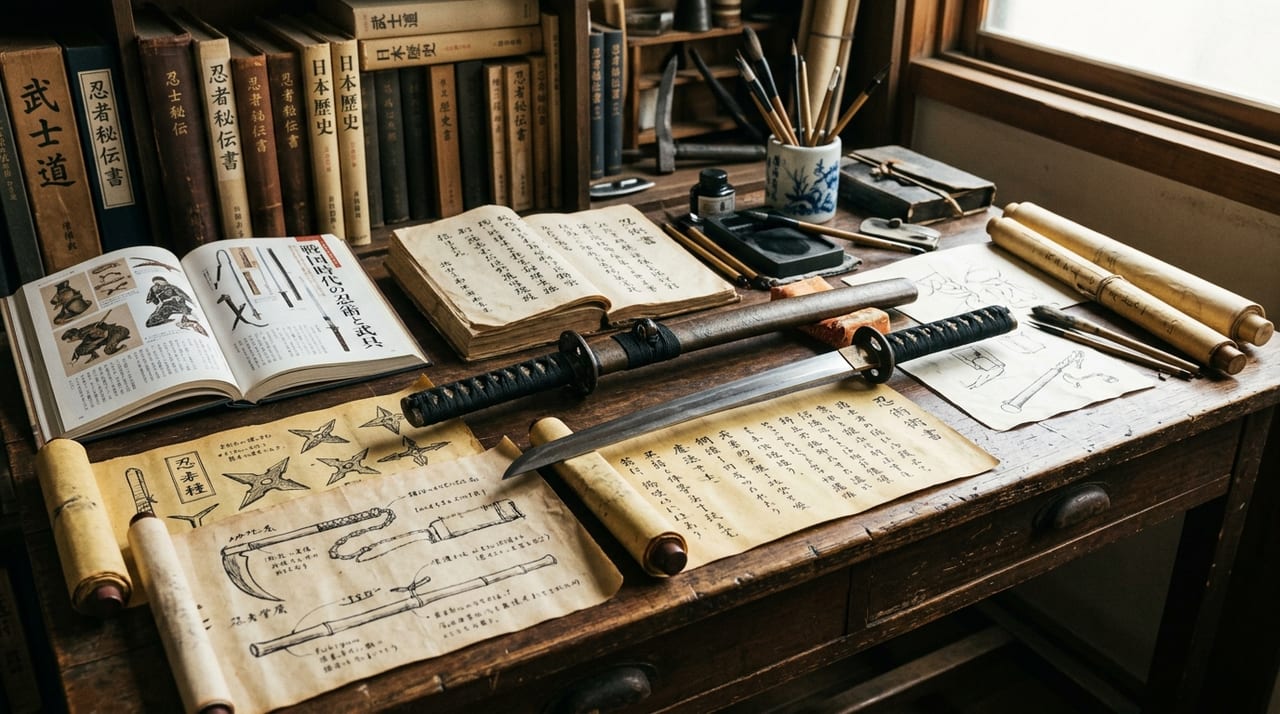
 * Image is for illustrative purposes only.
Nintama Rantarō
忍たま乱太郎
A long-running NHK anime (1993–) based on the manga 'Rakudai Ninja Rantarō' by Sobe Amako (1986–). It follows young ninja-in-training at the Ninja Academy (Ninjutsu Gakuen) in their daily school life and adventures. While aimed at children, the series naturally conveys foundational knowledge of ninja and samurai culture, Edo-period weapons (swords, shuriken, kunai), and has become a lasting piece of Japanese cultural heritage.
Description
Nintama Rantarō — 30 Years of Teaching Children about Ninja and Sword Culture
Nintama Rantarō (NHK, 1993–) is one of Japan's longest-running anime series, based on Sobe Amako's manga Rakudai Ninja Rantarō (1986–). As of 2024, the series has aired for over 30 years and more than 1,000 episodes — among the longest continuous runs in Japanese animation history. While a children's comedy, it is noted for its careful historical and cultural accuracy, and has introduced generations of Japanese children to Japanese swords, ninja weapons, and Sengoku-period warrior culture.
### The Ninja Academy and the Cultural Role of Weapons Education
The setting, "Ninjutsu Gakuen" (Ninja Academy), is a fictional school where young ninja-in-training study martial arts, academics, and practical skills. Its curriculum includes ninjutsu, unarmed combat, weapons technique, and fire arts. Through this framework, child viewers naturally absorb basic knowledge of shuriken, kunai, blowguns, and swords — their shapes, uses, and proper handling. The series repeatedly emphasizes the difference between a samurai's sword and a ninja's blade, and demonstrates the etiquette of drawing and sheathing (iai) as expressions of warrior spirit.
### Historical Accuracy in Edo-Period Weapons and Ninja Tools
The series is set in the late Sengoku through early Edo period, and its weapons, tools, and customs are grounded in historical research. Creator Amako prioritizes accuracy, depicting weapons in a child-friendly way while not departing from basic historical fact. The diversity of weapons actually used by historical ninja — kunai, shuriken, makibishi (caltrops), iron fans, chain-sickles, blowguns — appear throughout, exposing children to the richness of Japan's weapons culture.
### Generational Transmission of Cultural Heritage
With over 30 years of broadcasts, Nintama Rantarō is that rare content "watched by both parents and their children." Many adults who watched as children in the 1990s now watch it again with their own children, creating a cycle of cross-generational transmission of ninja and warrior culture. The series has served NHK's cultural mission of historical education in a way few children's programs have matched.
### For Sword Enthusiasts
Although aimed at children, Nintama Rantarō holds significant "grassroots" importance for the popularization of Japanese sword culture. Many Japanese sword enthusiasts cite it as their first exposure to swords and ninja weapons. The pattern of adults who grew up watching the series entering iaijutsu, kendō, or sword appreciation as adults is common, and the series' long-term contribution to cultivating interest in Japanese weapons culture is not to be underestimated.
Real Swords Featured
Ninjatō — The Ninja Sword
The ninjatō is said to be shorter and straighter than the standard uchigatana, designed for use in confined spaces. Its square guard (tsuba) allegedly also served as a foothold when climbing walls. The term 'ninjatō' is largely a modern construction; historical ninja used a variety of short swords and tanto depending on the situation. Nintama Rantarō portrays the concept accurately for its child audience without overclaiming.
Shuriken and Kunai
Shuriken is a general term for throwing weapons, encompassing the stick-type (bō shuriken) and the familiar star-shaped variety. Kunai were multipurpose iron tools used for throwing, thrusting, and digging. Both were produced by smiths and thus closely related to the broader sword-making culture. Nintama Rantarō repeatedly features both, teaching children their shapes and uses in a natural, entertaining context.
See authentic Japanese swords
See authentic Japanese swordsThis page is intended to introduce Japanese sword culture and is not affiliated with any of the works mentioned.