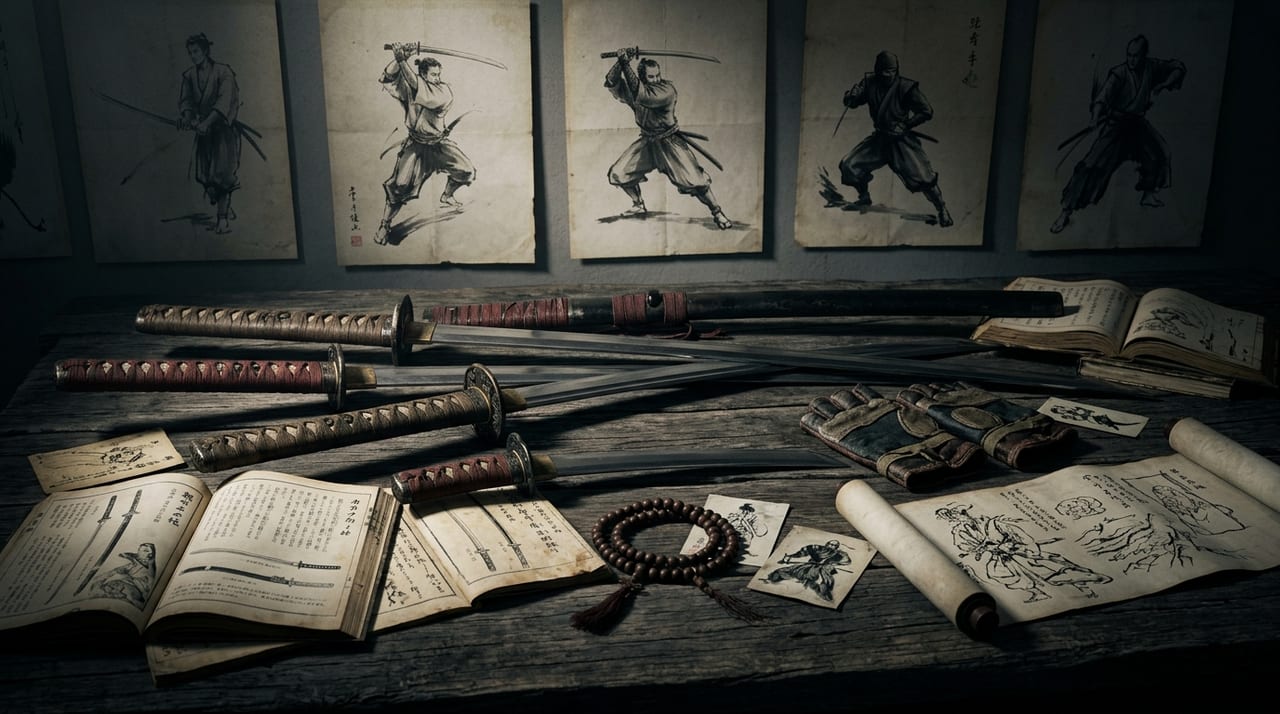
 * Image is for illustrative purposes only.
Ninja Scroll
獣兵衛忍風帖
A 1993 anime film directed by Yoshiaki Kawajiri. Set in Edo-period Japan, this sword-action masterpiece follows the wandering ninja-swordsman Jubei as he engages in deadly combat against eight demonic sorcerers known as the 'Eight Devils of the Kigen Gate.'
Description
Overview of the Work
"Ninja Scroll" is a theatrical anime directed, written, and character-designed by Yoshiaki Kawajiri, released in 1993. Set in the early Edo period, it depicts the machinations against the Tokugawa shogunate and the battles of Jubei, a wandering ninja-swordsman caught up in the conflict. The narrative's core consists of consecutive deadly battles against eight sorcerers known as the "Eight Devils of the Kigen Gate," each possessing inhuman abilities. Battles against enemies with diverse supernatural powers—a man with a body like stone, a poison manipulator, a wielder of magnetic force—create richly varied sword-fight sequences.
Sword Techniques and Japanese Sword Depiction
Jubei's combat style is a fusion of ninjutsu and swordsmanship, his blade emphasizing speed and the certainty of a single decisive strike. Yoshiaki Kawajiri's animation excels at controlling the rhythm of movement and the cinematic presentation of 'ma' (negative space). The tension of the moment Jubei draws his katana and the sharpness of slashes cleaving through space express the fundamental terror of the sword while maintaining dramatic exaggeration. The framework of facing supernatural powers with pure swordplay and wit is grounded in the ancient martial way's philosophy that 'the essence of the sword lies in technique and spirit.'
International Impact and Critical Reception
"Ninja Scroll" received greater critical acclaim internationally than domestically, becoming one of the works that led the anime boom worldwide in the 1990s. Its release in North America and Europe broadened recognition of the 'anime for adults' genre and influenced countless subsequent anime, games, and films. Notably, the Wachowski sisters of The Matrix series and Quentin Tarantino have referenced the work, and its impact on global pop culture is incalculable. It also played a crucial role in shaping international perceptions of ninja, samurai, and the Japanese sword as cultural themes.
Historical Setting and Sword Culture
The early Edo period, when the work is set, was a transitional era when swords were shifting from pure weapons to symbols of samurai identity. Wandering swordsmen and ninja like Jubei belonged to no existing domain or organization and lived by their single katana. Their sword was not a blade for appreciation but a tool primarily designed to protect and take life. The aesthetic of such 'working blades'—functional beauty stripped of ornamental excess—resonates even with modern sword enthusiasts.
TV Series and Enduring Popularity
Following the 1993 theatrical release, a television anime series titled 'Ninja Scroll: Ryu Hōgyoku-hen' was produced and aired in 2003. While it did not achieve the same impact as the theatrical film, Jubei's popularity has endured, establishing him as an iconic figure in Japan's ninja-swordsman genre. Numerous media adaptations—games, manga, and more—have been released, and the work's footprint in the Japanese sword-action genre runs deep.
Real Swords Featured
Ninja Blades: Practical Short Swords and Uchigatana
Swords carried by ninja-swordsmen like Jubei are presumed to have employed a dual-blade style, switching between the uchigatana and the shinobi-to (straight-edged, shorter blade) depending on circumstances. The shinobi-to typically featured a straight edge with a short blade, a practical tool designed for use in darkness and confined spaces. The uchigatana, which a wandering swordsman would carry as a primary weapon, prioritized cutting ability and durability over fittings that displayed social status, favoring a sturdy, functional aesthetic.
Muramasa (Demonic Blade Legend)
The early Tokugawa period, which forms the historical backdrop of this work, was an era when legends of the demonic blade 'Muramasa' were most actively told. Muramasa blades were produced by the Muramasa school of swordsmiths in Kuwana, Mie Prefecture, from the late Muromachi through the Sengoku period. Because several ancestors and relatives of the Tokugawa house were wounded by these blades, they became reviled as 'swords cursed upon the Tokugawa.' However, the actual Muramasa blades are highly esteemed for their cutting ability, elegant curvature, and beautiful form, sharing imagery with swordsmen like Jubei who possess rebellious spirit.
See authentic Japanese swords
See authentic Japanese swordsThis page is intended to introduce Japanese sword culture and is not affiliated with any of the works mentioned.